
 EN
EN

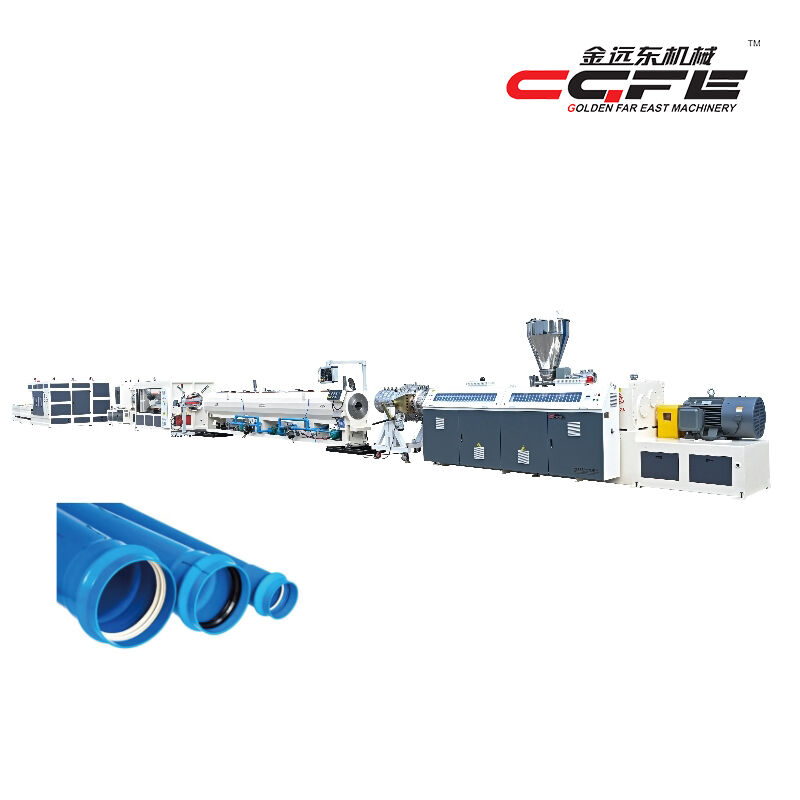
Understanding the differences between CPVC pipe making machines and PVC models is crucial for manufacturers considering pipe production equipment investments. While both machines serve similar fundamental purposes in the plastic pipe manufacturing industry, their design specifications, operational requirements, and production capabilities vary significantly due to the distinct material properties of CPVC and PVC resins.
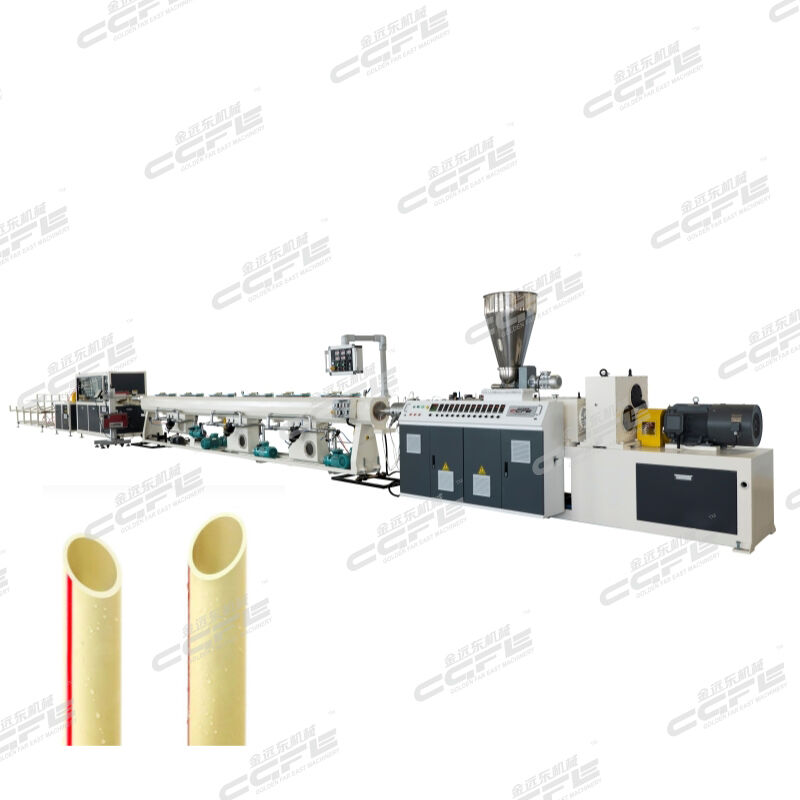
The fundamental distinction lies in how each machine handles temperature-sensitive polymer processing requirements. A cpvc pipe making machine operates under more stringent thermal control parameters compared to standard PVC equipment, reflecting the enhanced heat resistance properties of chlorinated polyvinyl chloride material. These differences impact everything from screw design and barrel heating systems to cooling methods and production speeds.
Material Processing Requirements and Temperature Control
CPVC Material Characteristics Demanding Specialized Processing
CPVC material requires significantly different processing conditions compared to standard PVC due to its molecular structure modifications. The chlorination process that creates CPVC results in a polymer with enhanced thermal stability, requiring a cpvc pipe making machine to maintain precise temperature zones throughout the extrusion process. Unlike PVC processing, CPVC demands higher melt temperatures while simultaneously requiring more careful thermal management to prevent material degradation.
The processing window for CPVC is narrower than PVC, meaning temperature variations that might be acceptable in PVC production can cause significant quality issues in CPVC pipe manufacturing. This necessitates more sophisticated temperature control systems in cpvc pipe making machine designs, including advanced heating elements with precise zonal control and enhanced insulation systems to maintain thermal uniformity across the barrel length.
Material flow characteristics also differ substantially between CPVC and PVC during the melting process. CPVC exhibits different viscosity behavior under heat and pressure, requiring specialized screw geometry and compression ratios in the extruder design. These material-specific requirements directly influence the mechanical design of cpvc pipe making machine components, particularly in the plastification and metering zones of the extruder screw.
Temperature Zone Management and Heating Systems
The heating system architecture in a cpvc pipe making machine incorporates multiple temperature zones with independent control capabilities, typically ranging from feed zone temperatures around 160-170°C to die head temperatures reaching 190-200°C. This contrasts with PVC processing, where lower overall temperatures and less stringent zone-to-zone control may be acceptable for achieving quality output.
Advanced heating elements in cpvc pipe making machine systems often utilize ceramic or cartridge heaters with rapid response characteristics, enabling quick temperature adjustments to maintain optimal processing conditions. The thermal mass of heating systems is typically higher than PVC equipment to provide stable heat distribution and minimize temperature fluctuations that could affect pipe wall thickness uniformity or surface quality.
Cooling system design also differs significantly between CPVC and PVC pipe making equipment. CPVC pipes require controlled cooling rates to prevent internal stress development, necessitating longer cooling tanks with more precise water temperature control compared to standard PVC production lines. The cooling section of a cpvc pipe making machine typically includes multiple temperature zones with individual circulation systems to achieve optimal cooling profiles.
Screw Design and Extrusion Technology Differences
Specialized Screw Geometry for CPVC Processing
The extruder screw design represents one of the most critical differences between a cpvc pipe making machine and PVC models. CPVC processing requires specialized screw geometry with modified compression ratios, typically ranging from 2.5:1 to 3:1, compared to higher compression ratios often used in PVC applications. This lower compression design prevents excessive shear heating that could degrade CPVC material during the plastification process.
Flight depth progression in cpvc pipe making machine screws follows a more gradual transition from feed zone to metering zone, allowing for gentler material heating and reduced mechanical stress on the polymer chains. The metering section length is often extended in CPVC screws to provide adequate homogenization time without creating excessive shear conditions that could compromise material properties.
Barrier screw designs are frequently employed in cpvc pipe making machine applications to improve melting efficiency while maintaining low shear conditions. These specialized screw configurations include barrier flights that separate solid and molten material streams, enabling more controlled heating and improved temperature uniformity in the final melt. Such sophisticated screw designs are less commonly required in standard PVC pipe production.
Barrel Design and Wear Resistance Considerations
The barrel construction of a cpvc pipe making machine incorporates enhanced wear resistance features due to the abrasive nature of CPVC compounds, particularly those containing titanium dioxide or other mineral fillers commonly used in CPVC pipe formulations. Barrel liners often utilize bimetallic construction or specialized overlay materials to extend service life under CPVC processing conditions.
Venting systems in cpvc pipe making machine barrels are designed to handle the different outgassing characteristics of CPVC materials compared to PVC. CPVC processing may generate different volatile compounds during melting, requiring modified venting configurations and potentially enhanced exhaust systems to maintain safe operating conditions and optimal material properties.
The length-to-diameter ratio of cpvc pipe making machine barrels is often optimized for CPVC processing requirements, typically ranging from 24:1 to 30:1 depending on the specific application. This ratio balances the need for adequate residence time for complete melting and homogenization while minimizing thermal exposure that could degrade the CPVC material.
Die Head Design and Calibration Requirements
Die Head Temperature Control and Material Flow
Die head design in a cpvc pipe making machine requires more sophisticated temperature control compared to PVC systems due to CPVC's sensitivity to thermal variations. The die head typically incorporates multiple heating zones with independent temperature controllers, allowing precise thermal management across the die lip to ensure uniform wall thickness and consistent pipe dimensions.
Material flow channels within cpvc pipe making machine die heads are designed with specific geometries to accommodate CPVC's flow characteristics under processing temperatures. The land length and channel dimensions are optimized to provide adequate back pressure for proper die swell compensation while minimizing residence time that could lead to material degradation.
Spiral distribution systems in cpvc pipe making machine die heads often feature modified pitch angles and channel depths compared to PVC applications. These modifications ensure proper material distribution around the circumference while maintaining the gentle processing conditions necessary for CPVC quality. The die construction materials may also differ, utilizing tool steels with enhanced corrosion resistance to handle CPVC processing conditions.
Calibration and Sizing Systems
The calibration system of a cpvc pipe making machine requires more precise dimensional control due to CPVC's different thermal expansion characteristics compared to PVC. Calibration sleeves are designed with tighter tolerances and may incorporate vacuum-assisted sizing to achieve consistent pipe dimensions across varying production conditions.
Water box design in cpvc pipe making machine calibration systems often features enhanced temperature control capabilities, with multiple zones allowing independent cooling water temperature management. This controlled cooling prevents rapid temperature changes that could induce stress in CPVC pipes, which are more sensitive to thermal shock than standard PVC products.
Vacuum levels and distribution patterns in cpvc pipe making machine calibration systems are optimized for CPVC material properties. The vacuum system design accounts for CPVC's stiffness characteristics and thermal behavior during the cooling process, ensuring proper pipe formation without surface defects or dimensional variations.
Production Speed and Quality Control Considerations
Production Rate Optimization for CPVC Processing
Production speeds in cpvc pipe making machine operations typically run 10-20% slower than equivalent PVC lines due to the more demanding processing requirements of CPVC material. The reduced production rates allow for better temperature control and material homogenization, which are critical for achieving consistent CPVC pipe quality and performance characteristics.
The relationship between production speed and quality is more sensitive in cpvc pipe making machine applications compared to PVC production. Higher speeds can lead to insufficient melting, poor material homogenization, or inadequate cooling, resulting in pipes with compromised mechanical properties or dimensional accuracy. This sensitivity requires more sophisticated process control systems to maintain optimal production parameters.
Throughput optimization in cpvc pipe making machine operations involves balancing multiple variables including screw speed, barrel temperatures, cooling rates, and take-off speeds. The optimization process is more complex than PVC production due to the narrower processing window and greater sensitivity to parameter variations characteristic of CPVC materials.
Quality Monitoring and Control Systems
Quality control systems in cpvc pipe making machine installations require more sophisticated monitoring equipment compared to standard PVC lines. Real-time wall thickness measurement systems with higher precision are typically employed to detect variations that might be acceptable in PVC but could compromise CPVC pipe performance.
Temperature monitoring throughout the cpvc pipe making machine process includes additional measurement points and more sensitive instrumentation to detect thermal variations that could affect material properties. The monitoring systems often incorporate data logging capabilities with statistical process control features to track long-term trends and identify process drift before quality issues occur.
Surface quality inspection systems in cpvc pipe making machine lines may include enhanced optical inspection capabilities to detect minor surface defects that could indicate processing problems. CPVC's different surface characteristics compared to PVC require adjusted inspection parameters and potentially different lighting or imaging systems for effective quality control.
FAQ
What are the main temperature differences between CPVC and PVC pipe making machines?
CPVC pipe making machines operate at higher processing temperatures, typically 180-200°C compared to PVC machines that run at 160-180°C. The temperature control systems in CPVC equipment also feature more precise zonal control and tighter tolerance requirements due to CPVC's narrower processing window and sensitivity to thermal variations.
Can a standard PVC pipe making machine be converted to produce CPVC pipes?
While some modifications are possible, converting a PVC machine for CPVC production typically requires significant upgrades including enhanced heating systems, specialized screw design, improved temperature controls, and modified cooling systems. The investment required often approaches the cost of purpose-built CPVC equipment, making dedicated cpvc pipe making machine installations more economically viable.
Why do CPVC pipe making machines have slower production speeds than PVC models?
CPVC pipe making machines operate at reduced speeds to accommodate the material's more demanding processing requirements. The slower speeds allow for proper temperature control, complete material homogenization, and controlled cooling necessary for CPVC quality. Attempting to match PVC production speeds typically results in quality issues including poor mechanical properties and dimensional inconsistencies.
What maintenance differences exist between CPVC and PVC pipe making equipment?
CPVC pipe making machines require more frequent maintenance attention due to higher operating temperatures and potentially more abrasive material compounds. Heating element replacement, temperature sensor calibration, and wear component inspection intervals are typically shorter than PVC equipment. The enhanced temperature control systems also require more sophisticated diagnostic and calibration procedures compared to standard PVC machines.
Table of Contents
- Material Processing Requirements and Temperature Control
- Screw Design and Extrusion Technology Differences
- Die Head Design and Calibration Requirements
- Production Speed and Quality Control Considerations
-
FAQ
- What are the main temperature differences between CPVC and PVC pipe making machines?
- Can a standard PVC pipe making machine be converted to produce CPVC pipes?
- Why do CPVC pipe making machines have slower production speeds than PVC models?
- What maintenance differences exist between CPVC and PVC pipe making equipment?