
 EN

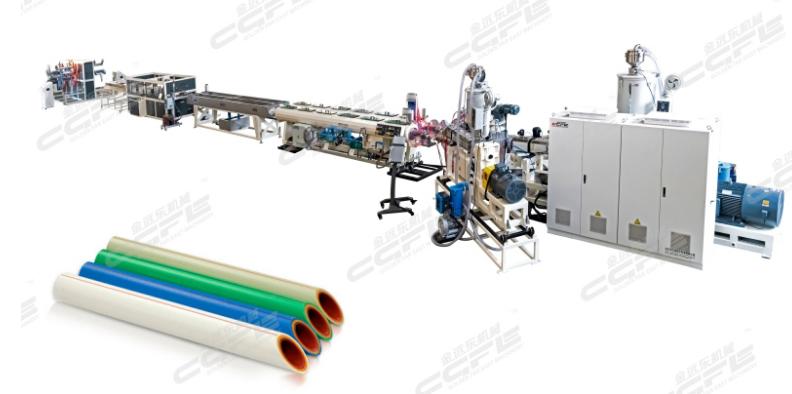
Modern industrial infrastructure demands pipes that combine exceptional durability with reliable pressure resistance. The evolution of PPR pipe production line technology has fundamentally transformed how manufacturers produce high-performance PPR pipes. Multilayer PPR pipe co-extrusion technology represents a significant advancement in creating pipes capable of withstanding demanding operational conditions while maintaining structural integrity over extended service lifecycles.
Co-extrusion processes integrated into advanced PPR pipe production line systems enable manufacturers to create layered pipe structures with precisely engineered material compositions. Each layer within a multilayer PPR pipe serves a specific functional purpose, contributing to overall system performance, thermal stability, and pressure handling capabilities. Understanding how co-extrusion technology improves pressure resistance helps manufacturers make informed decisions about production equipment investments and operational protocols.
How Co-Extrusion Technology Enhances Pressure Resistance
Multi-Layer Construction and Structural Integrity
The PPR pipe production line equipped with co-extrusion capabilities produces pipes with distinct material layers that work synergistically to resist internal pressure forces. A typical multilayer PPR pipe structure includes an inner layer formulated for direct fluid contact, intermediate reinforcement layers that distribute stress loads evenly, and outer protective layers that shield the pipe from environmental degradation. Modern PPR pipe production line systems control the thickness and material composition of each layer with precision, ensuring consistent pressure ratings across entire production batches.
When multiple materials are extruded simultaneously within the PPR pipe production line, the resulting bond between layers creates a monolithic structure that responds as a unified system under pressure stress. This contrasts sharply with conventionally manufactured pipes where separate components are assembled after production, potentially creating weak points at junction zones. The co-extrusion approach eliminates these vulnerability areas by integrating all material layers during the initial manufacturing stage.
Temperature Stability and Long-Term Performance
Advanced PPR pipe production line technology uses co-extrusion to incorporate temperature-stabilizing additives strategically throughout the pipe wall structure. PPR pipes manufactured through co-extrusion on modern PPR pipe production line equipment maintain their structural properties across wider temperature ranges than single-layer alternatives. The intermediate reinforcement layers absorb thermal expansion and contraction stresses, preventing the localized weakening that typically occurs at temperature fluctuation boundaries.
Multilayer design implemented through PPR pipe production line co-extrusion processes ensures that thermal stress distributes across multiple material phases rather than concentrating at single interfaces. This distribution mechanism significantly extends the service life of pipes operating in environments subject to frequent temperature cycling or sustained elevated temperatures. Manufacturers utilizing advanced PPR pipe production line systems report improved performance consistency and reduced field failure rates compared to conventional production methods.
Material Selection and Optimization in Co-Extrusion Processes
Core Material Composition for Pressure Bearing
The inner pressure-bearing layer of PPR pipes produced on modern PPR pipe production line equipment uses precisely formulated polymer blends optimized for strength and chemical resistance. Reinforcing this core through controlled co-extrusion on PPR pipe production line systems adds structural capacity without proportionally increasing wall thickness or weight. The engineering approach allows manufacturers to create lighter pipes that maintain or exceed pressure ratings of heavier conventionally produced alternatives.
Quality control systems integrated into contemporary PPR pipe production line operations monitor material flow rates and ratios for each layer during co-extrusion, ensuring dimensional consistency and material property uniformity. This precision manufacturing capability, enabled by advanced PPR pipe production line technology, directly translates to predictable pressure performance and compliance with international standards. Material degradation risk decreases substantially when PPR pipe production line co-extrusion systems maintain optimal processing parameters throughout extended production runs.
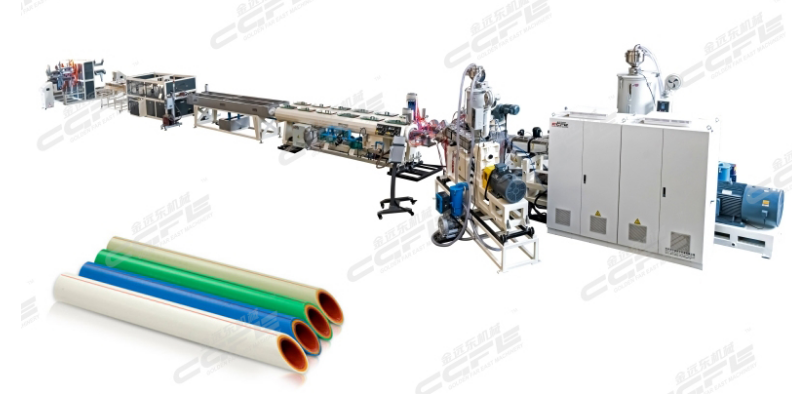
Barrier and Protection Layers for Enhanced Durability
Outer protective layers incorporated through PPR pipe production line co-extrusion provide critical barriers against ultraviolet radiation, chemical exposure, and mechanical abrasion encountered during installation and operational phases. Modern PPR pipe production line equipment deposits these protective layers with controlled thickness that optimizes cost efficiency while maintaining maximum protective effectiveness. The integrated manufacturing approach ensures protective layer adhesion surpasses that achieved through post-production coating methods.
Advanced PPR pipe production line systems allow manufacturers to customize outer layer formulations for specific environmental conditions and industrial applications. Pipes produced on sophisticated PPR pipe production line equipment designed for co-extrusion demonstrate superior environmental resistance compared to single-layer alternatives, translating to longer service intervals and reduced maintenance requirements. This capability positions manufacturers using state-of-the-art PPR pipe production line technology as competitive leaders in premium pipe markets.
Operational Advantages and Implementation Considerations
Production Efficiency and Cost Optimization
Implementing multilayer co-extrusion within the PPR pipe production line creates manufacturing efficiencies that reduce per-unit production costs while simultaneously improving product quality metrics. The simultaneous extrusion of multiple material layers within a single PPR pipe production line pass eliminates secondary processing operations required for conventionally manufactured pipes. This streamlined approach reduces energy consumption, minimizes material waste, and accelerates output rates, making advanced PPR pipe production line technology financially attractive for manufacturers operating at scale.
Manufacturers transitioning to modern PPR pipe production line systems equipped with co-extrusion capabilities report significant improvements in production consistency and reduction in rework requirements. The integrated quality control systems integrated into contemporary PPR pipe production line equipment prevent defects before they develop into field failures, reducing warranty costs and protecting brand reputation. Return on investment calculations for modern PPR pipe production line installations typically demonstrate payback periods within two to three years based on improved efficiency and product premiums.
Technical Implementation and System Integration
Successfully deploying multilayer co-extrusion technology within existing manufacturing facilities requires careful evaluation of PPR pipe production line specifications and compatibility requirements. Modern PPR pipe production line systems designed for co-extrusion include independent material feeding systems, synchronized extrusion screws, and coordinated downstream processing equipment that work as an integrated platform. Technical support from PPR pipe production line manufacturers becomes critical during installation, calibration, and operator training phases to ensure optimal performance and safety compliance.
Advanced PPR pipe production line equipment incorporates sophisticated monitoring and control systems that continuously track extrusion parameters, material viscosity, and pressure conditions throughout the production cycle. These automated systems adjust processing parameters in real-time to maintain consistent product quality and specifications, minimizing operator intervention and human error. Investment in training programs ensures plant personnel can effectively operate and maintain sophisticated PPR pipe production line systems, maximizing equipment utilization and production consistency.
FAQ
What specific pressure ratings can multilayer PPR pipes produced on modern PPR pipe production line equipment achieve?
Multilayer PPR pipes manufactured on advanced PPR pipe production line systems can achieve pressure ratings ranging from 0.6 MPa to 2.5 MPa depending on overall pipe diameter, wall thickness configurations, and material formulations used during co-extrusion. Standard PPR pipe production line operations produce pipes meeting these specifications across 20-63 mm diameter ranges commonly used in residential and commercial applications. Specific pressure ratings depend on individual PPR pipe production line design parameters and material selection protocols established by individual manufacturers.
How does co-extrusion within a PPR pipe production line compare to conventional layered pipe assembly methods?
Co-extrusion integrated into modern PPR pipe production line operations creates monolithic structures with superior bond integrity compared to assembled multilayer pipes produced through conventional methods. Pipes manufactured through PPR pipe production line co-extrusion eliminate potential failure points that occur at assembly junctions in conventionally produced alternatives. The integrated manufacturing approach reduces production time, improves quality consistency, and delivers superior long-term pressure performance compared to post-production assembly methods.
What maintenance requirements apply to PPR pipe production line equipment used for multilayer co-extrusion operations?
Advanced PPR pipe production line systems require regular maintenance including screw cleaning, die inspections, and material feeding system servicing to maintain optimal co-extrusion performance. Scheduled preventive maintenance of PPR pipe production line equipment typically involves monthly screw purging cycles, quarterly die inspections, and annual component replacements based on wear patterns. Comprehensive maintenance protocols ensure PPR pipe production line equipment continues delivering consistent product quality and prevents unexpected production disruptions during operational phases.
Table of Contents
- How Co-Extrusion Technology Enhances Pressure Resistance
- Material Selection and Optimization in Co-Extrusion Processes
- Operational Advantages and Implementation Considerations
-
FAQ
- What specific pressure ratings can multilayer PPR pipes produced on modern PPR pipe production line equipment achieve?
- How does co-extrusion within a PPR pipe production line compare to conventional layered pipe assembly methods?
- What maintenance requirements apply to PPR pipe production line equipment used for multilayer co-extrusion operations?