
 EN
EN

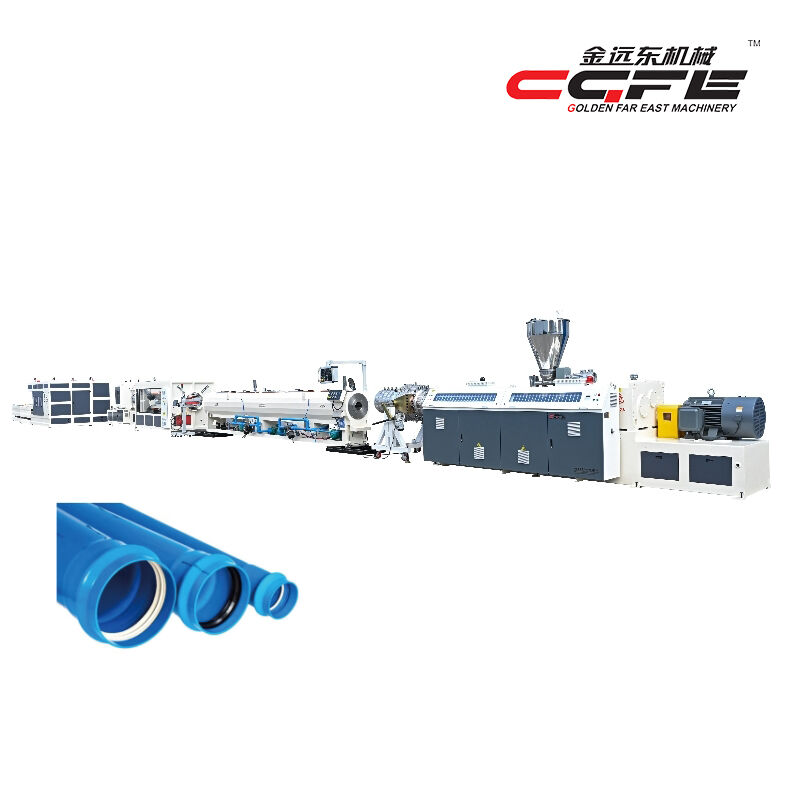
Small manufacturing enterprises face unique challenges when selecting industrial equipment, particularly when investing in specialized machinery like a pvc pipe production line. The decision requires careful evaluation of production capacity, space constraints, initial investment levels, and operational complexity to ensure the chosen system aligns with business scale and growth projections.
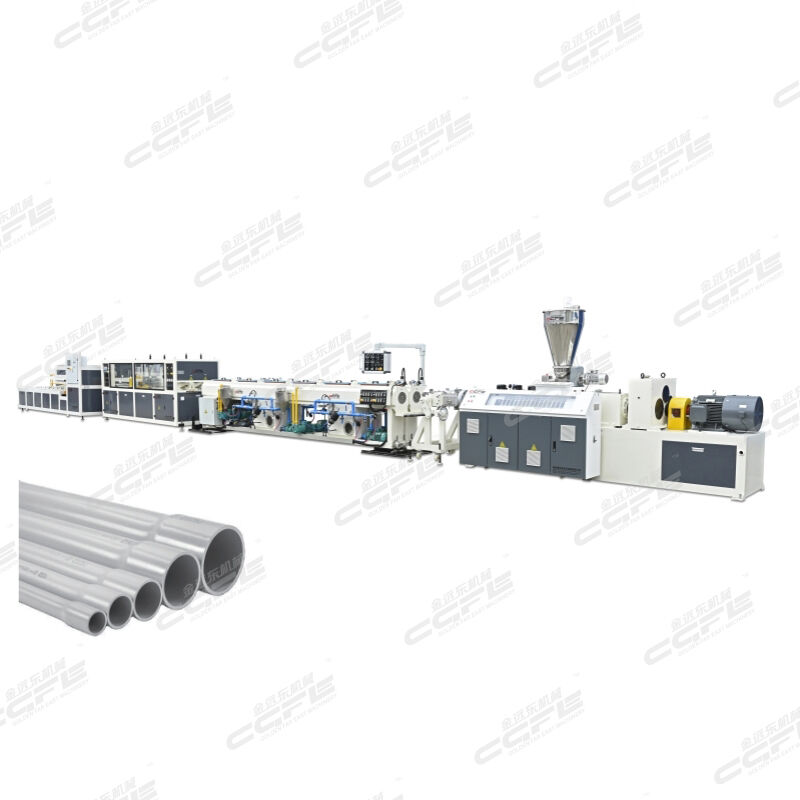
Determining the right pvc pipe production line for small factories involves analyzing specific operational parameters that directly impact profitability and sustainability. Small-scale manufacturers must balance production efficiency with cost-effectiveness while considering factors such as floor space availability, power requirements, and workforce capabilities that distinguish their needs from larger industrial operations.
Production Capacity Requirements for Small Factory Operations
Daily Output Expectations and Market Demand Analysis
Small factories typically require a pvc pipe production line capable of producing between 50 to 200 meters of pipe per hour, depending on pipe diameter and wall thickness specifications. This production range allows manufacturers to serve local and regional markets while maintaining reasonable inventory levels without overcommitting resources to excessive capacity.
Market demand analysis reveals that small manufacturers often focus on standard residential and light commercial applications, requiring pipe diameters ranging from 20mm to 63mm. A properly sized pvc pipe production line for this segment should demonstrate flexibility in switching between different pipe specifications without extensive downtime or complex reconfiguration procedures.
Production scheduling becomes critical for small operations, as these facilities typically operate single-shift patterns with limited storage capacity. The selected production line must deliver consistent output rates that match order fulfillment requirements while allowing for quality control procedures and routine maintenance activities.
Scalability and Future Growth Considerations
Forward-thinking small manufacturers should evaluate whether their chosen pvc pipe production line offers expansion capabilities through modular additions or capacity upgrades. This approach prevents the need for complete system replacement as business volumes increase, protecting the initial investment while supporting growth objectives.
Equipment modularity becomes particularly important when considering automated handling systems, quality inspection equipment, and downstream processing capabilities. A well-designed production line allows gradual automation implementation as operational experience and financial resources develop.
Production line manufacturers increasingly offer phased installation options, enabling small factories to begin with essential components and add advanced features over time. This strategy reduces initial capital requirements while ensuring compatibility with future enhancements.
Space and Infrastructure Considerations
Factory Floor Space Optimization
Small manufacturing facilities typically operate within 500 to 2000 square meters of production space, making efficient layout design crucial for pvc pipe production line installation. Compact system configurations that minimize material handling distances while maintaining safe working clearances become essential selection criteria.
Modern production lines designed for small factories incorporate vertical material storage solutions and integrated conveyor systems that reduce horizontal space requirements. These space-saving features allow manufacturers to maintain production efficiency while reserving floor area for quality control, packaging, and shipping operations.
Ceiling height requirements vary significantly among different pvc pipe production line configurations, with some systems requiring up to 4 meters of clearance for material handling equipment. Small factories must verify that their existing infrastructure can accommodate these dimensional requirements without costly building modifications.
Utility Infrastructure and Power Requirements
Electrical power consumption represents a significant operational consideration for small factories, as production lines typically require three-phase power supplies ranging from 50kW to 150kW depending on line capacity and automation level. Existing electrical infrastructure must support these demands without requiring expensive utility upgrades.
Compressed air systems, cooling water circuits, and ventilation requirements add complexity to infrastructure planning for pvc pipe production line installation. Small manufacturers should evaluate whether their current utility systems can support these additional loads or if modifications will be necessary.
Environmental compliance considerations, including noise levels and emissions control, may require additional infrastructure investments for small factories operating in mixed-use or residential areas. Production line selection should account for these regulatory requirements during the planning phase.
Technology Features Suitable for Small-Scale Operations
Automation Level and Operational Complexity
Small factories benefit from pvc pipe production line systems that balance automation with operational simplicity, typically featuring semi-automatic controls that reduce labor requirements while maintaining manageable complexity levels. Full automation may prove excessive for smaller operations due to higher initial costs and specialized maintenance requirements.
User-friendly control interfaces become crucial for small manufacturing operations that may not employ dedicated technical specialists. Modern production lines incorporate touchscreen controls with intuitive programming features that allow operators to manage recipe changes and basic troubleshooting without extensive technical training.
Preventive maintenance features, including automated lubrication systems and condition monitoring capabilities, help small manufacturers maintain equipment reliability while minimizing specialized technical support requirements. These features reduce long-term operational costs and improve production consistency.
Quality Control and Process Monitoring
Integrated quality control systems designed for small-scale pvc pipe production line operations typically include dimensional monitoring, wall thickness measurement, and basic defect detection capabilities. These systems help maintain product consistency while avoiding the complexity and cost of laboratory-grade testing equipment.
Real-time process monitoring allows small manufacturers to identify and correct production issues quickly, reducing material waste and maintaining product quality standards. Modern systems provide data logging capabilities that support quality documentation requirements and continuous improvement initiatives.
Statistical process control features help small operations maintain consistent product quality while building customer confidence in their manufacturing capabilities. These systems typically include trend analysis and alarm functions that alert operators to process variations before they result in defective products.
Investment and Financial Considerations
Initial Capital Requirements and Financing Options
Small factories typically work within capital budgets ranging from $100,000 to $500,000 for complete pvc pipe production line installations, including auxiliary equipment and installation costs. This investment level requires careful financial planning and often involves equipment financing arrangements or lease-to-own programs.
Equipment manufacturers increasingly offer flexible financing solutions specifically designed for small manufacturers, including graduated payment schedules that align with projected production ramp-up periods. These arrangements help small factories manage cash flow while establishing production capabilities.
Return on investment calculations should consider not only equipment costs but also installation expenses, training requirements, and initial raw material inventory needs. A comprehensive pvc pipe production line investment analysis helps small manufacturers make informed decisions based on realistic financial projections.
Operational Cost Management
Energy efficiency becomes a critical factor for small manufacturers operating on tight profit margins, making energy-efficient pvc pipe production line systems attractive despite potentially higher initial costs. Modern production lines incorporate variable-frequency drives and energy recovery systems that reduce operational expenses.
Maintenance cost predictability helps small factories manage operational budgets effectively, with many manufacturers offering comprehensive service contracts that provide cost certainty for routine maintenance activities. These agreements often include emergency support and spare parts availability guarantees.
Raw material efficiency directly impacts profitability for small operations, making production lines with minimal material waste and high yield rates particularly valuable. Advanced extrusion controls and recycling capabilities help optimize material utilization while reducing manufacturing costs.
Selection Criteria and Decision Framework
Vendor Evaluation and Support Capabilities
Small manufacturers should prioritize pvc pipe production line suppliers with demonstrated experience serving similar-sized operations, as these vendors understand the unique challenges and constraints facing smaller manufacturers. Local or regional support availability becomes crucial for minimizing downtime and maintaining production schedules.
Technical training and support programs specifically designed for small factory operations help ensure successful production line implementation and long-term operational success. Comprehensive training should cover operation, basic maintenance, and troubleshooting procedures that match the technical capabilities of small factory personnel.
Spare parts availability and delivery responsiveness significantly impact small factory operations, as these facilities typically cannot afford extensive spare parts inventories. Suppliers should demonstrate reliable parts supply chains and reasonable delivery timeframes for critical components.
Performance Validation and Reference Installations
Visiting reference installations operating similar pvc pipe production line configurations provides valuable insights into real-world performance and operational characteristics. Small manufacturers should seek opportunities to observe production processes and discuss operational experiences with current users.
Performance guarantees and acceptance testing procedures help protect small manufacturers' investments by ensuring that purchased equipment meets specified performance criteria. These agreements should include clear remediation procedures if performance targets are not achieved.
Documentation quality and completeness become important factors for small operations that may not have dedicated engineering staff. Comprehensive operating manuals, maintenance procedures, and troubleshooting guides support independent operation and reduce reliance on external technical support.
FAQ
What is the minimum production capacity needed for a profitable small factory pvc pipe production line?
A small factory typically needs a pvc pipe production line capable of producing at least 100-150 meters per hour to achieve profitable operations, depending on local market conditions and pipe diameter requirements. This capacity allows for reasonable labor efficiency while meeting minimum order quantities from distributors and contractors.
How much space does a small-scale pvc pipe production line require?
A compact pvc pipe production line suitable for small factories typically requires 200-400 square meters of floor space, including material storage, production equipment, and finished product handling areas. Ceiling height requirements range from 3-4 meters depending on the specific equipment configuration and material handling systems.
What are the typical power requirements for a small factory pvc pipe production line?
Small-scale pvc pipe production line systems typically require 80-120 kW of electrical power, including extruders, cooling systems, and auxiliary equipment. Three-phase electrical service is standard, and facilities should also plan for compressed air supply of 6-8 bar pressure and cooling water circulation systems.
How long does it take to install and commission a pvc pipe production line in a small factory?
Installation and commissioning of a pvc pipe production line for small factories typically takes 4-8 weeks, including equipment delivery, mechanical installation, electrical connections, and system testing. This timeline assumes that necessary infrastructure preparations, including utilities and floor preparation, are completed before equipment arrival.
Table of Contents
- Production Capacity Requirements for Small Factory Operations
- Space and Infrastructure Considerations
- Technology Features Suitable for Small-Scale Operations
- Investment and Financial Considerations
- Selection Criteria and Decision Framework
-
FAQ
- What is the minimum production capacity needed for a profitable small factory pvc pipe production line?
- How much space does a small-scale pvc pipe production line require?
- What are the typical power requirements for a small factory pvc pipe production line?
- How long does it take to install and commission a pvc pipe production line in a small factory?