
 EN
EN

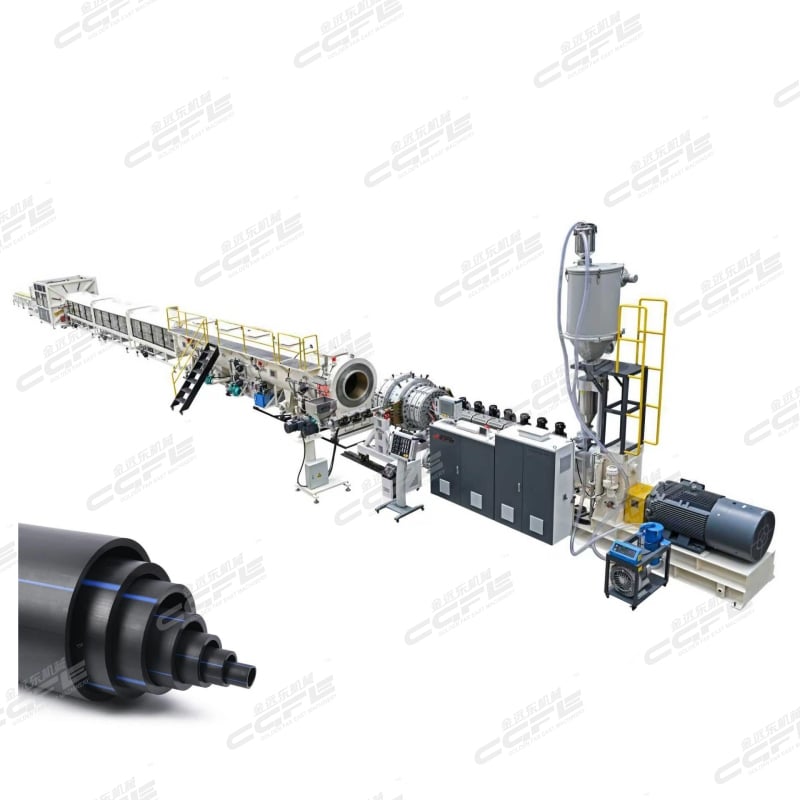
Understanding how a pe pipe production line works in 2026 is essential for manufacturers, procurement engineers, and plant managers who need to make informed decisions about equipment investment, process optimization, and output quality. The technology behind pe pipe production has evolved significantly over the past decade, and today's systems integrate precision engineering, digital controls, and energy-efficient mechanisms that were not available in earlier generations of extrusion equipment. Whether you are setting up a new facility or upgrading an existing one, knowing the full workflow from raw material input to finished pipe output gives you a critical operational advantage.
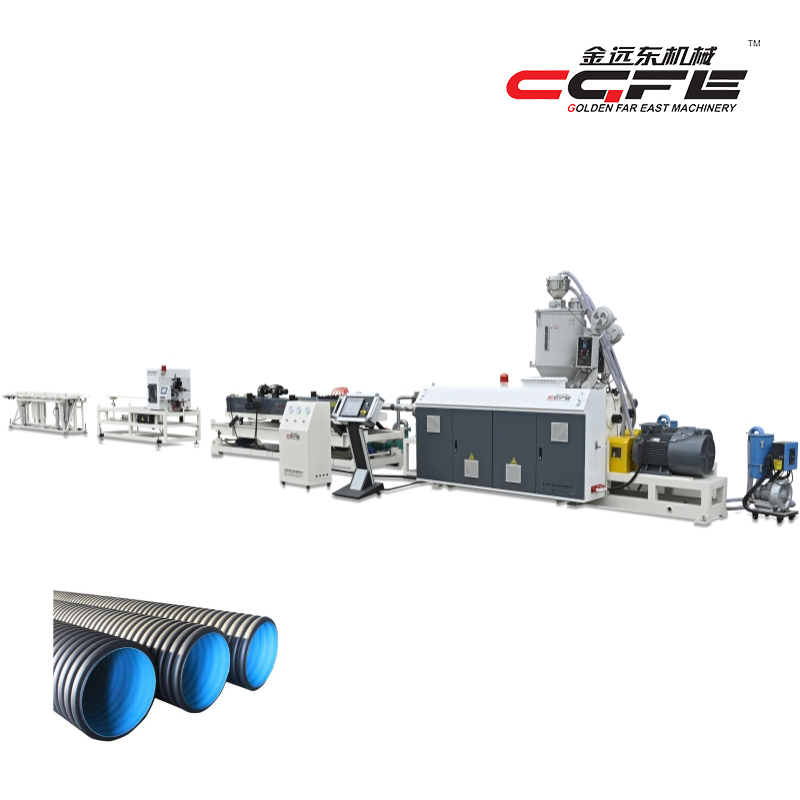
A modern pe pipe production line is a carefully sequenced system of machines and process stages, each performing a specific function that contributes to the dimensional accuracy, mechanical strength, and surface quality of the final product. In 2026, these lines are increasingly governed by PLC-based automation and real-time monitoring systems that reduce human error and improve consistency across long production runs. This article walks through the complete working mechanism of a pe pipe production line, explaining each stage in detail so you can understand exactly what happens between the raw polyethylene pellet and the finished pipe ready for installation.
The Raw Material Preparation Stage
Selecting and Feeding Polyethylene Resin
The process of a pe pipe production line begins before any heat or pressure is applied. Raw polyethylene resin, typically in pellet or granule form, must be selected according to the pipe's intended application. For pressure pipes used in water supply or gas distribution, high-density polyethylene grades such as PE100 or PE80 are standard choices. The material grade directly determines the pipe's pressure rating, flexibility, and long-term performance under stress.
Pellets are loaded into a hopper or silo system at the start of the pe pipe production line. In modern facilities, this feeding process is automated using vacuum conveying systems or gravimetric dosing units that measure material flow by weight rather than volume. This level of precision ensures that the extruder receives a consistent and uninterrupted supply of resin, which is critical for maintaining stable output dimensions throughout the production run.
Some pe pipe production line configurations also include a drying stage at this point, particularly when processing hygroscopic materials or when ambient humidity is high. Moisture in the resin can cause surface defects, voids, or degraded mechanical properties in the finished pipe, so pre-drying is a preventive measure that protects product quality from the very first step.
Additive Blending and Color Masterbatch Integration
Most pe pipe production line setups incorporate a blending or dosing unit that introduces additives and color masterbatch into the resin stream before it enters the extruder. Common additives include UV stabilizers, antioxidants, and carbon black compounds, the last of which is standard for pipes intended for outdoor or underground use where UV resistance is required.
Gravimetric blenders on a pe pipe production line allow operators to set precise ratios between base resin and masterbatch, ensuring that the final pipe meets color consistency and additive concentration requirements across every meter of output. This stage is often overlooked in discussions of pipe manufacturing, but it has a direct impact on the pipe's service life and compliance with international standards such as ISO 4427 or ASTM D3350.
The Extrusion Process at the Heart of the Line
Single-Screw Extruder Operation
The extruder is the central machine in any pe pipe production line, and in 2026, single-screw extruders remain the dominant configuration for polyethylene pipe manufacturing. The extruder consists of a heated barrel and a rotating screw that simultaneously conveys, melts, and pressurizes the resin. As the pellets move along the screw's helical flights, they transition through three functional zones: the feed zone, the compression zone, and the metering zone.
In the feed zone of the pe pipe production line extruder, solid pellets are picked up from the hopper and begin moving forward. The compression zone applies increasing mechanical shear and heat, causing the pellets to melt and homogenize into a viscous polymer melt. By the time the melt reaches the metering zone, it has a uniform temperature and viscosity, ready to be pushed through the die at a controlled and consistent rate.
Barrel temperatures on a pe pipe production line extruder are carefully profiled, typically ranging from around 160°C at the feed throat to 200–220°C near the die, depending on the resin grade and pipe diameter. These temperature zones are independently controlled by PID controllers, and in 2026, many systems use adaptive algorithms that automatically adjust heating and cooling to compensate for variations in ambient conditions or resin lot properties.
Die Head Design and Melt Distribution
After the melt exits the extruder barrel, it enters the die head, which is one of the most precision-engineered components in the entire pe pipe production line. The die head shapes the molten polyethylene into a hollow cylindrical form by directing the melt through an annular gap between an outer die ring and an inner mandrel. The geometry of this gap determines the pipe's wall thickness and outer diameter.
Modern die heads used in a pe pipe production line employ spiral distributor or spider leg designs to ensure even melt distribution around the full circumference of the annular gap. Uneven distribution would result in wall thickness variation, which is a critical quality defect that can cause premature pipe failure under pressure. In 2026, die heads for larger diameter pipes, such as those in the 110–400mm range, are engineered with particularly long flow channels to allow the melt to fully homogenize before exiting.
The die gap on a pe pipe production line can often be adjusted mechanically using centering bolts around the die head circumference. This allows operators to fine-tune wall thickness uniformity during production without stopping the line, which is a significant advantage for maintaining tight dimensional tolerances on long production runs.
Cooling, Sizing, and Dimensional Control
Vacuum Sizing and Water Cooling Tanks
Immediately after the molten pipe exits the die head of the pe pipe production line, it enters the sizing and cooling section. This is where the pipe's final outer diameter is fixed and the material is solidified. The first unit in this section is typically a vacuum sizing tank, where the hot pipe passes through a sizing sleeve submerged in water under negative pressure. The vacuum draws the soft pipe wall outward against the sizing sleeve, locking in the precise outer diameter.
Following the vacuum sizing tank, the pe pipe production line includes one or more spray cooling tanks where the pipe is progressively cooled to near ambient temperature. Cooling must be controlled carefully because too rapid a temperature drop can introduce residual stresses into the pipe wall, while insufficient cooling before the haul-off unit can cause dimensional distortion. In 2026, cooling tank lengths and water temperatures are calculated based on pipe wall thickness and line speed to ensure optimal thermal management.
For larger diameter pipes produced on a pe pipe production line, the cooling section may extend over several meters, and some configurations use immersion cooling rather than spray cooling to achieve more uniform heat extraction across the full pipe cross-section. The choice between spray and immersion cooling depends on the pipe diameter, wall thickness, and the required production speed.
Haul-Off Units and Line Speed Control
The haul-off unit, also called the caterpillar puller, is responsible for drawing the pipe through the entire pe pipe production line at a controlled and consistent speed. It consists of two or more sets of rubber-padded tracks that grip the pipe gently but firmly, pulling it forward without deforming the still-cooling pipe wall. The haul-off speed is synchronized with the extruder output rate to maintain the correct draw-down ratio, which directly affects wall thickness.
In a well-calibrated pe pipe production line, the relationship between extruder screw speed and haul-off speed is continuously monitored and adjusted by the central control system. If the haul-off speed increases relative to the extrusion rate, the pipe wall becomes thinner. If it decreases, the wall thickens. Maintaining this balance is critical for producing pipes that meet dimensional standards such as SDR (Standard Dimension Ratio) specifications.
Marking, Cutting, and Coiling or Stacking
Inline Printing and Pipe Marking
Before the pipe is cut or coiled, a pe pipe production line typically includes an inline marking or printing station. This unit applies identification information directly onto the pipe surface using inkjet or hot-stamp printing technology. Standard markings include the pipe's outer diameter, wall thickness, material grade, pressure rating, production date, and applicable standards compliance codes.
Accurate and legible marking is not just a quality assurance measure on a pe pipe production line — it is often a regulatory requirement for pipes used in water supply, gas distribution, or industrial fluid handling applications. In 2026, many marking systems are integrated with the line's central control software, automatically pulling production parameters and printing them in real time without manual data entry.
Cutting and Downstream Handling
At the end of the pe pipe production line, a planetary saw cutter or a rotary cutter cuts the pipe to the specified length. These cutters are synchronized with the line speed so that cutting occurs without stopping or slowing the production process. The cut length is set by the operator and controlled automatically, with sensors detecting the pipe position and triggering the cutter at the correct moment.
For smaller diameter pipes produced on a pe pipe production line, a coiler unit may be used instead of a cutter, winding the pipe into large coils for easier transport and installation. Coiling is common for pipes up to around 63mm in diameter. Larger pipes are cut to fixed lengths, typically 6 or 12 meters, and stacked on racks or pallets for storage and shipment. The downstream handling configuration is chosen based on the pipe diameter, customer requirements, and logistics considerations.
Automation and Quality Monitoring in 2026
PLC Control Systems and Real-Time Data
One of the most significant developments in the pe pipe production line in 2026 is the depth of automation and data integration available to operators. Modern lines are controlled by programmable logic controllers (PLCs) with touchscreen HMI panels that give operators a complete view of every process parameter in real time. Temperature profiles, screw speed, haul-off speed, vacuum pressure, cooling water temperature, and wall thickness measurements are all displayed and logged continuously.
Advanced pe pipe production line systems in 2026 also support remote monitoring and diagnostics, allowing equipment engineers or service technicians to access machine data over a secure network connection. This capability reduces downtime by enabling faster fault diagnosis and predictive maintenance scheduling based on actual operating data rather than fixed time intervals.
Inline Measurement and Closed-Loop Correction
Inline measurement systems are now standard on high-performance pe pipe production line configurations. Laser diameter gauges and ultrasonic wall thickness sensors measure the pipe continuously as it moves through the line, providing real-time feedback to the control system. If the measured dimensions drift outside the specified tolerance band, the control system automatically adjusts the relevant process parameters to bring the output back into specification.
This closed-loop control capability is a major quality advantage for a pe pipe production line operating in 2026. It eliminates the lag time between a dimensional deviation occurring and an operator detecting and correcting it, which in older systems could result in meters of out-of-specification pipe being produced before the problem was identified. Closed-loop correction keeps the process tightly controlled and reduces material waste significantly.
FAQ
What materials are used in a pe pipe production line?
A pe pipe production line primarily processes polyethylene resins, most commonly high-density polyethylene grades such as PE80 and PE100. These materials are supplied as pellets or granules and may be blended with color masterbatch, UV stabilizers, antioxidants, or carbon black compounds depending on the pipe's intended application and the standards it must meet.
How long does it take to set up a pe pipe production line for a new pipe size?
Changeover time on a pe pipe production line depends on the extent of the size change. Switching between pipes of similar diameter may only require adjusting haul-off speed and cutting length, which can be done in under an hour. Changing to a significantly different diameter typically requires swapping the die head, sizing sleeve, and possibly the haul-off tracks, which can take several hours including warm-up and stabilization time.
What quality standards does a pe pipe production line need to meet?
Pipes produced on a pe pipe production line are typically required to comply with standards such as ISO 4427 for water supply pipes, ISO 4437 for gas supply pipes, or ASTM D3350 for polyethylene plastic pipe materials. The specific standards applicable depend on the pipe's end use and the market where it will be sold. The production line itself must be capable of maintaining the dimensional tolerances and material properties specified in these standards.
Can a pe pipe production line produce different wall thicknesses without changing the die?
Yes, within a certain range, a pe pipe production line can produce different wall thicknesses using the same die by adjusting the draw-down ratio, which is the relationship between the die gap and the final pipe wall thickness. This is achieved by changing the haul-off speed relative to the extrusion rate. However, for large changes in wall thickness or for pipes with very tight dimensional tolerances, a dedicated die with the appropriate gap geometry is preferred to ensure consistent quality.