
 EN
EN

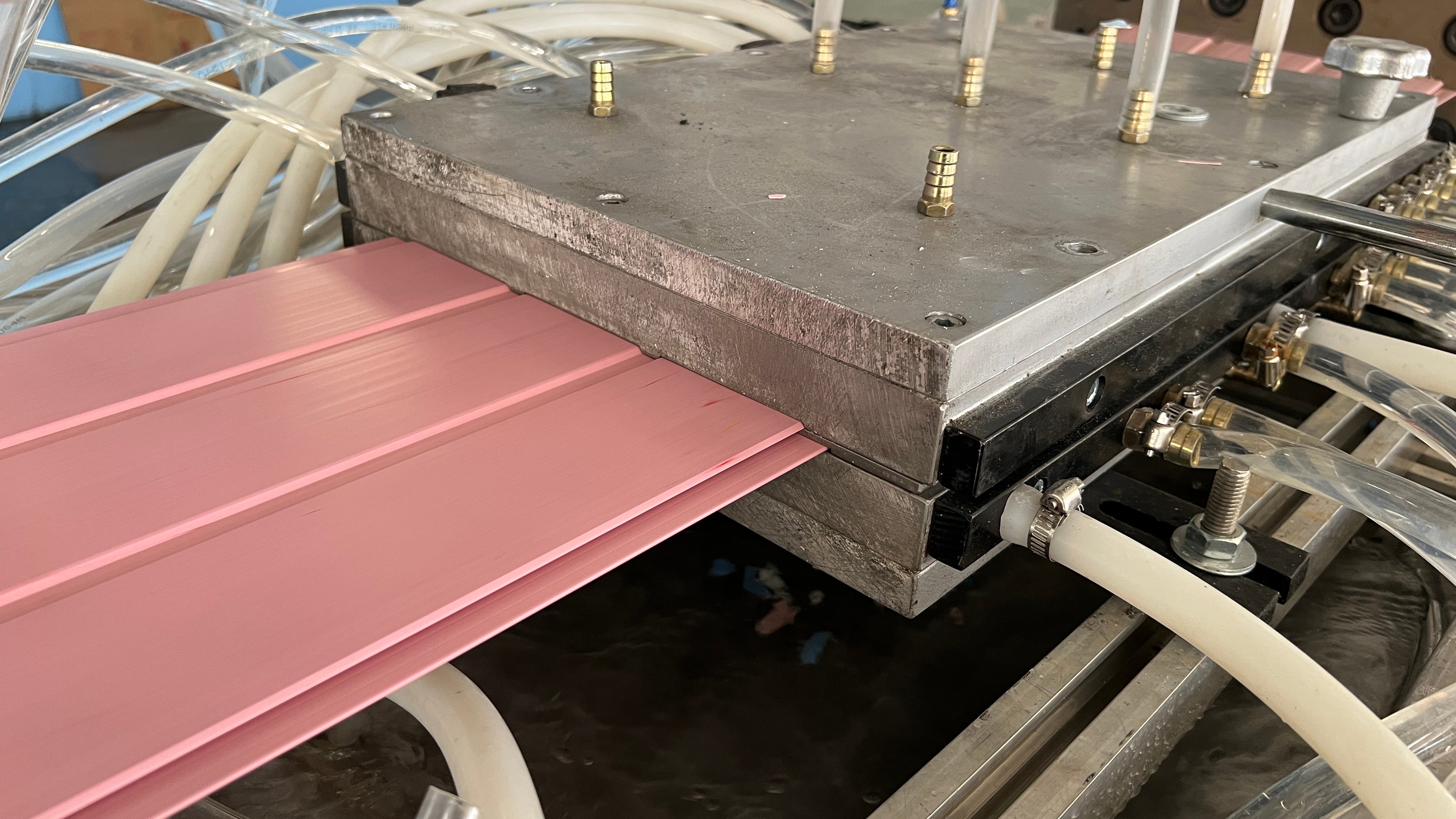
Knowing when to upgrade your pvc ceiling panel production line is one of the most consequential decisions a manufacturer can face. Upgrade too early and you absorb unnecessary capital costs. Wait too long and you risk falling behind on output quality, efficiency, and market competitiveness. The challenge is that the right timing is rarely obvious — it emerges from a combination of operational signals, market shifts, and strategic business goals that must be read together.
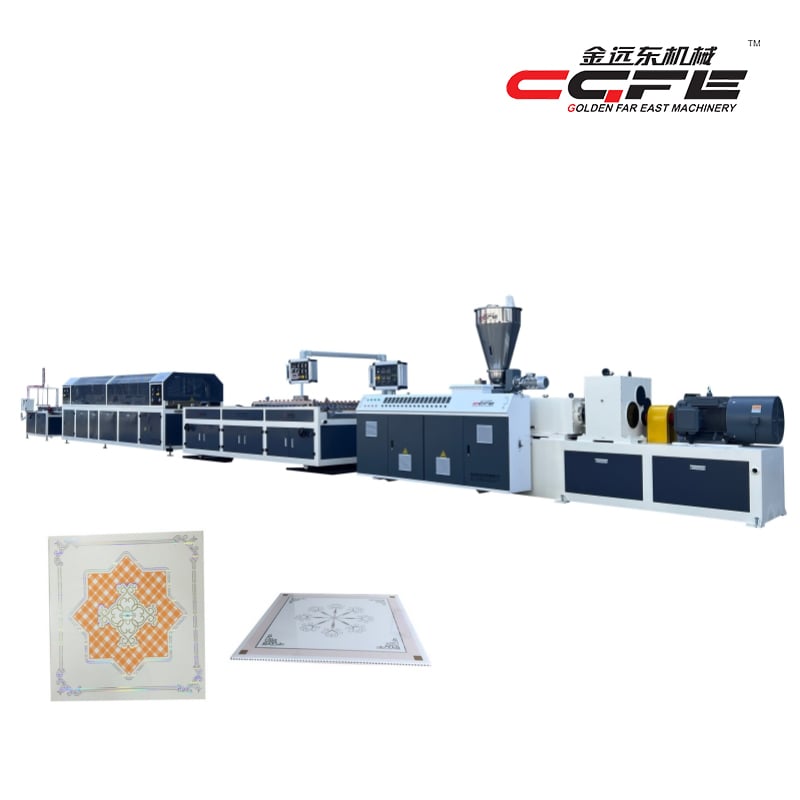
This article is designed to help production managers, plant owners, and operations directors identify the specific conditions that signal it is time to invest in a new or upgraded pvc ceiling panel production line. Rather than offering generic advice, we focus on the real-world triggers — from equipment fatigue and rising defect rates to evolving product specifications and capacity bottlenecks — that make the upgrade decision not just justified, but necessary for long-term growth.
Recognizing the Operational Warning Signs
Increasing Downtime and Maintenance Frequency
One of the clearest indicators that your pvc ceiling panel production line needs an upgrade is a steady rise in unplanned downtime. When maintenance calls become more frequent and repair intervals grow shorter, the cumulative cost of keeping aging equipment running often exceeds the investment required for a modern replacement. Each hour of unplanned stoppage translates directly into lost output, delayed orders, and strained customer relationships.
Older extrusion systems, worn calibration units, and degraded haul-off mechanisms all contribute to instability in the production process. If your maintenance team is spending more time firefighting than performing scheduled preventive work, that imbalance is a strong signal. A well-functioning pvc ceiling panel production line should operate with predictable, manageable maintenance cycles — not reactive crisis management.
Track your mean time between failures over a rolling six-month period. If that figure is declining consistently, the equipment is telling you something important. Continuing to patch aging systems may feel cost-effective in the short term, but the hidden costs in labor, spare parts, and production losses accumulate rapidly.
Rising Defect Rates and Quality Inconsistency
Quality consistency is the foundation of any competitive pvc ceiling panel production line. When defect rates begin to climb — whether in surface finish, dimensional accuracy, color uniformity, or panel flatness — it is often a symptom of mechanical wear that cannot be fully corrected through recalibration alone. Worn screws, degraded dies, and imprecise temperature control systems all introduce variability that shows up as product rejects.
In markets where buyers are increasingly demanding tighter tolerances and more consistent aesthetics, a production line that cannot reliably deliver within specification becomes a liability. Customers who receive inconsistent panels will seek alternative suppliers, and the reputational damage from quality failures is difficult to recover from. Upgrading your pvc ceiling panel production line to equipment with tighter process controls and modern monitoring systems directly addresses this risk.
Modern lines incorporate real-time thickness gauging, automated temperature profiling, and closed-loop control systems that actively correct deviations before they become defects. If your current setup relies heavily on manual inspection and operator judgment to catch quality issues, you are already operating at a disadvantage compared to facilities running newer equipment.
Capacity Constraints and Market Demand Shifts
When Output Can No Longer Meet Order Volume
A pvc ceiling panel production line that was sized correctly for your business three or five years ago may no longer match your current order book. If your sales team is regularly turning down orders, extending lead times, or managing customer expectations around supply constraints, the production line has become a ceiling on your business growth rather than an enabler of it.
Capacity upgrades are not always about replacing an entire line. In some cases, adding a second extrusion unit, upgrading the haul-off speed, or integrating a faster cutting and stacking system can meaningfully increase throughput without a full line replacement. However, when the core extrusion system itself is the bottleneck — limited by screw diameter, motor power, or die design — a more comprehensive upgrade becomes necessary.
Evaluate your current utilization rate honestly. If your pvc ceiling panel production line is running at or above 85 to 90 percent of rated capacity on a sustained basis, you have very little buffer for demand spikes, scheduled maintenance, or unexpected downtime. That level of utilization is a strong signal that capacity expansion should be planned proactively rather than reactively.
Shifting Product Specifications and Panel Formats
The pvc ceiling panel market does not stand still. Panel widths, surface textures, foam densities, and decorative finishes evolve in response to architectural trends, building codes, and end-user preferences. If your current pvc ceiling panel production line was configured for a specific panel format that is losing market share, the inability to adapt your output becomes a strategic problem.
Modern production lines offer greater flexibility in die changeover, profile adjustment, and surface treatment integration. If your competitors are offering wider panels, more complex embossed textures, or co-extruded surface layers that your current equipment cannot produce, you are competing with a narrower product range. Upgrading your pvc ceiling panel production line to a more flexible platform allows you to respond to market demand rather than being constrained by equipment limitations.
Consider also the growing demand for panels with enhanced fire resistance, antibacterial surfaces, or improved thermal insulation properties. These performance characteristics often require formulation changes and processing adjustments that older equipment cannot accommodate reliably. A modern line gives you the process control needed to work with advanced compound formulations.
Energy Efficiency and Operating Cost Pressures
The Hidden Cost of Inefficient Energy Consumption
Energy is one of the largest variable costs in operating a pvc ceiling panel production line, and older equipment is almost always less energy-efficient than modern alternatives. Aging barrel heaters, inefficient drive motors, and poorly insulated processing zones all contribute to energy waste that shows up directly in your operating cost per unit. As energy prices rise globally, this inefficiency becomes increasingly difficult to absorb.
Modern pvc ceiling panel production lines incorporate servo-driven haul-off systems, variable frequency drives on extruder motors, and optimized heating zone designs that significantly reduce energy consumption per kilogram of output. The payback period on energy savings alone can be surprisingly short when calculated against the full annual energy bill of a high-utilization production facility.
Conduct an energy audit of your current line before making an upgrade decision. Compare your current kilowatt-hours per kilogram of output against the specifications of modern equipment. If the gap is significant — and it often is for lines more than seven to ten years old — energy savings should be factored into the financial case for upgrading your pvc ceiling panel production line.
Labor Costs and Automation Gaps
Older pvc ceiling panel production lines typically require more manual intervention at multiple stages — from material feeding and parameter adjustment to quality inspection and panel handling. As labor costs rise and skilled operators become harder to retain, the labor intensity of an older line becomes a growing competitive disadvantage.
Newer production lines integrate automated material dosing, touchscreen HMI control systems, inline quality monitoring, and automated stacking and packaging. These features reduce the headcount required per shift, improve consistency by removing human variability from critical process steps, and make it easier to train new operators. If your current pvc ceiling panel production line demands a high level of operator skill and attention to maintain acceptable output quality, automation upgrades can deliver both cost savings and quality improvements simultaneously.
Strategic Business Triggers for Upgrading
Entering New Markets or Customer Segments
Sometimes the trigger for upgrading a pvc ceiling panel production line is not internal equipment failure but external business opportunity. Winning a major new customer, entering a new geographic market, or qualifying for a supply contract with stricter technical requirements can all create a compelling case for investment in upgraded production capability.
If a new customer requires panels that meet specific international standards — such as fire classification, dimensional tolerances, or surface quality grades — and your current line cannot reliably produce to those standards, the upgrade becomes a prerequisite for the business relationship. In this context, the cost of the upgrade should be evaluated against the revenue potential of the new opportunity, not just against the current cost base.
Similarly, if your business strategy involves moving upmarket toward higher-value decorative or technical panels, your pvc ceiling panel production line must be capable of supporting that positioning. A production line optimized for commodity output will struggle to deliver the consistency and finish quality that premium market segments demand.
Technology Obsolescence and Spare Parts Availability
Equipment that is no longer supported by its original manufacturer presents a specific and often underestimated risk. When spare parts become difficult to source, lead times for critical components extend, and the risk of a prolonged production stoppage increases substantially. A pvc ceiling panel production line that depends on obsolete components is operating with a fragile supply chain for its own maintenance needs.
Technology obsolescence also affects your ability to integrate with modern plant management systems, quality tracking software, and Industry 4.0 monitoring platforms. If your current line cannot communicate with digital production management tools, you are missing opportunities to optimize scheduling, reduce waste, and improve traceability — capabilities that are increasingly expected by sophisticated buyers and quality auditors.
When your equipment supplier can no longer provide technical support, software updates, or guaranteed spare parts availability, that is a clear signal that the pvc ceiling panel production line has reached the end of its practical service life, regardless of whether it is still physically running.
FAQ
How do I know if my pvc ceiling panel production line needs a full replacement or just an upgrade?
The distinction depends on where the performance gaps are located. If the core extruder, screw, and barrel are in good condition but peripheral systems like the haul-off, cutter, or control panel are causing problems, targeted upgrades may be sufficient. However, if the extruder itself is the source of quality inconsistency, capacity limitation, or energy inefficiency, a full line replacement is usually the more cost-effective long-term solution. A thorough technical audit by an experienced equipment engineer is the best starting point for making this determination.
What is the typical service life of a pvc ceiling panel production line?
With proper maintenance, a well-built pvc ceiling panel production line can operate effectively for ten to fifteen years. However, service life varies significantly based on operating intensity, material abrasiveness, maintenance quality, and the pace of technological change in the market. Lines running at high utilization with abrasive compounds may show significant wear within seven to eight years, while lightly used lines in controlled environments may remain competitive for longer. Age alone is not the deciding factor — performance against current market requirements is the more relevant measure.
How long does it take to commission a new pvc ceiling panel production line?
Commissioning timelines depend on the complexity of the line, the readiness of the installation site, and the experience of the installation team. A standard pvc ceiling panel production line typically requires two to four weeks for mechanical installation and electrical connection, followed by one to two weeks of trial runs, parameter optimization, and operator training. Planning for a total transition period of four to eight weeks from delivery to stable full-production output is a reasonable baseline for most facilities.
Can upgrading a pvc ceiling panel production line improve product quality without changing the formulation?
Yes, in many cases equipment upgrades deliver meaningful quality improvements even when the compound formulation remains unchanged. Tighter temperature control, more consistent screw speed, improved die design, and better calibration systems all reduce process variability that causes surface defects, dimensional inconsistency, and color deviation. Modern pvc ceiling panel production lines with closed-loop control systems actively compensate for process drift in real time, which older equipment cannot do. The result is a more consistent product from the same raw material inputs.
Table of Contents
- Recognizing the Operational Warning Signs
- Capacity Constraints and Market Demand Shifts
- Energy Efficiency and Operating Cost Pressures
- Strategic Business Triggers for Upgrading
-
FAQ
- How do I know if my pvc ceiling panel production line needs a full replacement or just an upgrade?
- What is the typical service life of a pvc ceiling panel production line?
- How long does it take to commission a new pvc ceiling panel production line?
- Can upgrading a pvc ceiling panel production line improve product quality without changing the formulation?