
 EN
EN

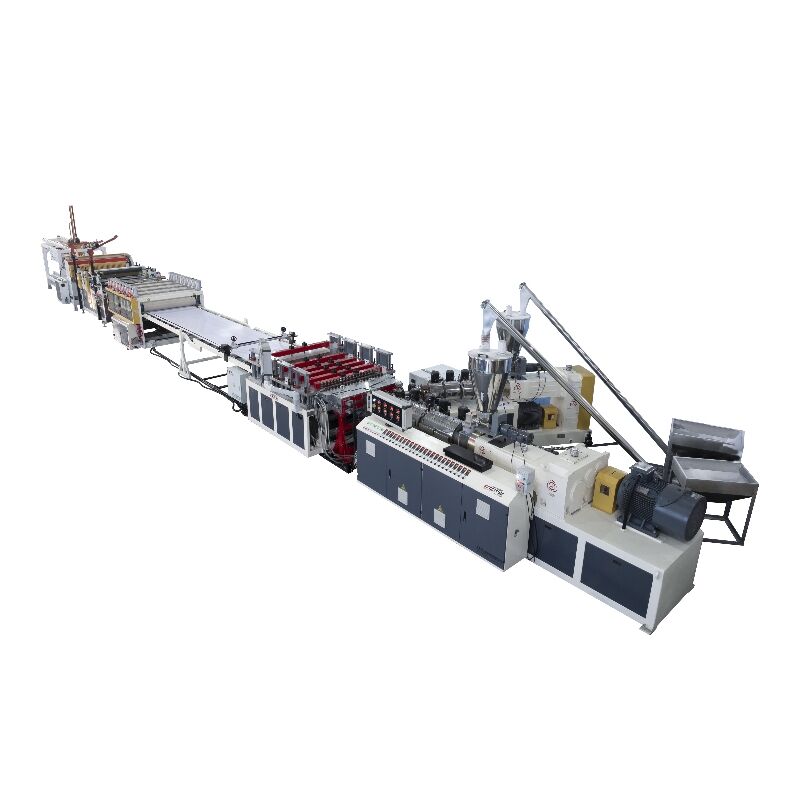
Understanding how a PVC foam board production line operates is essential for manufacturers seeking to produce high-quality, lightweight plastic boards used across construction, advertising, furniture, and decorative industries. This specialized industrial system transforms polyvinyl chloride resin and foaming agents into rigid, cellular-structured boards through a precisely controlled extrusion and expansion process. The pvc foam board production line integrates multiple processing stages including raw material feeding, mixing, plasticizing, foaming, shaping, cooling, and cutting to deliver consistent board thickness, density, and surface quality. Each component within the production line plays a critical role in determining the final product's mechanical properties, dimensional accuracy, and commercial viability.
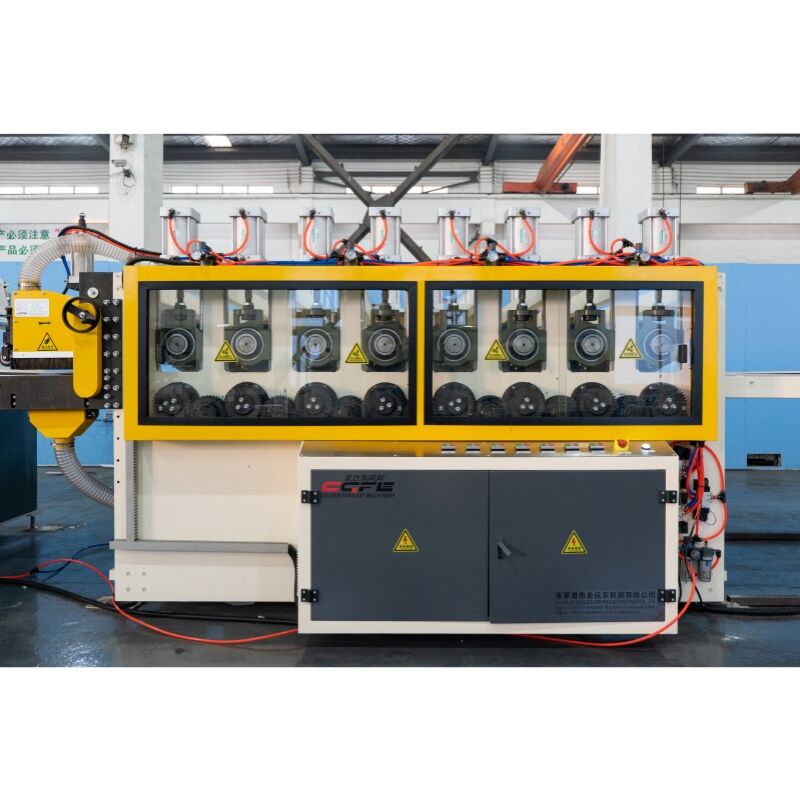
The operational workflow of a pvc foam board production line requires precise coordination between heating systems, screw extruders, calibration equipment, and downstream handling machinery. Modern production lines employ advanced temperature control algorithms, pressure monitoring systems, and automated adjustment mechanisms to maintain optimal foaming conditions throughout the extrusion cycle. For businesses evaluating equipment investment or operational optimization, comprehending the detailed working mechanism of each production stage enables better equipment selection, process troubleshooting, and quality control implementation. This comprehensive examination explores the sequential operation of every major component within the production line, explaining how raw materials transform into finished foam boards ready for commercial distribution.
Raw Material Preparation and Feeding System
PVC Resin and Additive Formulation
The pvc foam board production line begins with precise formulation of raw materials that determine the final board characteristics. PVC resin serves as the primary polymer matrix, typically using suspension-grade or emulsion-grade polyvinyl chloride with specific K-values ranging from sixty-five to seventy to ensure appropriate melt viscosity during extrusion. Chemical foaming agents such as azodicarbonamide or bicarbonate compounds decompose at controlled temperatures to generate gas bubbles within the polymer melt. Stabilizers including calcium-zinc or organotin compounds prevent thermal degradation during high-temperature processing, while processing aids like acrylic copolymers improve melt flow and reduce die buildup. Lubricants comprising stearic acid, paraffin wax, or polyethylene wax manage internal and external friction during extrusion, and impact modifiers such as chlorinated polyethylene or acrylic impact modifiers enhance the board's toughness.
Pigments and fillers complete the formulation, with titanium dioxide providing whiteness and opacity, calcium carbonate reducing material costs while improving stiffness, and color pigments enabling customized board appearance. The precise ratio of these components directly influences foam density, cell structure uniformity, surface smoothness, and dimensional stability. Typical formulations contain forty to sixty percent PVC resin, ten to thirty percent calcium carbonate filler, five to fifteen percent processing aids and stabilizers, and one to three percent foaming agent by weight. Each ingredient must meet specific particle size, purity, and moisture content specifications to ensure consistent foaming behavior and prevent processing defects.
High-Speed Mixing and Homogenization
After formulation, raw materials enter high-speed heating mixers where mechanical shear energy and frictional heat raise the mixture temperature to eighty-five to one hundred twenty degrees Celsius within three to eight minutes. This heating mixer operation serves multiple critical functions including uniform distribution of all additives throughout the PVC resin particles, partial melting of external lubricants onto resin surfaces, and moisture removal from hygroscopic components. The high-speed mixer typically operates at eight hundred to twelve hundred revolutions per minute, generating sufficient shear force to break up agglomerates and create a homogeneous powder blend. Temperature sensors and automated discharge systems ensure the mixture reaches target temperature without overheating, which could prematurely activate foaming agents or degrade heat-sensitive stabilizers.
Following high-speed mixing, the heated compound transfers to a cooling mixer operating at two hundred to four hundred revolutions per minute, rapidly reducing the mixture temperature to forty to fifty degrees Celsius to prevent moisture absorption and premature chemical reactions. This cooling stage stabilizes the compound for storage and feeding while maintaining the uniform distribution achieved during high-speed mixing. The cooled compound exhibits free-flowing powder characteristics with bulk density typically between zero-point-five and zero-point-seven grams per cubic centimeter, enabling consistent gravimetric or volumetric feeding into the extrusion system. Some advanced pvc foam board production line configurations incorporate vacuum dehumidification during cooling to achieve moisture content below zero-point-two percent, critical for producing foam boards with minimal surface defects and consistent cell structure.
Extrusion and Plasticizing Process
Conical Twin-Screw Extruder Operation
The heart of any pvc foam board production line is the conical twin-screw extruder, which transforms powder compound into a homogeneous, pressurized polymer melt ready for foaming. Unlike parallel twin-screw extruders, conical designs feature intermeshing screws with gradually increasing diameter from feed end to discharge end, creating a natural compression ratio that efficiently conveys, compacts, melts, and homogenizes the PVC compound. The screws rotate in opposite directions within a conical barrel divided into multiple heating zones, each independently controlled to establish an optimal temperature profile. Feed zone temperatures typically range from one hundred forty to one hundred sixty degrees Celsius, compression zones from one hundred sixty to one hundred seventy-five degrees Celsius, and metering zones from one hundred seventy to one hundred eighty-five degrees Celsius.
As compound enters the extruder throat, the rotating screws convey material forward while the narrowing flight depth progressively compacts the powder, eliminating air pockets and creating frictional heat. This mechanical energy combines with external barrel heating to raise material temperature above the PVC gelation threshold, causing polymer chains to entangle and form a viscous melt. The screw geometry incorporates mixing sections with kneading blocks or mixing elements that generate distributive and dispersive mixing, ensuring uniform temperature distribution and complete incorporation of all additives. Pressure builds continuously as material advances toward the die, typically reaching fifteen to thirty megapascals at the extruder discharge. This high pressure keeps dissolved gases in solution and prevents premature foaming until the melt exits the die into lower-pressure calibration equipment.
Temperature Profile and Rheological Control
Precise temperature control throughout the extruder barrel is fundamental to producing quality foam boards with consistent cell structure and mechanical properties. Each heating zone employs electric resistance heaters or cast aluminum heaters with embedded thermocouples providing closed-loop temperature feedback to PID controllers. The temperature profile must balance several competing requirements including complete PVC gelation and homogenization, maintaining foaming agent stability until controlled decomposition, preventing thermal degradation of heat-sensitive stabilizers, and achieving appropriate melt viscosity for die forming. Excessive temperatures cause premature foaming agent decomposition within the extruder, resulting in irregular cell structure and dimensional instability, while insufficient temperatures produce poorly gelled material with inadequate melt strength to maintain foam structure.
Screw speed adjustment provides additional rheological control, with typical operating ranges from eight to twenty revolutions per minute depending on production capacity and board thickness requirements. Higher screw speeds increase throughput and shear heating but may reduce residence time below the threshold needed for complete gelation and homogenization. Lower screw speeds extend residence time and reduce shear stress but may cause material degradation in high-temperature zones. Advanced pvc foam board production line systems incorporate melt pressure sensors and torque monitoring to detect viscosity changes indicating formulation variations or processing anomalies. The extruder discharge zone maintains slightly elevated pressure compared to the die pressure drop, ensuring continuous material flow without pulsation or surging that would create surface defects or thickness variation in the finished boards.
Die Forming and Foaming Control
Sheet Die Design and Flow Distribution
The extrusion die transforms cylindrical melt flow from the extruder into a thin, wide sheet profile while initiating the controlled foaming process. PVC foam board dies typically employ coat-hanger or T-shaped internal manifold designs that distribute melt flow uniformly across the die width, which may range from six hundred millimeters to over two thousand millimeters depending on production line capacity. The manifold geometry features carefully calculated flow channel dimensions that balance resistance across the entire width, compensating for the greater flow path length to the die edges compared to the center. Die lip openings typically range from one-point-five to three millimeters, significantly smaller than the final board thickness, because foam expansion occurs immediately upon exiting the high-pressure die environment.
Die construction materials must withstand corrosive PVC compounds at elevated temperatures while maintaining dimensional stability and surface finish. Tool steel alloys with hardened and polished surfaces minimize flow resistance and prevent material degradation or buildup. Adjustable die bolts or flex-lip mechanisms enable fine-tuning of the die opening profile to compensate for uneven flow distribution or thermal expansion effects. Die temperature control is critical, typically maintained ten to twenty degrees Celsius higher than the final extruder zone to prevent premature cooling and viscosity increase that would restrict flow. Electric cartridge heaters embedded throughout the die body provide independent temperature zones, while insulation jackets minimize heat loss to the surrounding environment and reduce energy consumption.
Nucleation and Cell Formation Mechanism
As pressurized melt exits the die into atmospheric pressure, dissolved gases from decomposing foaming agents rapidly nucleate and expand, creating the cellular structure characteristic of PVC foam boards. The pressure drop from twenty to thirty megapascals within the extruder to atmospheric pressure triggers supersaturation of dissolved gases, causing thermodynamic instability that initiates bubble nucleation. Nucleation sites form preferentially at surfaces of dispersed particles including calcium carbonate fillers, pigments, and incompletely melted PVC resin domains. Higher nucleation site density produces finer, more uniform cell structures with improved mechanical properties and surface quality. The nucleation rate depends critically on pressure drop magnitude, melt temperature, foaming agent concentration, and melt viscosity at the moment of die exit.
Cell growth following nucleation continues as gas diffuses from supersaturated melt into expanding bubbles until the polymer matrix cools and solidifies, freezing the cellular structure. Optimal foam quality requires balancing rapid nucleation to create numerous small cells against sufficient melt strength to prevent cell coalescence and collapse. PVC melt viscosity increases rapidly as temperature decreases, naturally limiting cell growth and stabilizing structure as the sheet moves through downstream calibration equipment. The typical cell size in quality PVC foam boards ranges from zero-point-one to zero-point-five millimeters diameter, with closed-cell structure exceeding ninety percent. Foam density depends on foaming agent concentration and expansion ratio, typically ranging from zero-point-four to zero-point-eight grams per cubic centimeter compared to one-point-four grams per cubic centimeter for solid PVC, representing material savings of forty to seventy percent while maintaining adequate stiffness and strength for most applications.
Calibration, Cooling, and Dimensional Control
Vacuum Calibration Table Operation
Immediately following die exit and initial foam expansion, the expanding sheet enters a vacuum calibration table that controls final board thickness, width, and surface flatness. The calibration table consists of a series of polished stainless steel or chrome-plated steel plates with precise dimensional openings corresponding to target board dimensions. Vacuum chambers beneath these plates apply negative pressure ranging from negative twenty to negative sixty kilopascals, drawing the expanding foam sheet against the calibration surfaces and preventing uncontrolled expansion or warping. The first calibration section typically features slightly oversized openings to accommodate initial expansion dynamics, while subsequent sections progressively constrain dimensions to final specifications. Water spray nozzles or circulation channels within the calibration plates provide initial cooling, rapidly reducing surface temperature to solidify the outer skin and lock in dimensional accuracy.
The calibration table length typically ranges from three to six meters depending on production speed and board thickness, with longer tables required for thicker boards that retain heat longer. Table surface temperature control is critical, typically maintained at forty to sixty degrees Celsius to balance rapid solidification against avoiding excessive thermal shock that could cause surface cracking or internal stress. The vacuum system must generate sufficient airflow to remove steam and volatile compounds released during cooling while maintaining consistent negative pressure across all calibration zones. Advanced pvc foam board production line designs incorporate independent vacuum control for each calibration section, enabling fine-tuning of expansion control and surface quality optimization. The haul-off system pulling the board through calibration must provide consistent, adjustable tension synchronized with extruder throughput to prevent stretching, compression, or surface marking.
Multi-Stage Cooling and Heat Removal
Following vacuum calibration, boards pass through extended cooling sections that complete heat removal and structural stabilization before cutting and stacking. Water tank cooling systems immerse the board in temperature-controlled water baths, typically maintained at twenty to thirty degrees Celsius, providing efficient convective heat transfer from both surfaces simultaneously. The total cooling zone length may extend eight to fifteen meters for thick boards requiring prolonged heat extraction to prevent warping during subsequent handling. Some production lines employ spray cooling instead of immersion, using arrays of water nozzles to coat board surfaces with cooling water while allowing gravity drainage and air circulation. Spray cooling reduces water consumption and simplifies drainage compared to immersion cooling but may provide less uniform temperature reduction across the board width.
Air knife drying sections following water cooling remove surface moisture using high-velocity air jets, preventing water spotting and preparing boards for immediate printing, laminating, or packaging operations. The cooling rate must be controlled to avoid excessive internal stress from differential thermal contraction between board surfaces and core, which could cause delayed warping hours or days after production. Infrared temperature sensors monitor board surface temperature at cooling zone exit, typically targeting forty to fifty degrees Celsius as safe for subsequent mechanical handling without deformation. Some high-speed pvc foam board production line configurations incorporate intermediate thickness measurement using laser or ultrasonic sensors, providing real-time feedback for automatic adjustment of die gap, calibration vacuum, or haul-off speed to maintain tight dimensional tolerances throughout production runs.
Cutting, Edge Trimming, and Quality Inspection
Automated Cutting Systems
After complete cooling and dimensional stabilization, continuous foam board sheets pass through automated cutting systems that separate finished boards into specified lengths while trimming edges to final width dimensions. Modern pvc foam board production line equipment employs flying saw cutters that move synchronously with board travel during the cutting cycle, eliminating the need to stop material flow and enabling continuous production at speeds reaching six to twelve meters per minute. The flying saw carriage travels on linear guides parallel to board movement, accelerating to match board speed before carbide-tipped circular saw blades descend to make the perpendicular cut. After completing the cut, the carriage decelerates and returns to starting position while the saw blade retracts, ready for the next cutting cycle. Length measurement systems using encoder feedback or optical sensors trigger cutting sequences at precise intervals, maintaining length tolerance within plus-or-minus two millimeters over standard board lengths of two to three meters.
Edge trimming saws mounted on both sides of the production line simultaneously remove irregular edges created during die exit and calibration, establishing precise board width and straight, smooth edges suitable for direct use or subsequent edge machining. These trimming saws typically employ continuous rotation rather than flying motion, with adjustable lateral positioning to accommodate different board widths. Dust collection hoods surrounding all cutting stations capture particulate generated during sawing operations, maintaining clean working environment and preventing contamination of board surfaces. Blade maintenance is critical for edge quality, with regular sharpening or replacement required to prevent chipping, rough edges, or excessive cutting force that could crack brittle foam boards. Some premium production lines incorporate laser-guided cutting systems or CNC-controlled saws that can execute complex cutting patterns for specialized board shapes or nested cutting to maximize material utilization.
Surface Quality and Dimensional Verification
Comprehensive quality inspection occurs both inline during production and offline after board stacking to ensure conformance with specifications before shipment. Inline inspection systems may include optical cameras with image processing software that automatically detect surface defects including scratches, color variation, contamination spots, or cell structure irregularities. Contact thickness gauges or laser displacement sensors continuously measure board thickness at multiple points across the width, triggering alarms or automatic process adjustments when measurements drift outside tolerance bands. Density verification using weight measurement combined with dimensional calculation ensures foam expansion remains consistent throughout production runs, while destructive testing of periodic samples measures mechanical properties including flexural strength, impact resistance, and compressive strength.
Operators perform visual inspection during board stacking, checking surface gloss, color uniformity, edge straightness, and freedom from warping or dimensional distortion. Boards failing quality standards may be diverted to secondary markets, reground for partial substitution in future batches, or discarded depending on defect severity and company quality policies. Documentation systems record production parameters including material batch numbers, processing temperatures, line speeds, and quality test results, enabling traceability and facilitating process optimization. Statistical process control methodologies analyze quality data trends to identify gradual parameter drift before producing significant quantities of non-conforming product. The overall equipment effectiveness of a well-maintained pvc foam board production line typically exceeds eighty-five percent, with first-pass yield rates above ninety-five percent for established formulations and experienced operators, demonstrating the maturity and reliability of modern PVC foam board manufacturing technology.
FAQ
What is the typical production capacity of a pvc foam board production line?
Production capacity varies significantly based on board thickness, width, and line configuration, but standard industrial systems typically produce between one hundred fifty to four hundred kilograms per hour of finished boards. Lines producing thin boards of three to six millimeters achieve higher linear speeds of eight to twelve meters per minute, while thick boards of fifteen to twenty millimeters require slower speeds of three to six meters per minute to ensure adequate cooling and dimensional stability. A medium-capacity line producing twelve-millimeter thick boards at one-point-two-meter width and six meters per minute linear speed yields approximately three hundred kilograms per hour or twenty-four hundred kilograms per eight-hour shift, assuming ninety percent operational efficiency accounting for startup, formulation changes, and minor stoppages.
How does board density affect the production process and equipment settings?
Target board density directly influences foaming agent concentration, calibration vacuum levels, and cooling requirements throughout the pvc foam board production line operation. Lower density boards requiring greater expansion use higher foaming agent concentrations, need reduced calibration vacuum to allow controlled expansion, and demand longer cooling times due to the insulating properties of thicker foam structures. Higher density boards with less expansion require minimal foaming agent, stronger calibration vacuum to prevent over-expansion, and can progress through cooling zones more rapidly. Extruder temperature profiles also adjust based on density targets, with lower density formulations sometimes requiring slightly elevated temperatures to ensure complete foaming agent decomposition, while higher density materials may use reduced temperatures to limit expansion. Operators must recalibrate multiple process parameters when changing between different density specifications to maintain quality and prevent board defects.
What maintenance requirements are critical for reliable pvc foam board production line operation?
Regular maintenance focuses on extruder screw and barrel wear, die cleaning and alignment, calibration table surface condition, and cooling system efficiency. Extruder screws operating with abrasive calcium carbonate fillers gradually wear, increasing clearance between screw flights and barrel walls, reducing mixing efficiency and causing throughput decline, typically requiring inspection every six to twelve months and replacement or refurbishment when wear exceeds specifications. Die internal surfaces accumulate degraded polymer deposits and require periodic disassembly and cleaning using brass brushes and chemical solvents to maintain uniform flow distribution. Calibration table vacuum channels can become partially blocked with condensed volatiles or water deposits, reducing vacuum effectiveness and causing dimensional variation, necessitating monthly cleaning protocols. Cooling system water quality management prevents scale buildup in heat exchangers and spray nozzles, with filtration and periodic chemical treatment extending equipment life and maintaining heat transfer efficiency essential for consistent production quality.
Can a single pvc foam board production line manufacture boards with different surface finishes or colors?
Yes, a single production line can manufacture various colors and achieve different surface finishes through formulation changes and calibration table modifications, though transitions between specifications require downtime for equipment adjustment and material changeover. Color changes involve purging existing compound from mixing equipment and extruder using the new formulation, typically consuming thirty to sixty minutes and generating transition material that cannot meet either color specification. Surface finish variations from matte to glossy require calibration table modifications including surface texture changes or temperature adjustments affecting surface cooling rates and crystallinity. Some manufacturers install multiple die sets with different lip configurations or surface treatments, enabling relatively quick changeovers between standard smooth finish and textured patterns. Production planning typically schedules extended runs of single specifications to minimize changeover frequency and maximize productive efficiency, with some facilities dedicating specific lines to high-volume standard products while maintaining flexible lines for custom or small-batch orders requiring frequent specification changes.
Table of Contents
- Raw Material Preparation and Feeding System
- Extrusion and Plasticizing Process
- Die Forming and Foaming Control
- Calibration, Cooling, and Dimensional Control
- Cutting, Edge Trimming, and Quality Inspection
-
FAQ
- What is the typical production capacity of a pvc foam board production line?
- How does board density affect the production process and equipment settings?
- What maintenance requirements are critical for reliable pvc foam board production line operation?
- Can a single pvc foam board production line manufacture boards with different surface finishes or colors?