
 EN
EN

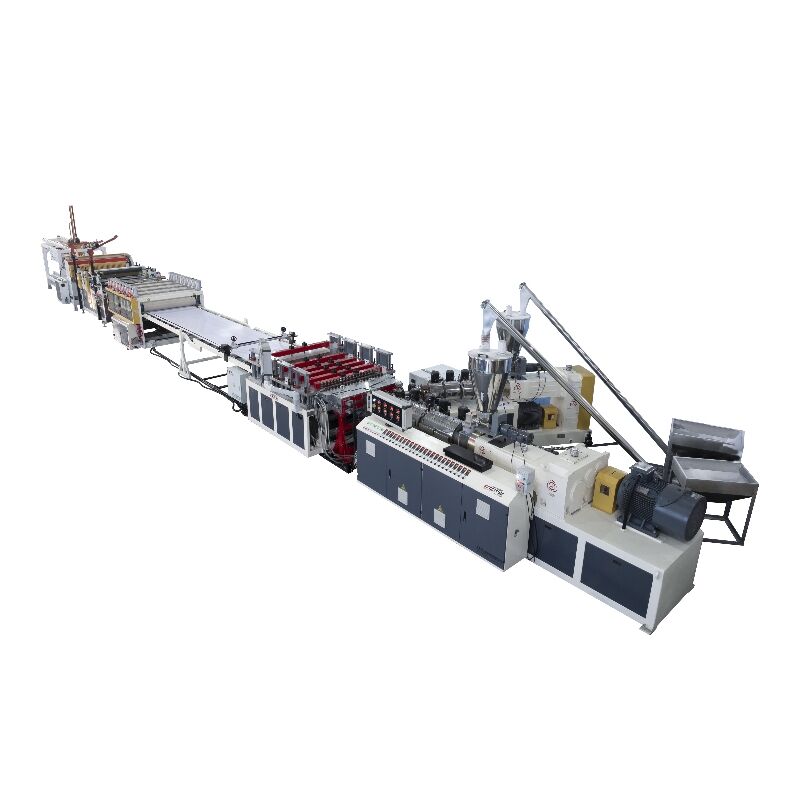
Efficiency in manufacturing systems determines profitability, production capacity, and competitive positioning in modern industrial markets. When evaluating what makes a pvc foam board production line efficient, manufacturers must examine multiple integrated factors that collectively determine throughput, material yield, energy consumption, and operational consistency. A truly efficient production line transforms raw PVC resin and chemical additives into high-quality foam boards with minimal waste, reduced downtime, and predictable output rates that meet market demand without excessive capital or operational expenditure.
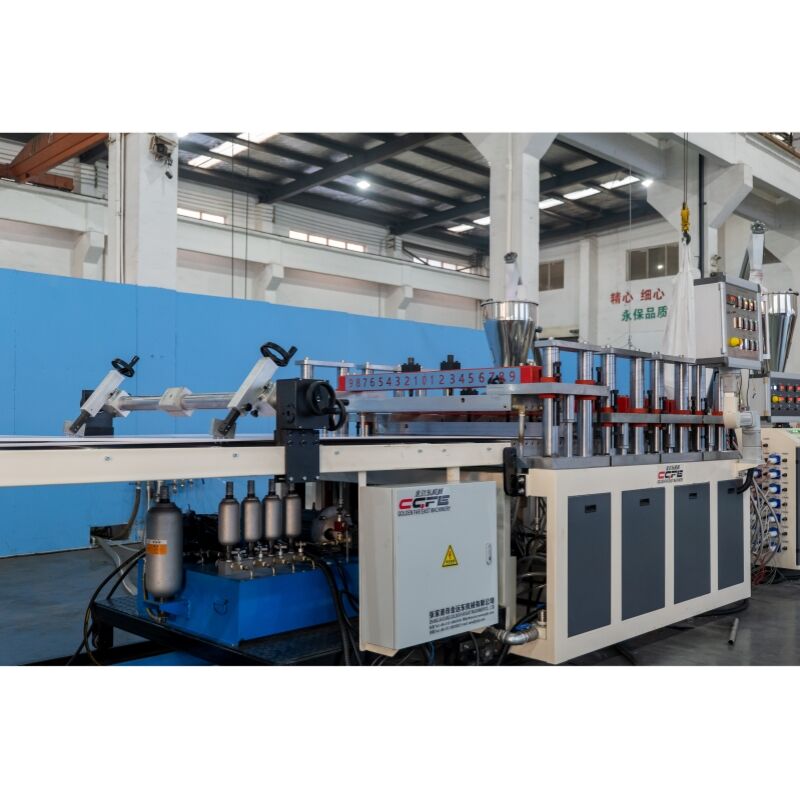
The efficiency of a pvc foam board production line stems from precision engineering across material handling, temperature control, extrusion mechanics, calibration systems, and automation integration. Unlike generic extrusion systems, foam board production requires exact control over foaming agent activation, melt viscosity, cooling rates, and dimensional stability to produce boards with uniform density, smooth surfaces, and consistent mechanical properties. Understanding these efficiency drivers enables manufacturers to optimize existing lines, specify new equipment accurately, and achieve superior return on investment in a competitive global marketplace where material costs and energy prices directly impact margins.
Material Feeding and Mixing Precision
Automated Dosing Systems Reduce Variability
Efficient pvc foam board production line systems incorporate gravimetric feeding technology that measures and delivers raw materials with accuracy exceeding manual batching methods by significant margins. Automated dosing eliminates human error in material ratios, ensuring that PVC resin, foaming agents, stabilizers, and processing aids enter the mixing system in precisely calculated proportions. This consistency directly influences foam cell structure, board density, and surface quality while preventing costly batch rejections caused by formula deviations. Advanced feeding systems also reduce material handling labor and minimize exposure to chemical additives, improving workplace safety alongside production efficiency.
Modern gravimetric feeders integrate with production control systems to adjust material flow rates dynamically based on extruder speed and throughput targets. This real-time calibration maintains optimal material balance even when production rates change, preventing the accumulation of unmixed materials or feed interruptions that disrupt extrusion stability. The elimination of manual intervention in material dosing also reduces contamination risks and enables precise tracking of raw material consumption, supporting accurate cost accounting and inventory management that contribute to overall operational efficiency.
High-Intensity Mixing Ensures Homogeneity
The mixing stage in a pvc foam board production line determines whether chemical additives distribute uniformly throughout the PVC matrix, which directly affects foaming performance and final board properties. High-intensity mixers generate sufficient shear and heat to blend solid PVC particles with liquid additives and powdered foaming agents into a homogeneous compound ready for extrusion. Efficient mixing systems achieve this blending in minimal cycle time while consuming less energy per kilogram of mixed material compared to conventional tumble mixers or ribbon blenders that require extended processing periods.
Temperature control during mixing represents another critical efficiency factor, as excessive heat can prematurely activate foaming agents while insufficient thermal energy leaves compounds poorly dispersed. Advanced mixing systems monitor internal temperatures and automatically adjust mixing speed or cooling water flow to maintain optimal conditions. This thermal management prevents material degradation, reduces energy waste, and ensures that every batch entering the extruder possesses identical rheological properties, eliminating the production variations that cause surface defects or density fluctuations in finished boards.
Extrusion System Design and Control
Twin-Screw Extruders Maximize Throughput
The extruder configuration fundamentally determines the production capacity and efficiency of any pvc foam board production line. Twin-screw extruders with co-rotating intermeshing screws deliver superior material conveying, mixing, and degassing performance compared to single-screw alternatives. The intermeshing screw geometry creates positive displacement pumping action that moves material forward consistently regardless of viscosity changes, enabling higher throughput rates with lower energy consumption per unit of output. This mechanical advantage translates directly into production efficiency by allowing manufacturers to achieve target capacities with smaller, less expensive equipment or to increase output from existing installations.
Twin-screw designs also provide better temperature control across the barrel length, with independent heating and cooling zones that maintain precise thermal profiles essential for foam cell development. The self-wiping action of intermeshing screws prevents material accumulation on barrel walls, reducing the frequency of cleaning shutdowns and minimizing material degradation from prolonged heat exposure. These operational characteristics enable continuous production runs lasting days or weeks without quality deterioration, maximizing equipment utilization rates that define manufacturing efficiency in capital-intensive production environments.
Precise Temperature Profiling Controls Foaming
Efficient pvc foam board production line operations depend on maintaining exact temperature profiles throughout the extrusion process, from material melting through foaming agent activation to final discharge at the die. Modern control systems divide extruder barrels into multiple independently controlled zones, each monitored by thermocouples and regulated through electric heaters or liquid cooling circuits. This zonal control enables operators to establish thermal gradients that melt PVC resin completely, activate foaming agents at optimal moments, and maintain melt viscosity within narrow ranges that produce uniform foam cell structures.
Temperature precision directly impacts energy efficiency because excessive heating wastes electricity while insufficient thermal input requires slower processing speeds to achieve complete melting. Advanced control systems employ closed-loop PID algorithms that minimize temperature fluctuations and reduce energy cycling, maintaining stable conditions with minimal power consumption. Some high-efficiency systems incorporate heat recovery technology that captures thermal energy from cooling zones and redirects it to heating zones, reducing total energy requirements and lowering operating costs while maintaining the temperature precision essential for consistent foam board quality.
Die Design and Calibration Systems
Wide Die Width Increases Production Area
The extrusion die represents the final shaping stage in a pvc foam board production line, where molten foamed material expands into its final board dimensions. Efficient production lines utilize dies with wider working widths that enable the manufacture of broader boards in single passes, eliminating the need for multiple narrower runs or subsequent edge-joining operations. Wide dies maximize production area per extrusion cycle, directly increasing square meter output per hour while reducing material waste from edge trimming and improving dimensional consistency across board width.
Modern die designs incorporate adjustable lip openings and internal flow channels engineered to distribute material uniformly across the entire width, preventing the edge thinning or center thickening that compromises board flatness. Precision-machined die lips with surface finishes measured in micrometers produce smooth board surfaces that require minimal secondary finishing, reducing processing steps and improving material yield. The combination of wide production capability and surface quality optimization makes die technology a central efficiency driver in contemporary pvc foam board production line systems.
Vacuum Calibration Ensures Dimensional Stability
Immediately after exiting the die, hot foamed PVC boards enter calibration systems that control cooling rates and maintain dimensional accuracy as material transitions from plastic to solid states. Vacuum calibration tables apply negative pressure to board surfaces, pulling them against precision-machined metal plates that define final thickness and flatness while extracting heat through water-cooled surfaces. This controlled cooling prevents warping, surface irregularities, and thickness variations that reduce product quality and increase scrap rates in less sophisticated production systems.
Efficient calibration systems balance cooling speed with product quality, using multiple vacuum zones with progressively decreasing suction pressures and water temperatures optimized for PVC thermal properties. This staged approach prevents thermal shock that can cause surface cracks or internal stresses while achieving cooling rates that maximize production speed. Advanced systems incorporate automated vacuum pressure control and coolant temperature regulation that adjust parameters based on board thickness and production speed, maintaining optimal conditions across different product specifications without manual intervention that slows changeovers and reduces operational efficiency.
Cutting Systems and Automation Integration
Flying Cut-Off Systems Eliminate Production Stops
Traditional stationary cutting systems require production lines to pause periodically for cutting operations, creating inefficiency through repeated acceleration and deceleration cycles. Modern pvc foam board production line installations incorporate flying cut-off technology that moves cutting blades at synchronized speeds matching material flow, enabling continuous production without stopping for cutting operations. These systems dramatically increase effective production time, eliminating the cumulative downtime losses that significantly reduce output in stop-start cutting configurations.
Flying cutters employ servo motor drives and precision position sensors that coordinate blade movement with material velocity, ensuring clean cuts without pulling, tearing, or edge damage that creates waste material. The elimination of production stops also reduces thermal cycling in the extrusion system, maintaining more stable operating conditions that improve product consistency and reduce energy consumption from repeated heating cycles. This continuous operation capability represents a fundamental efficiency advantage that separates high-performance production systems from conventional installations in competitive manufacturing environments.
Automated Stacking and Packaging Reduce Labor
Post-extrusion material handling significantly impacts overall pvc foam board production line efficiency, as manual stacking operations create labor bottlenecks and potential safety hazards while limiting production speed to manual handling capacity. Automated stacking systems use robotic arms or conveyor arrays to lift, orient, and stack cut boards into precise bundles ready for packaging and shipping. This automation eliminates manual lifting of heavy boards, reduces workplace injury risks, and enables production speeds unconstrained by human handling limitations.
Integration between cutting systems, stackers, and packaging equipment creates seamless material flow from extrusion through finished goods without human intervention, maximizing throughput while minimizing labor costs per unit produced. Automated systems also improve stacking precision, creating uniform bundles that optimize shipping container utilization and reduce transportation costs. The combination of labor reduction, safety improvement, and logistics optimization makes material handling automation an essential efficiency component in modern foam board manufacturing operations serving cost-sensitive construction and industrial markets.
Energy Management and Process Monitoring
Variable Frequency Drives Optimize Power Consumption
Electric motors driving extruders, mixers, and auxiliary equipment represent major energy consumers in any pvc foam board production line. Efficient systems employ variable frequency drives that adjust motor speeds precisely to match processing requirements rather than running at constant maximum speeds with mechanical throttling that wastes energy. VFD technology enables motors to operate at optimal efficiency points across different production rates, reducing electricity consumption by substantial percentages compared to fixed-speed motor configurations while extending equipment service life through reduced mechanical stress.
Advanced energy management extends beyond individual motor control to encompass entire production systems, with centralized monitoring that tracks power consumption across all equipment and identifies optimization opportunities. Some installations incorporate power factor correction and harmonic filtering to improve electrical efficiency and reduce utility charges, while others schedule energy-intensive operations during off-peak periods when electricity costs less. These comprehensive energy management strategies reduce operating costs and environmental impact while improving production economics in markets where energy represents significant manufacturing expenses.
Real-Time Process Monitoring Prevents Quality Deviations
Efficient pvc foam board production line operations depend on maintaining process parameters within narrow specification ranges throughout extended production runs. Modern control systems employ numerous sensors measuring temperatures, pressures, material flow rates, and dimensional parameters across all production stages, feeding data to centralized monitoring platforms that alert operators to deviations before they produce defective material. This real-time oversight prevents the accumulation of scrap material and reduces the frequency of quality-related production stops that diminish efficiency.
Advanced monitoring systems incorporate statistical process control algorithms that analyze parameter trends and predict potential quality issues before they manifest in finished products. This predictive capability enables proactive adjustments that maintain optimal conditions continuously rather than reactive corrections after problems occur. Historical data logging supports detailed production analysis, identifying efficiency improvement opportunities and documenting process capabilities for customer quality certifications. The integration of comprehensive monitoring with automated control creates self-regulating production systems that maintain peak efficiency with minimal human intervention, reducing labor requirements while improving output consistency.
FAQ
How does production speed affect efficiency in pvc foam board manufacturing?
Production speed impacts efficiency through its influence on throughput capacity and unit costs, but maximum speed does not always equal maximum efficiency. The optimal production rate balances material quality requirements with equipment capabilities, as excessive speeds can compromise foam cell structure and surface finish while generating higher scrap rates that reduce overall efficiency. Efficient pvc foam board production line systems operate at speeds where material quality remains consistent, equipment utilization stays high, and energy consumption per unit output reaches minimum levels. Advanced lines achieve these optimal speeds through precise control systems and mechanical designs that maintain stability at higher throughput rates than conventional equipment.
What maintenance practices maximize production line uptime?
Preventive maintenance schedules tailored to equipment manufacturer recommendations and actual operating conditions prevent unexpected failures that cause extended downtime. Efficient operations implement condition monitoring for critical components like extruder screws, drive systems, and heating elements, replacing parts based on measured wear rather than arbitrary schedules. Regular cleaning of die lips, calibration surfaces, and material handling systems prevents buildup that degrades product quality and eventually forces production stops. Maintaining inventories of critical spare parts enables rapid repairs when failures occur, minimizing downtime duration. Systematic maintenance practices directly correlate with production efficiency by maximizing equipment availability and maintaining consistent operating performance over equipment service life.
Can older production lines achieve efficiency comparable to new installations?
Selective retrofitting of control systems, automation components, and critical mechanical elements can substantially improve efficiency in existing pvc foam board production line installations without complete replacement costs. Upgrading to modern variable frequency drives, automated material feeding, and advanced process controls often delivers significant efficiency gains at fractions of new equipment investment. However, fundamental limitations in extruder design, die technology, and structural capacity cannot be overcome through upgrades alone, and manufacturers must evaluate whether retrofit improvements provide sufficient returns or whether replacement becomes more economical. The decision depends on existing equipment condition, production capacity requirements, and available capital, with engineering analysis required to determine optimal upgrade strategies for specific installations.
What role does operator training play in production efficiency?
Skilled operators who understand pvc foam board production line mechanics, material behaviors, and control system functions identify and correct efficiency problems faster than untrained personnel, reducing downtime and quality losses. Training programs covering troubleshooting procedures, parameter optimization, and preventive maintenance enable operators to maintain peak efficiency during normal operations and respond effectively to process deviations. Even highly automated production lines benefit from knowledgeable operators who recognize subtle performance changes and make informed adjustment decisions. Ongoing training that keeps operators current with equipment updates and process improvements represents an investment in human capital that delivers continuous efficiency returns through better equipment utilization and reduced production losses across facility operating life.