Home > PRODUCTS > Plastic Sheet / Board Production Line > PVC Foam Board Production Line
Place of Origin: |
Jiangsu, China |
Brand Name: |
CGFE |
Model Number: |
SJSZ80/156 & SJSZ65/132 |
Certification: |
CE, ISO9001 |
Minimum Order Quantity: |
1set |
Price: |
USD 180000 |
Packaging Details: |
Wood pallet, PE film package. |
Delivery Time: |
30 days after receipt of deposit |
Payment Terms: |
FOB, CFR, CIF, DAP, etc. |
Supply Ability: |
20 sets each month |
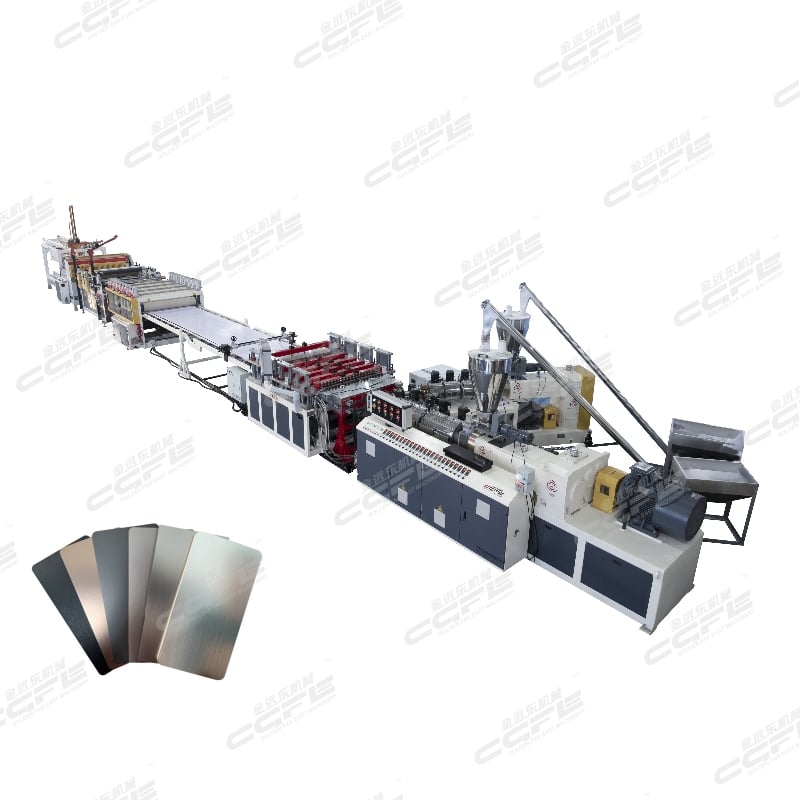
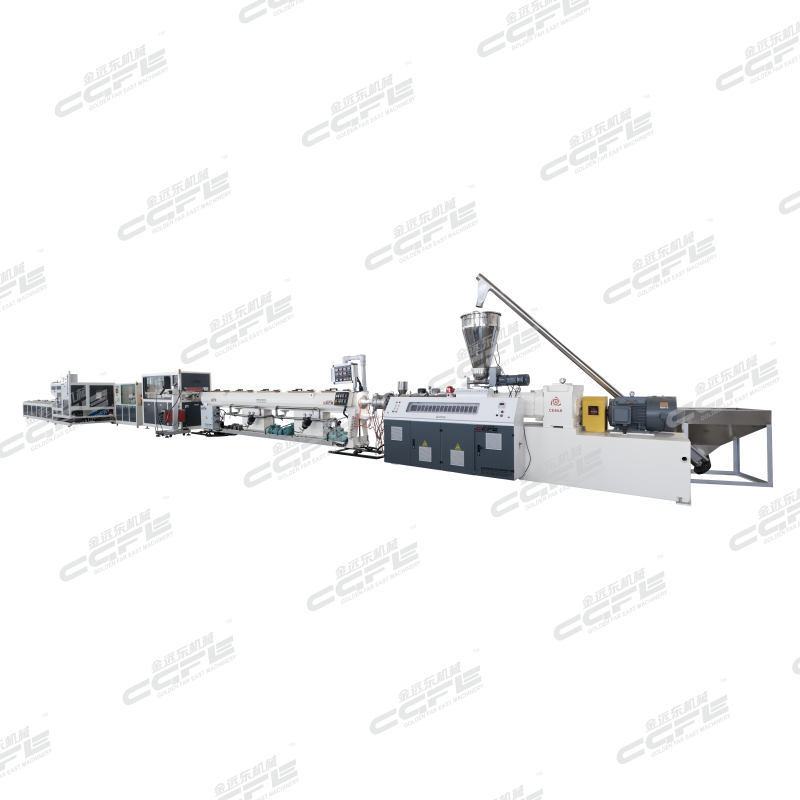
This production line is an automated plastic sheet production equipment that integrates mixing, extrusion, shaping, and cutting. It primarily uses polyvinyl chloride (PVC) resin as the main raw material, supplemented with foaming agents, stabilizers, and other additives. Through specific mold structures and processes, it produces PVC foamed sheets with a uniform closed-cell structure.
This production line boasts mature technology, enabling it to produce not only skin-foamed boards (WPC skin boards) with smooth surfaces and high hardness, but also free-foamed boards with uniform internal structures. The finished boards are widely used in furniture manufacturing, construction templates, advertising carving, interior decoration, and other fields.
The entire production line adopts continuous extrusion technology, featuring clear processes and high automation:
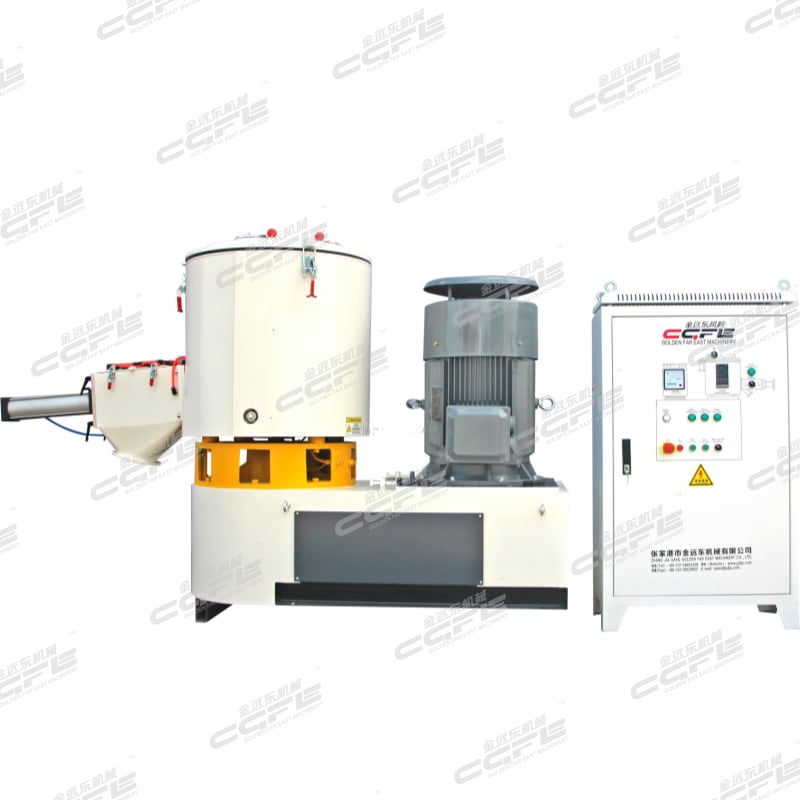
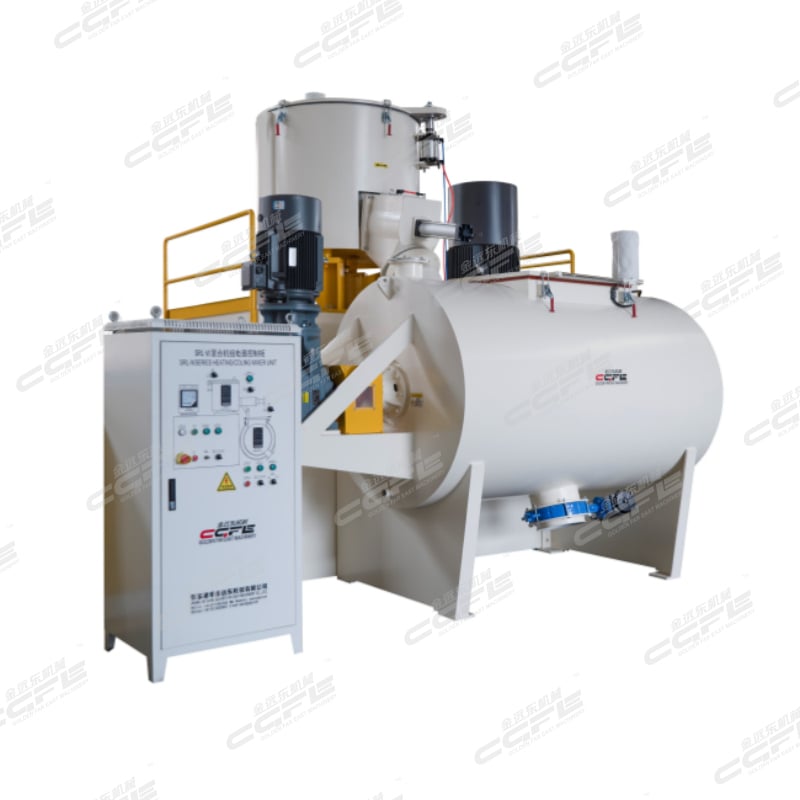
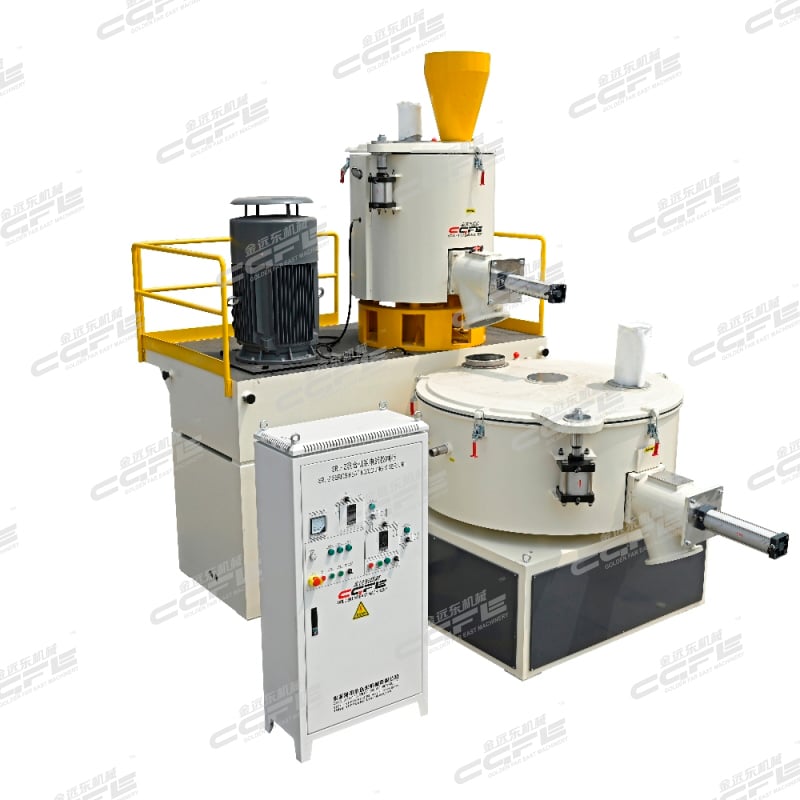
Mixing System: Utilizing a combination of high-speed hot mixers and low-speed cold mixers, this system thoroughly mixes and cools PVC resin, foaming agents, calcium powder, stabilizers, and other additives to ensure even material dispersion and prevent premature foaming.
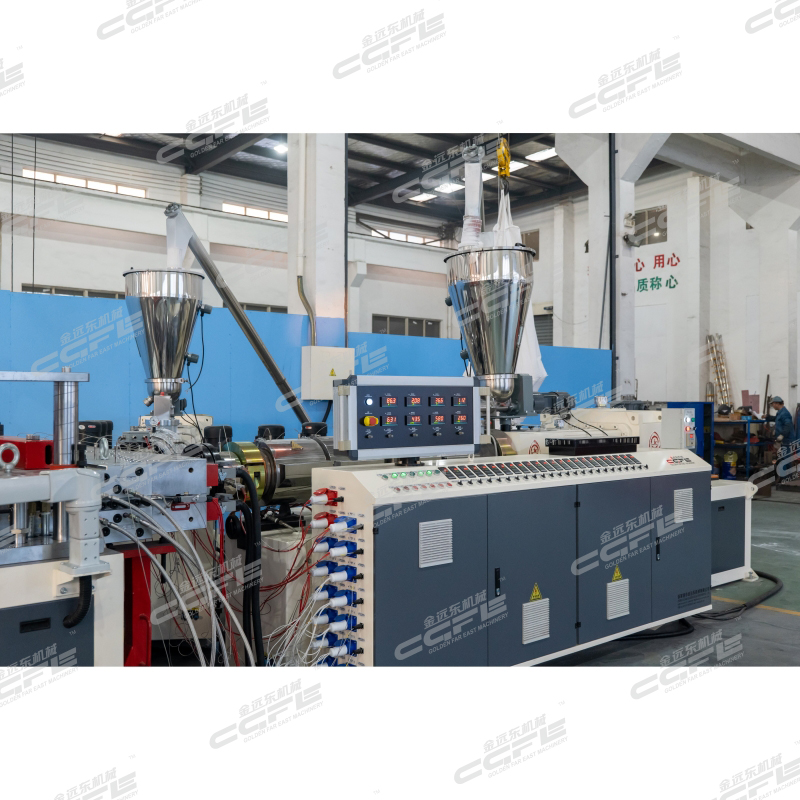
Extrusion System: The material enters the high-torque twin-screw extruder through a quantitative feeder and is plasticized and melted under high temperature and pressure.
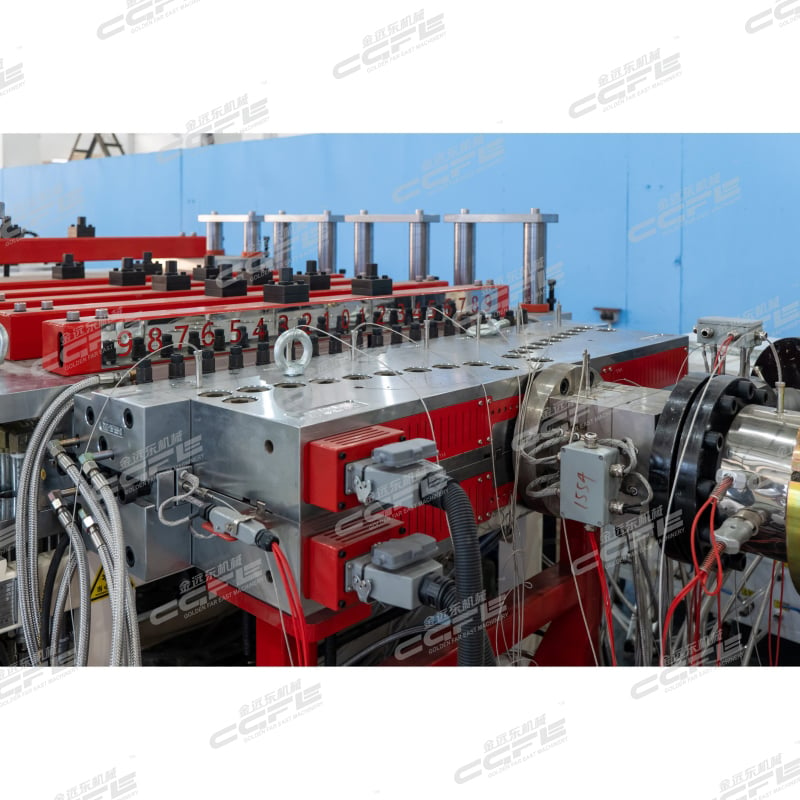
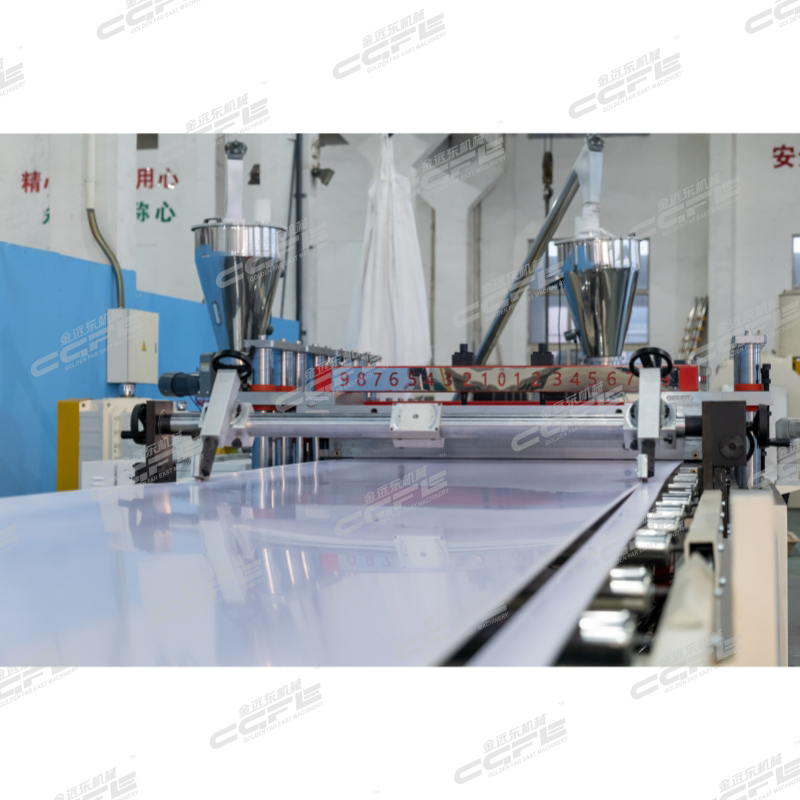
Die Forming: The melt is extruded through a T-shaped die with a specially designed flow channel.
Skinning process: The mold lip is specially designed, and it is paired with a calibrating mold, which enables the surface of the board to quickly cool and form a dense "skin", while the interior continues to foam.
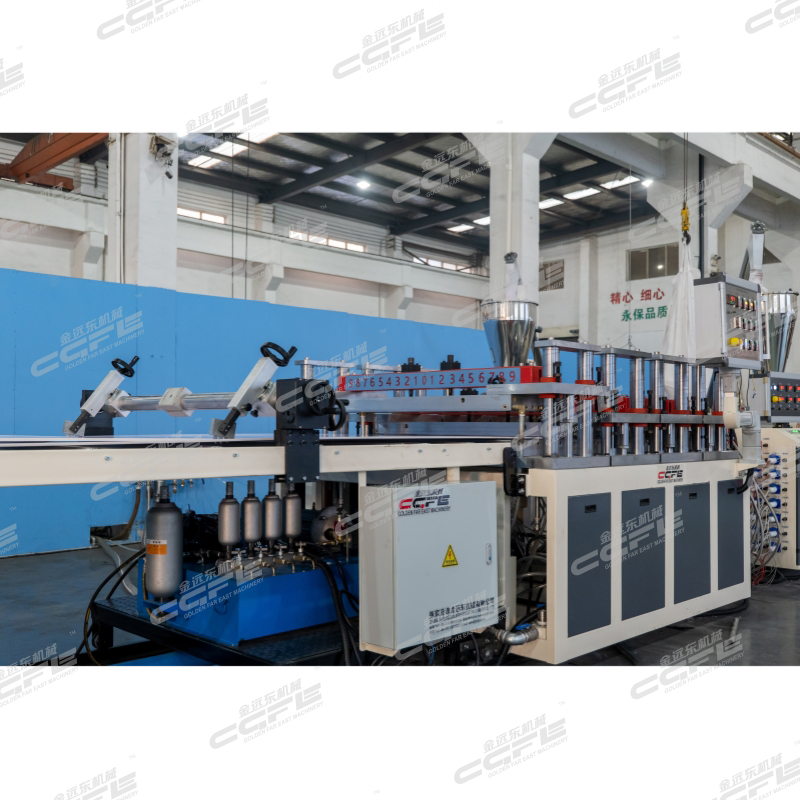
Vacuum Calibration & Cooling: The board enters the vacuum calibration station, where it undergoes vacuum adsorption and spray cooling to precisely control its thickness, width, and surface flatness.
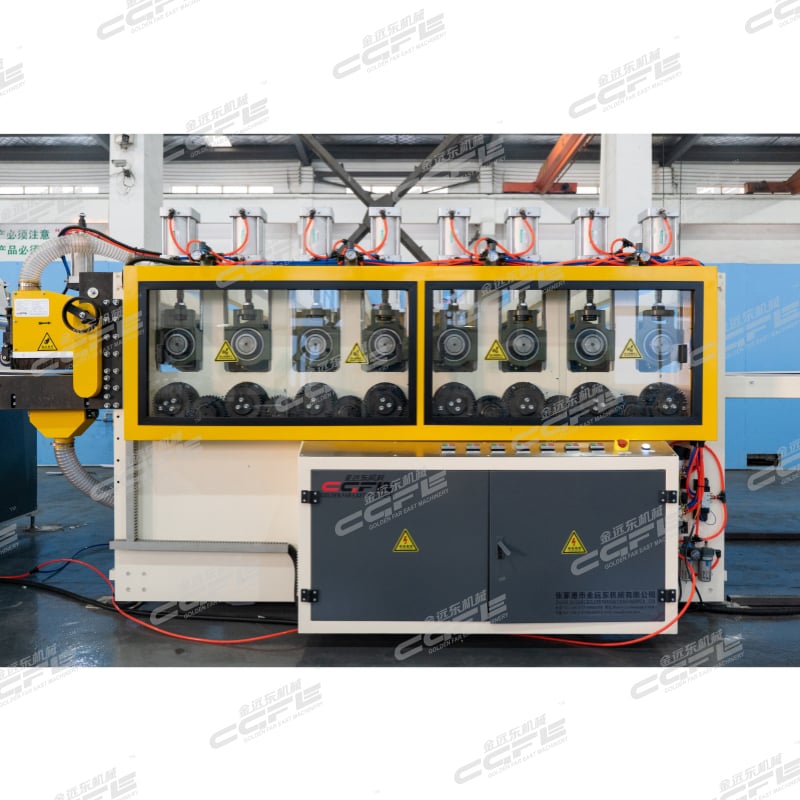
Traction & Cutting: After passing through a multi-roller traction machine (to prevent plate deformation), the material is finally automatically cut to the preset size by a vertical and horizontal cutting machine, and then stacked.
High Torque Twin Screw Extruder:
Adopting a modular screw structure, it boasts strong plasticizing capacity and excellent venting performance, effectively ensuring the stability of the foaming ratio.
The barrel is made of high-quality nitrided steel, which is wear-resistant and corrosion-resistant, extending its service life.
Special Foaming Die:
The design features a hanger-style flow channel with adjustable die lip opening, ensuring uniform thickness of the plate material.
The surface of the flow channel is plated with hard chrome and polished, ensuring smooth material discharge and high surface finish of the plate.
High-efficiency vacuum calibration table:
Adopting an extended box design, multi-stage vacuum adsorption and water circulation cooling ensure rapid plate shaping, low internal stress, and resistance to deformation.
Intelligent Control System:
The entire line adopts PLC + touch screen control, with key parameters (temperature, pressure, speed) displayed digitally, making operation simple and ensuring good process repeatability.
Crust Board: It boasts high surface hardness, wear resistance, impact resistance, and produces no dust during cutting. Furthermore, it exhibits excellent sound and heat insulation properties.
Free Foam Board: It boasts a lightweight texture, with fine and uniform internal pores, and exhibits excellent weather resistance and corrosion resistance.
Environmental friendliness: The production process releases no formaldehyde, meeting environmental standards.
Advertising industry: silk screen printing, engraving, exhibition boards, signboards.
Furniture industry: kitchen cabinets, bathroom cabinets, office furniture, table and chair panels.
Construction industry: construction formwork (waterproof, high turnover frequency), partition walls, ceiling materials.
Vehicle and boat decoration: yacht interior panels, bus partitions.
Control system |
Siemens PLC control system |
Extruder model |
SJSZ80/156 & SJSZ65/132 |
Main motor power (kw) |
55 & 37 |
Output (kg/h) |
500 |
mold |
Width: 1300mm Thickness can be adjusted |
Calender |
Four rollers calender |
Hot stamping online |
Yes |
Lamination |
Online or offline |
Discharge of products |
Stacking by robot automatically |
UV machine |
Option |
This is the core "hard power" of PVC foam board, which directly determines its viability in harsh environments.
1. Ultimate weather resistance and corrosion resistance (Weather & Chemical Resistance)
Advantages: Compared to wooden boards, PVC foam boards do not contain cellulose, do not absorb water, do not rot, and do not mold. They are resistant to acid, alkali, salt spray, and most chemical solvents.
Application scenarios: outdoor billboards, chemical plant partitions, bathroom cabinets, and ship interiors.
2. Structural stability and low expansion rate (Dimensional Stability)
Advantages: The boards processed by special techniques (such as the skinning process) exhibit a high surface density and uniform internal structure. In environments with drastic temperature and humidity changes, they exhibit an extremely low coefficient of thermal expansion and contraction, making them less prone to deformation, cracking, or warping.
Comparison: It is superior to ordinary medium density fiberboard (MDF) and solid wood boards.
3. The eco-friendliness of "plastic as a wood substitute"
Advantages: No formaldehyde added during the production process (compliant with E0 standard), and 100% recyclable. This is a huge selling point for the European and American markets that prioritize environmental regulations.
Application scenarios: Kindergarten furniture, hospital partitions, export packaging materials.
4. Excellent fire retardancy
Advantages: Polyvinyl chloride (PVC) itself possesses the property of self-extinguishing upon removal from a flame (with a flame retardant rating typically reaching B1 level). When burned, it produces low-toxicity smoke, meeting building fire safety standards.
This is the part that customers (processors, designers) care most about, determining whether they are "easy to use".
1. Perfect surface finish and printability (Surface Finish)
Advantages: Especially for the skin-foaming board, the surface is as smooth as a mirror, allowing direct silk screening, inkjet printing, laminating, or leather pasting without the need for polishing.
Competitive advantage: It eliminates the need for painting and primer processes, significantly reducing the cost of subsequent processing.
2. Easy to process, "wood-like processability"
Advantages: Although it is made of plastic, it can be cut, drilled, routed, carved, nailed, and screwed using woodworking tools. Its screw-holding power is superior to that of ordinary hollow boards.
Application scenario: CNC engraving of characters and furniture components with complex shapes.
3. Lightweight design
Advantages: The density is typically between 0.4-0.8 g/cm³ (adjustable), which is over 50% lighter than solid wood and lighter than aluminum panels.
Competitive points: It reduces transportation costs and is easy to install (e.g., no need for complex load-bearing structures when installed on a wall).
This is the ultimate factor determining the procurement decision.
1. Long Service Life
Advantages: It can remain colorfast and non-cracking for 5-10 years when used outdoors; when used indoors, its lifespan is almost as long as that of the building.
ROI (Return on Investment): Although the initial procurement cost may be slightly higher than that of some low-end wood materials, the long-term total cost of ownership (TCO) is extremely low due to "zero maintenance" and "no replacement".
2. Cost controllability (Cost Efficiency)
Advantages: Compared to acrylic (PMMA), aluminum-plastic panel, or imported solid wood board, PVC foam board offers extremely high price competitiveness.
Technical point: The modern production line supports high calcium powder filling technology, further reducing raw material costs without significantly sacrificing performance.
3. Flexibility in Sizing
Advantages: It can produce large-format panel materials with thicknesses ranging from 2mm to over 30mm and widths up to 2.05 meters, reducing splicing seams and enhancing aesthetics.

Copyright © 2026 Zhangjiagang Golden Far East Machinery Co., Ltd. All rights reserved.

 EN
EN