
 EN
EN

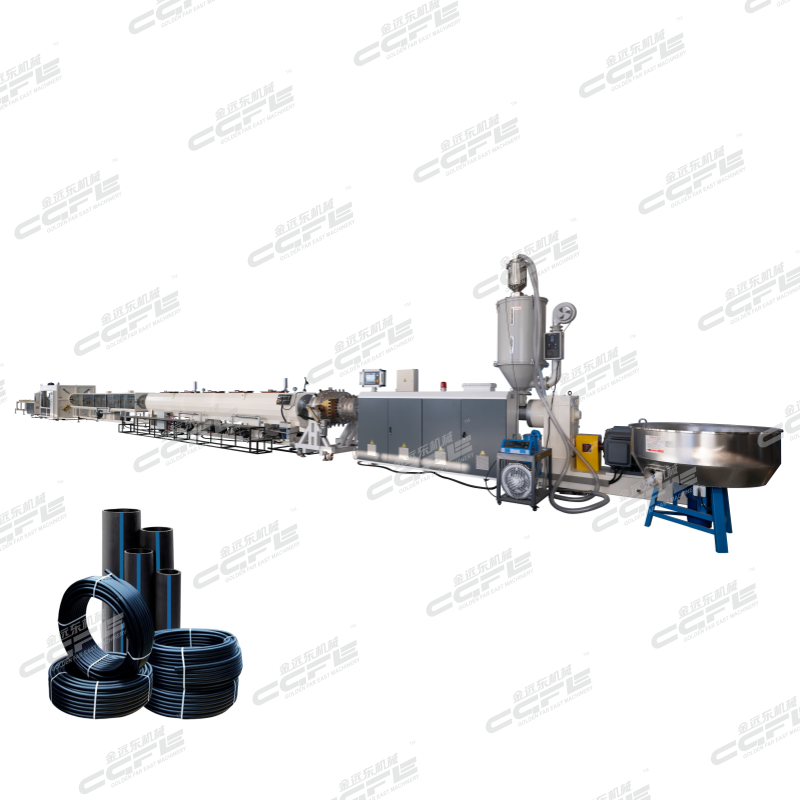
When evaluating a pe pipe production line, quality is not determined by a single component but by the combined performance of every element in the system. From the extruder screw design to the final haul-off unit, each stage contributes directly to whether the finished pipe meets dimensional tolerances, pressure ratings, and long-term durability standards. Understanding these factors helps buyers, plant engineers, and procurement managers make more informed decisions.
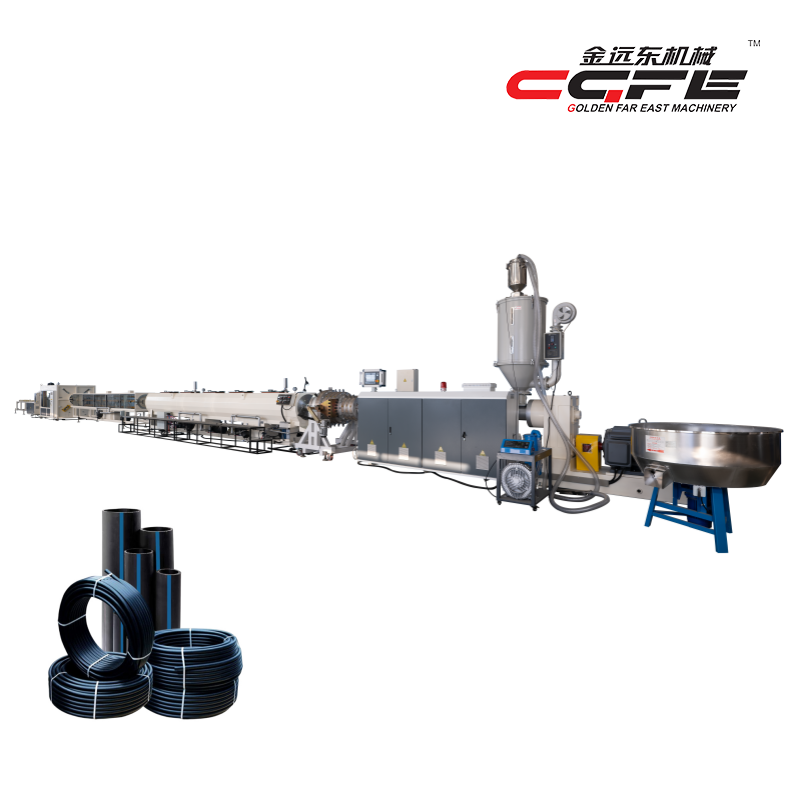
A pe pipe production line operates as an integrated system where the weakest link determines overall output quality. Even a highly capable extruder cannot compensate for a poorly designed die head or an inconsistent cooling tank. This article breaks down the critical quality factors across the full pe pipe production line to help you identify what separates reliable, high-output equipment from average alternatives.
Extrusion System Precision and Consistency
Screw and Barrel Design
The extruder is the heart of any pe pipe production line, and its screw geometry directly affects melt quality. A well-engineered screw for PE materials ensures uniform plasticization, stable melt pressure, and consistent output temperature. If the screw design is mismatched to the PE resin viscosity range, the pe pipe production line will produce pipes with internal stress variations, surface defects, or inconsistent wall thickness.
Barrel temperature control on a pe pipe production line must be precise across multiple heating zones. Modern systems use PID controllers to maintain tight thermal profiles, which is essential when processing HDPE grades used in pressure pipe applications. Poor temperature uniformity leads to degraded material properties in the final pipe, compromising long-term performance in buried or pressurized installations.
Drive System Stability
The drive motor and gearbox on a pe pipe production line must deliver stable torque without fluctuation. Any rotational instability in the screw directly causes melt pressure variations, which translate into diameter oscillation or wall thickness irregularities in the pipe. High-quality pe pipe production line systems typically use AC servo or variable frequency drives with closed-loop feedback to ensure consistent screw speed throughout extended production runs.
Die Head and Calibration Unit Performance
Die Head Design and Flow Balance
The die head of a pe pipe production line determines the concentricity and wall uniformity of the extruded pipe. A spiral mandrel die with balanced flow channels ensures that molten PE material reaches all circumferential positions at equal pressure and velocity. On a lower-quality pe pipe production line, unbalanced die flow results in eccentric walls, which cause pipes to fail pressure tests or crack under stress.
Quick-change die head systems improve the flexibility of a pe pipe production line, allowing rapid diameter changeovers without extended downtime. This is particularly valuable when the pe pipe production line must produce multiple pipe sizes across different project specifications. Precision die head manufacturing tolerances, typically within microns, are a direct indicator of system quality.
Vacuum Calibration and Cooling Tank
After the die head, the calibration sleeve and vacuum cooling tank define the final outer diameter and surface finish of the pipe. A well-calibrated pe pipe production line uses precisely machined calibration sleeves matched to each pipe diameter, maintaining stable vacuum levels to ensure the pipe holds its shape as it cools. Inconsistent vacuum pressure on a pe pipe production line leads to ovality and surface roughness that may cause installation issues.
Cooling efficiency is another major quality factor on a pe pipe production line. Longer cooling tanks with controlled water temperature zones allow the pipe to solidify gradually and uniformly, reducing residual internal stress. A pe pipe production line with insufficient cooling length may produce pipes that appear dimensionally correct at room temperature but relax over time, causing long-term diameter drift or reduced pressure resistance.
Material Handling and Process Control Integration
Raw Material Feeding Accuracy
Consistent raw material input is fundamental to pe pipe production line quality. Gravimetric dosing feeders on a pe pipe production line measure and control the mass flow of PE resin and any color masterbatch or stabilizer additive with high accuracy. Volumetric feeders introduce fluctuations that propagate through the entire pe pipe production line, resulting in density variation, inconsistent pipe color, or reduced UV stability in outdoor applications.
Moisture content in PE resin is another variable that a high-quality pe pipe production line must manage. Proper drying equipment upstream ensures that moisture-induced defects such as streaks, bubbles, or surface pitting do not appear in the finished pipe. A pe pipe production line without adequate material conditioning equipment will struggle to produce consistent output regardless of how capable the downstream components are.
Automation and Online Monitoring
Modern pe pipe production line systems integrate online measurement tools such as laser diameter gauges, wall thickness ultrasonic sensors, and melt pressure monitors. These instruments feed data in real time to a centralized control system, allowing automatic correction before defects accumulate. A pe pipe production line equipped with closed-loop dimensional control can maintain tighter tolerances than manually adjusted lines, reducing scrap rates and ensuring compliance with standards such as ISO 4427 or EN 12201.
The haul-off and cutting unit at the end of the pe pipe production line must also maintain consistent pulling speed synchronized with extrusion output. Speed mismatches cause wall thickness deviation as the pipe is either stretched or compressed. A high-quality pe pipe production line uses synchronized servo haul-off drives that respond dynamically to upstream speed changes, ensuring dimensional consistency across the full production run.
FAQ
What is the most important factor in pe pipe production line quality?
No single factor dominates, but the extrusion screw design and die head flow balance are consistently critical. These components determine melt consistency and pipe wall uniformity, which are foundational to all downstream quality outcomes on any pe pipe production line.
How does cooling tank length affect pe pipe production line output quality?
A longer cooling tank on a pe pipe production line allows the pipe wall to solidify gradually under controlled conditions, reducing residual stress and minimizing the risk of post-production diameter drift or reduced pressure performance. Insufficient cooling is a common cause of long-term pipe quality failures.
Why is online measurement important on a pe pipe production line?
Online measurement tools on a pe pipe production line provide real-time feedback that allows automatic correction of diameter or wall thickness deviations before they result in reject product. This reduces material waste, ensures dimensional compliance with relevant pipe standards, and improves overall production efficiency significantly.