
 EN
EN

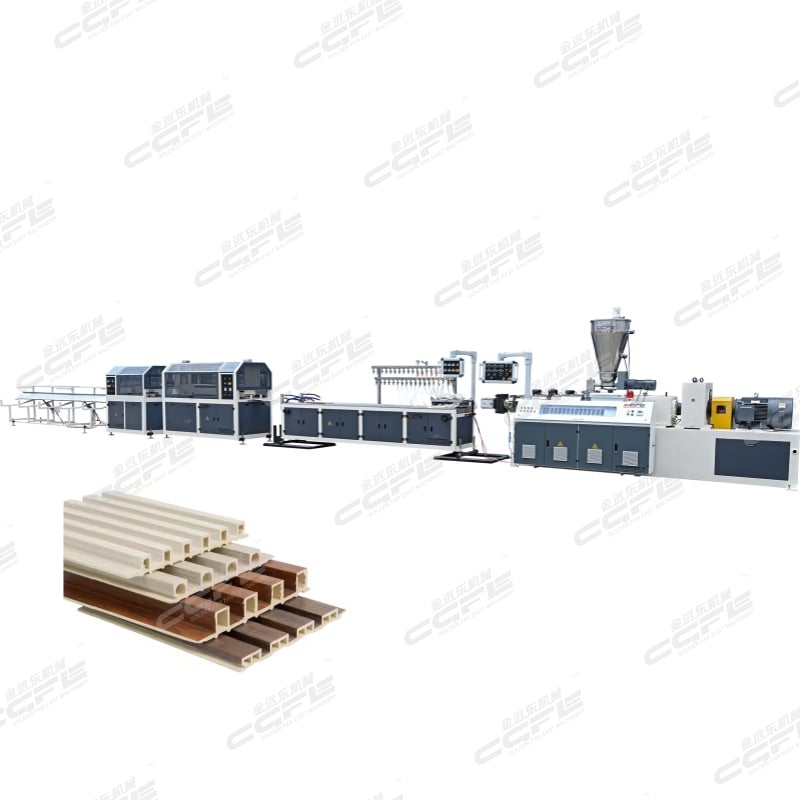
The pvc wall panel production line is a specialized industrial system designed to continuously manufacture decorative and functional PVC panels used in interior wall and ceiling applications. As demand for lightweight, moisture-resistant, and cost-effective interior finishing materials continues to rise globally, the pvc wall panel production line has become a cornerstone investment for building materials manufacturers. Understanding what this system is, how it is structured, and what makes it effective in 2026 is essential for any business considering entry into or expansion within this market.
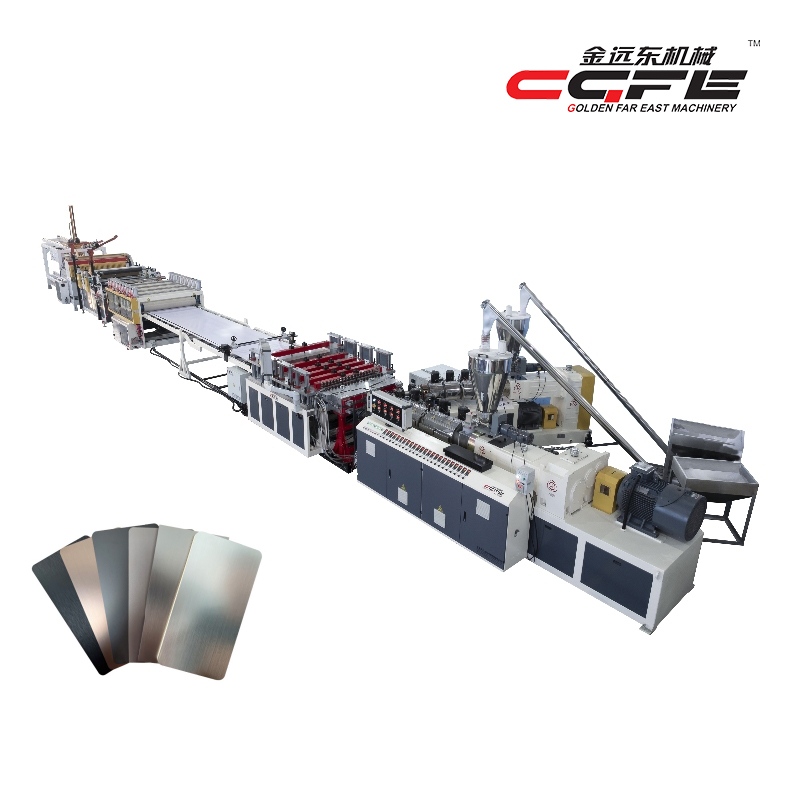
A pvc wall panel production line is not a single machine but rather an integrated set of processing units working in sequence. Each unit performs a distinct function, from raw material compounding to final product cutting and stacking. In 2026, advances in automation, energy efficiency, and precision control have significantly elevated what a modern pvc wall panel production line can deliver in terms of output quality and operational reliability. This article defines the system, its core components, its working process, and the key factors that distinguish high-performance pvc wall panel production line configurations.
Core Definition and Scope
What a PVC Wall Panel Production Line Actually Is
A pvc wall panel production line is an extrusion-based manufacturing system that processes PVC compound into finished decorative panels through continuous forming. The system begins with raw PVC resin blended with stabilizers, plasticizers, fillers, and colorants to form a consistent compound. This compound is then fed into an extruder, which melts and forces the material through a shaped die to form the desired panel profile. The pvc wall panel production line is therefore a thermoplastic extrusion line adapted specifically for thin, wide, structured panel geometries.
In 2026, the pvc wall panel production line typically handles panel widths ranging from 150mm to 400mm, with hollow or foamed core structures that reduce weight while maintaining rigidity. The line produces panels in standard lengths, which are cut to specification by downstream cutting units. The entire pvc wall panel production line is controlled by a centralized PLC system that monitors temperatures, speeds, pressures, and dimensional tolerances in real time.
How It Differs from General PVC Extrusion Lines
While a general PVC extrusion line can produce pipes, profiles, or sheets, a pvc wall panel production line is configured with dies, calibrators, and cooling systems specifically engineered for wide decorative panel formats. The die design on a pvc wall panel production line must produce consistent wall thickness across the full panel width, which is technically more demanding than simple pipe or rod extrusion. Calibration and cooling are also more complex because the panel must hold its flat geometry precisely without warping or surface defects.
Key Components of the System
The Extruder and Die Unit
The extruder is the heart of any pvc wall panel production line. It uses a twin-screw or single-screw mechanism to melt and homogenize the PVC compound before pushing it through the shaping die. Twin-screw extruders dominate modern pvc wall panel production line configurations because they provide superior mixing, better heat distribution, and higher output stability. The die unit attached to the extruder defines the panel's cross-sectional shape, including its hollow chambers, surface texture, and edge profiles. A well-designed die is critical to achieving consistent quality across every meter of output on the pvc wall panel production line.
Die temperature uniformity is a key performance parameter. Uneven die temperatures on a pvc wall panel production line can cause flow imbalances, leading to panels with inconsistent thickness or visible surface lines. Modern pvc wall panel production line dies use individually controlled heating zones to compensate for thermal gradients and maintain stable output.
Calibration Table, Cooling Units, and Haul-Off
Immediately after the die, the panel enters the calibration table, where vacuum and water cooling fix the panel's dimensions. The calibration stage on a pvc wall panel production line is where the panel's final width, thickness, and flatness are locked in. After calibration, the panel passes through additional water cooling tanks to bring the material temperature down sufficiently before the haul-off unit applies pulling tension. The haul-off on a pvc wall panel production line must apply consistent, adjustable tension to maintain panel straightness and dimensional accuracy throughout the run.
Cutting and Stacking Units
At the downstream end of the pvc wall panel production line, a planetary saw or guillotine cutter trims panels to the required length. Cutting speed on the pvc wall panel production line is synchronized with extrusion speed to ensure clean, square cuts without interrupting production flow. Finished panels are then transferred to a stacking unit, where they are counted and arranged for packaging. Some pvc wall panel production line configurations include inline printing or embossing units that apply surface patterns or wood-grain textures directly during production.
Performance Standards in 2026
Automation and Control Technology
The pvc wall panel production line in 2026 is defined by a high degree of automation. PLC-based control systems manage all process parameters, and many lines now incorporate servo-driven components for precise speed and position control. Data logging and remote monitoring are standard features on advanced pvc wall panel production line systems, allowing operators to track production efficiency, detect deviations early, and reduce material waste. Some systems integrate vision inspection cameras that scan every panel surface in real time, flagging defects before the panel exits the pvc wall panel production line.
Energy efficiency is another defining standard for the pvc wall panel production line in 2026. Induction-heated barrels, variable-frequency drives on motors, and optimized die designs collectively reduce energy consumption per kilogram of output. For manufacturers running the pvc wall panel production line continuously, these efficiency improvements translate directly into lower operating costs and a stronger competitive position.
Output Capacity and Panel Specifications
A standard pvc wall panel production line in 2026 can achieve output speeds of 2 to 6 meters per minute depending on panel thickness and material formulation. Higher-speed pvc wall panel production line configurations require more robust calibration and cooling capacity to maintain dimensional stability. Panel width on the pvc wall panel production line typically falls between 200mm and 400mm, with total lengths determined by downstream cutting settings. Manufacturers selecting a pvc wall panel production line must match the line's output capacity to their production targets and customer panel specifications.
FAQ
What raw materials are used in a pvc wall panel production line?
A pvc wall panel production line primarily uses PVC resin as the base material, combined with heat stabilizers, calcium carbonate filler, processing aids, impact modifiers, and pigments. The exact formulation varies depending on whether the pvc wall panel production line is producing rigid, semi-rigid, or foamed panel types. Compound consistency is critical to achieving stable output on the pvc wall panel production line.
How long does it take to set up a pvc wall panel production line?
The physical installation of a pvc wall panel production line typically takes two to four weeks, depending on factory preparation, equipment scale, and engineering support availability. After installation, the pvc wall panel production line requires trial runs and process tuning, which can add one to two additional weeks before full production capacity is reached. Experienced technicians familiar with pvc wall panel production line systems can significantly shorten the commissioning timeline.
What maintenance does a pvc wall panel production line require?
Regular maintenance of a pvc wall panel production line includes screw and barrel inspection, die cleaning to prevent carbon buildup, lubrication of haul-off and cutting components, and calibration checks on control sensors. A preventive maintenance schedule for the pvc wall panel production line typically includes daily checks, weekly cleaning routines, and monthly mechanical inspections. Consistent maintenance directly extends the service life of the pvc wall panel production line and prevents costly unplanned downtime.