
 EN
EN

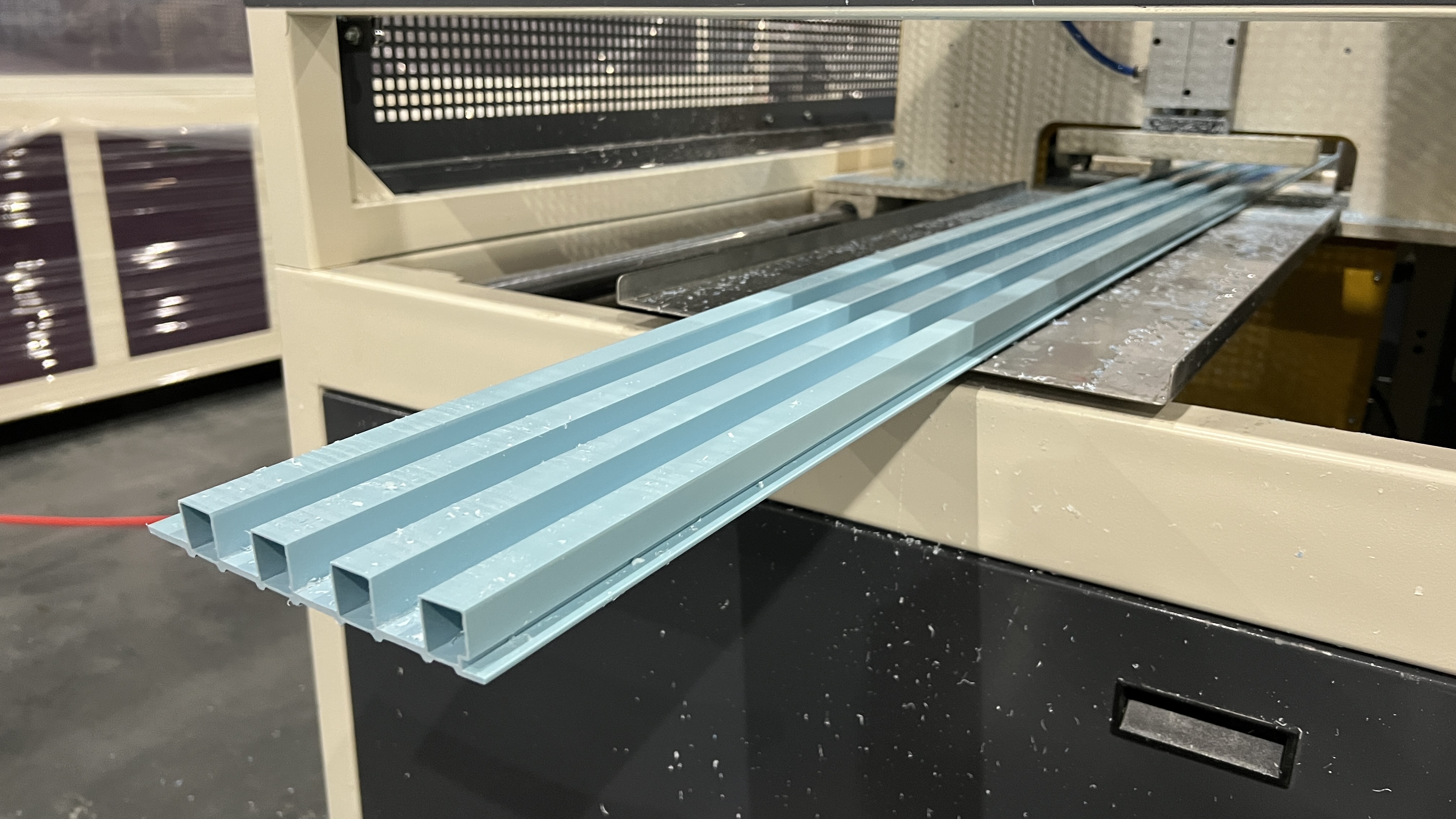
Manufacturers in the building materials industry are under constant pressure to produce more, waste less, and deliver consistent quality at competitive prices. An automated pvc wall panel production line addresses all three of these demands simultaneously, making it one of the most strategically important investments a factory can make today. Understanding why automation is the right direction starts with recognizing the limitations of manual or semi-automatic approaches and the specific advantages that a fully integrated pvc wall panel production line brings to daily operations.
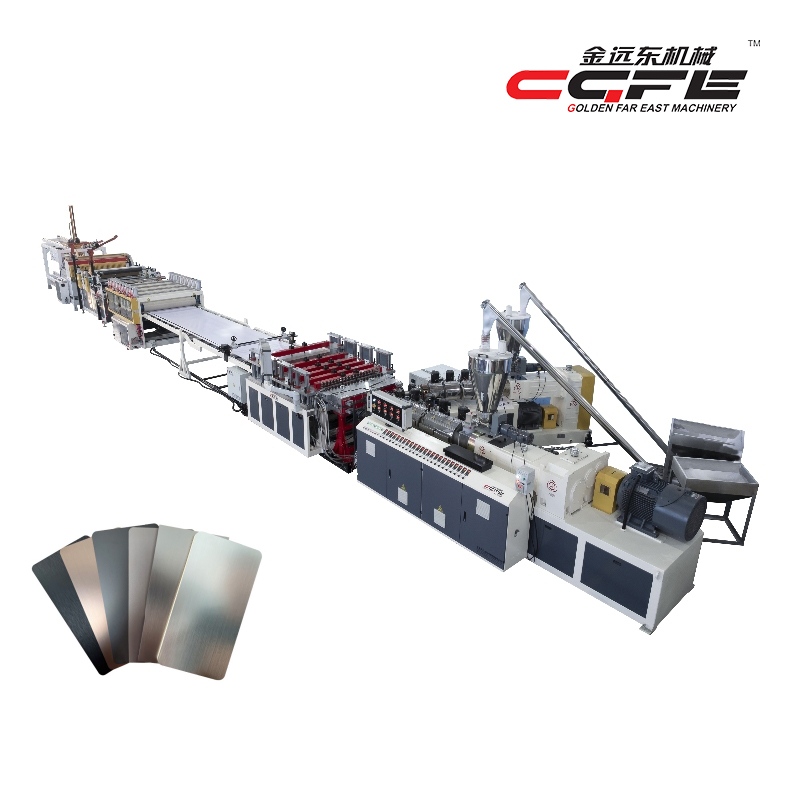
The global demand for PVC decorative panels continues to grow across residential, commercial, and industrial construction sectors. To meet that demand profitably, manufacturers need a pvc wall panel production line that can run at high speed, maintain dimensional accuracy, and minimize material waste across every production shift. Automation is no longer a luxury upgrade — it is the operational foundation that separates competitive factories from those that struggle to fulfill large orders reliably.
Operational Efficiency Gains from Automation
Higher Throughput with Consistent Output
A fully automated pvc wall panel production line is engineered to maintain stable output speeds that manual operations simply cannot match. When extrusion, cooling, calibration, cutting, and stacking are all synchronized through programmable control systems, the pvc wall panel production line runs with minimal interruption and dramatically reduced idle time. Each stage of the pvc wall panel production line is controlled by sensors and logic controllers that respond instantly to deviations, keeping production on track without relying on manual intervention. This level of coordination allows a single pvc wall panel production line to produce volumes that would otherwise require multiple manual workstations and larger labor teams.
Reduced Labor Dependency and Operating Cost
One of the most compelling reasons to invest in an automated pvc wall panel production line is the significant reduction in direct labor requirements. The pvc wall panel production line handles material feeding, profile forming, surface embossing, and panel cutting through automated mechanisms that need only a small team to supervise rather than operate manually. Lower labor dependency on the pvc wall panel production line means reduced payroll costs, lower risk of human error, and greater operational stability even during labor shortages. Over the medium term, the pvc wall panel production line generates a measurable return on investment simply through labor cost savings alone.
Quality Control and Product Consistency
Precision Forming and Dimensional Accuracy
Product consistency is a critical requirement for any supplier of building panels, and the pvc wall panel production line delivers this through tight process control at every stage. The extrusion die and calibration tooling in the pvc wall panel production line are designed to hold exact panel dimensions across thousands of meters of continuous output. When customers place bulk orders, they expect every panel from the pvc wall panel production line to match the same thickness, width, and surface finish as the sample they approved. An automated pvc wall panel production line eliminates the variation that typically arises from manual adjustments, inconsistent operator skill levels, or fatigue-related errors on the production floor.
Surface Quality and Defect Reduction
The pvc wall panel production line integrates temperature and pressure controls that directly influence surface quality during the forming process. When these parameters are managed automatically, the pvc wall panel production line produces panels with smooth, uniform surfaces that are free from warping, sink marks, or uneven embossing patterns. Defect rates on an automated pvc wall panel production line are significantly lower than on manually operated lines, which directly reduces the cost of rework, material waste, and customer complaints. A well-maintained pvc wall panel production line thus protects the manufacturer's reputation as well as its margins.
Scalability and Long-Term Business Value
Flexible Configuration for Diverse Product Ranges
Modern automated pvc wall panel production line systems are designed with modular tooling and adjustable parameters, which means the same core line can be reconfigured to produce different panel widths, thicknesses, and surface patterns. This flexibility makes the pvc wall panel production line a versatile asset rather than a fixed-purpose machine. As market trends shift toward different panel aesthetics or dimensions, the pvc wall panel production line can adapt without requiring a complete equipment replacement. Manufacturers who invest in a configurable pvc wall panel production line are better positioned to respond to changing customer specifications and expand their product catalog without proportionally increasing capital expenditure.
Scalable Capacity to Meet Growing Demand
When a business secures larger contracts or enters new regional markets, the pvc wall panel production line must be capable of scaling output without a corresponding drop in quality or a spike in per-unit costs. An automated pvc wall panel production line can often be upgraded with additional downstream equipment, improved cooling capacity, or higher-speed haul-off systems to increase throughput. The pvc wall panel production line thus grows alongside the business rather than becoming a production bottleneck. Choosing the right pvc wall panel production line from the outset — one engineered with scalability in mind — is a decision that pays dividends for years as the business expands its market presence.
FAQ
What materials are typically processed on a pvc wall panel production line?
A standard pvc wall panel production line is designed to process PVC resin compounds, stabilizers, and modifiers that are blended and fed into a twin-screw extruder. The pvc wall panel production line can handle both rigid and foam-core PVC formulations depending on the end product specification. Some pvc wall panel production line configurations also support co-extrusion with surface coating layers for added durability or visual effect.
How long does it take to set up and commission a pvc wall panel production line?
The commissioning timeline for a pvc wall panel production line depends on factors such as factory readiness, utility availability, and operator training requirements. Most automated pvc wall panel production line installations can be commissioned within one to three weeks once equipment arrives on-site. Suppliers of the pvc wall panel production line typically provide technical support engineers to oversee installation, trial runs, and initial production adjustments to ensure the line meets output and quality targets before full handover.
What maintenance schedule is recommended for a pvc wall panel production line?
Routine maintenance on a pvc wall panel production line includes regular cleaning of the extruder screw and barrel, inspection of die lips and calibration tooling, lubrication of haul-off and cutting components, and checking of electrical and sensor systems. The pvc wall panel production line manufacturer typically provides a detailed maintenance manual specifying daily, weekly, and monthly tasks. Following a structured maintenance schedule helps maximize the service life of the pvc wall panel production line and prevents unplanned downtime that disrupts delivery commitments.