
 EN
EN

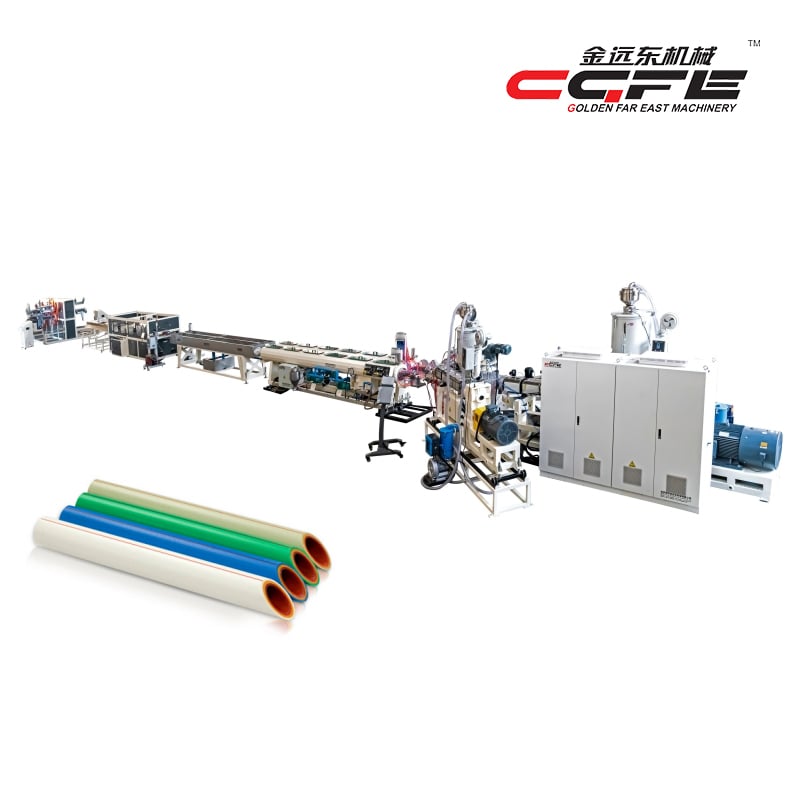
Delamination represents one of the most costly quality failures in modern plastic pipe manufacturing, and preventing it directly impacts production efficiency and final product reliability. When operating a pvc pipe production line, understanding the root causes of delamination and implementing proactive control measures ensures consistent output and reduces waste. This challenge becomes especially critical in double-wall corrugated configurations, where material layers must bond perfectly throughout the extrusion process.
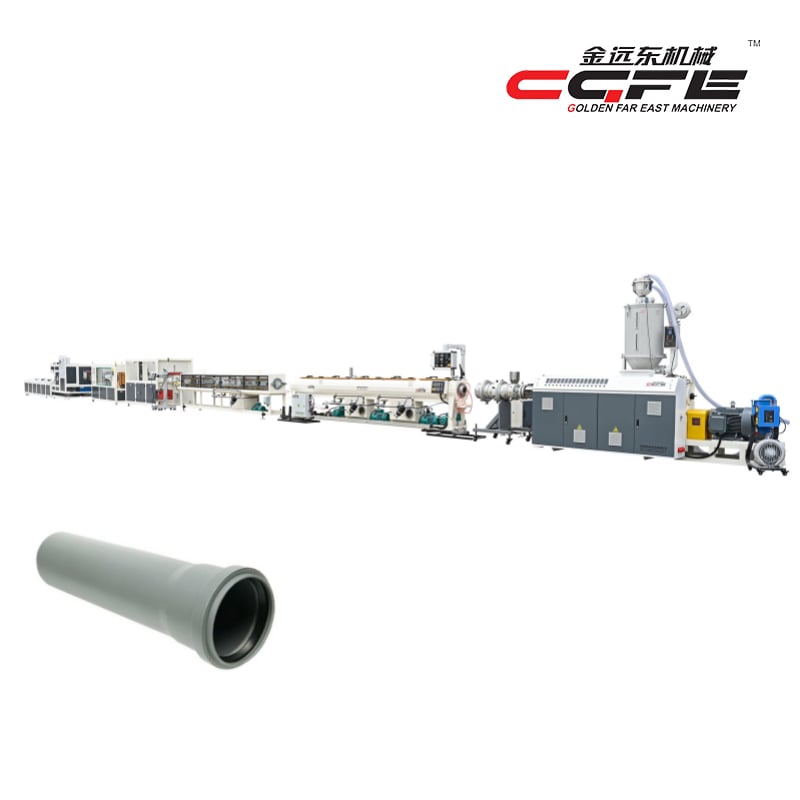
A successful pvc pipe production line requires precise control over temperature, material flow rates, and cooling dynamics at every stage of manufacture. Delamination occurs when adhesion between the inner wall, foam core, and outer wall fails due to inadequate pressure, temperature mismatch, or contamination in the material feed. Mastering delamination prevention transforms operational reliability and significantly reduces the scrap rate across your pvc pipe production line.
Understanding Delamination Root Causes in Your PVC Pipe Production Line
Material Temperature and Flow Synchronization
Temperature uniformity across the pvc pipe production line extrusion head is non-negotiable for bond formation. When the outer wall material enters at a substantially different temperature than the foam core layer, thermal stress develops at the interface, causing separation. Each material in the three-layer structure must reach the same processing window simultaneously; otherwise, viscosity mismatches prevent proper molecular adhesion during the critical welding moment inside the die.
A well-calibrated pvc pipe production line maintains precision within plus or minus two degrees Celsius across all heating zones. This tight control ensures that when layers meet, they possess identical flow characteristics and molecular energy for bonding. Temperature sensors positioned upstream of the extrusion head allow operators to catch drift before delamination occurs downstream.
Pressure Balance and Die Design Optimization
The pressure applied during layer convergence within the die fundamentally determines adhesion strength for your pvc pipe production line. Insufficient back pressure allows the core material to collapse or shift, preventing full contact with outer wall material. Conversely, excessive pressure can distort the foam core structure, compromising the corrugated geometry that provides the pipe's structural advantage on your pvc pipe production line.
Die design directly influences how these pressures develop. A pvc pipe production line with a properly engineered die geometry creates a converging flow path that gently compresses layers together at the precise moment when material viscosity supports adhesion without shear damage. Uneven pressure distribution across the die's convergence zone creates localized delamination points that appear as weak streaks in the finished product.
Implementing Process Control Measures on Your PVC Pipe Production Line
Material Feed Consistency and Pre-Processing
Contamination and moisture in the raw material directly undermine adhesion on any pvc pipe production line. Moisture trapped between layers creates microscopic vapor pockets that expand during heating, forcing layers apart before adhesion locks. Feed material for your pvc pipe production line must pass through drying stages maintained at sixty to eighty degrees Celsius for four to six hours before extrusion, depending on ambient humidity and material type.
A pvc pipe production line operator should implement incoming material testing that measures moisture content before feed introduction. Material with moisture levels exceeding 0.05 percent should be rejected or re-dried. Additionally, inspect for foreign particles, color shifts, or texture changes that indicate contamination; these often signal processing problems upstream that will cause delamination in your pvc pipe production line.
Real-Time Monitoring and Adjustment Protocols
Modern pvc pipe production line equipment includes digital monitoring systems that track melt temperature, screw speed, back pressure, and cooling water temperature continuously. These integrated sensors create a real-time feedback loop that alerts operators when any parameter drifts outside the acceptable range. A robust pvc pipe production line incorporates automatic correction features that adjust screw speed or heating zone temperatures within seconds of detecting drift.
Beyond automated systems, trained operators remain essential to your pvc pipe production line's success. Operators should review process logs at hourly intervals, comparing actual parameters to target specifications. Subtle patterns—such as gradual temperature increase in one heating zone or pressure fluctuation at specific production speeds—often precede major delamination events on a pvc pipe production line, and early detection enables preventive intervention before product is compromised.
Cooling Strategy and Post-Extrusion Stabilization
Controlled Cooling Rates for Layer Integrity
The cooling phase represents a critical window where delamination risk remains high on your pvc pipe production line. Rapid cooling creates differential contraction between layers; the outer wall cools faster than the foam core, generating internal stress that can split the bond. A pvc pipe production line must employ staged cooling where the pipe enters water tanks at precisely controlled temperatures, typically starting at forty-five degrees Celsius and gradually decreasing to ambient temperature.
Cooling duration is equally important to rate; rushing the pipe through cooling tanks on your pvc pipe production line before internal layers reach uniform temperature allows residual thermal stress to cause delayed delamination. Industry standards recommend a minimum cooling time of three to five minutes for double-wall corrugated pipe, depending on nominal diameter and wall thickness. Your pvc pipe production line should include length-based cooling conveyors that ensure adequate dwell time regardless of production speed.
Dimensional Stability and Quality Verification
After cooling, your pvc pipe production line should include inspection stations that measure outer and inner diameters, wall thickness, and corrugation geometry. These dimensional checks reveal delamination before the pipe reaches the customer; if layers are separating, outer diameter typically increases while inner diameter becomes irregular. Automated calipers on your pvc pipe production line can detect diameter variation of 0.5 millimeters or less, flagging suspect pipe for manual visual inspection or cross-sectioning.
Additionally, ultrasonic or thermal imaging inspection methods detect sub-surface delamination on your pvc pipe production line that visual examination misses. These technologies identify voids or weak bonds within the structure and enable rejection before shipping. Regular third-party testing of sampled pipe from your pvc pipe production line confirms adhesion strength through pull tests or hydrostatic pressure tests, providing objective evidence of process control effectiveness.
FAQ
What is the primary cause of delamination in a pvc pipe production line?
Temperature misalignment between layers stands as the leading delamination cause in most pvc pipe production line failures. When outer wall material, foam core, and inner wall enter the die at different temperatures, molecular bonding cannot form uniformly. Material feed contamination and inadequate drying represent secondary but significant contributors to delamination in a pvc pipe production line.
How often should I recalibrate temperature sensors on my pvc pipe production line?
Manufacturers recommend monthly verification of all temperature sensors on a pvc pipe production line, with formal recalibration performed quarterly or when sensors drift beyond 1.5 degrees Celsius of the reference standard. Environmental conditions such as ambient humidity and seasonal temperature changes affect sensor accuracy, so your pvc pipe production line should maintain a calibration log that tracks sensor performance trends over time.
Can delamination be repaired, or must the pipe be scrapped from a pvc pipe production line?
Delaminated pipe from a pvc pipe production line cannot be reliably repaired and should be recycled or scrapped; delamination indicates structural failure that compromises pressure rating and durability regardless of reheating attempts. Prevention through proper process control on your pvc pipe production line remains far more cost-effective than managing scrap disposal and customer returns resulting from product failure.