
 EN
EN

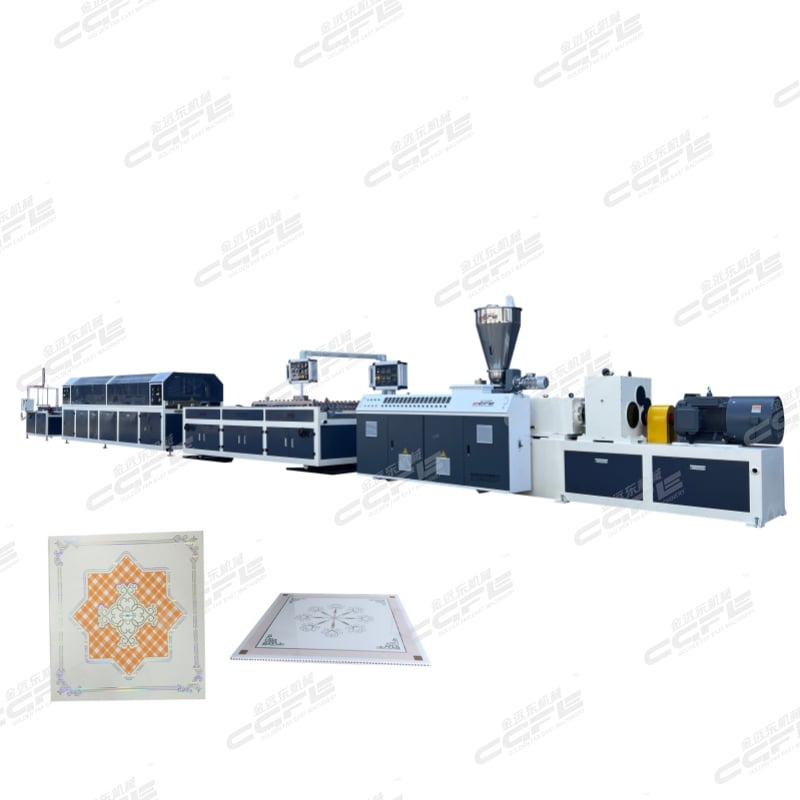
Choosing the right pvc ceiling panel production line is one of the most consequential decisions a manufacturer or investor can make in the building materials sector. The market offers a wide range of configurations, output capacities, and automation levels, and selecting the wrong setup can lead to wasted capital, production bottlenecks, and panels that fail to meet market specifications. Understanding which pvc ceiling panel production line genuinely fits your operational needs requires a structured evaluation of your production goals, facility constraints, target product range, and long-term business strategy.
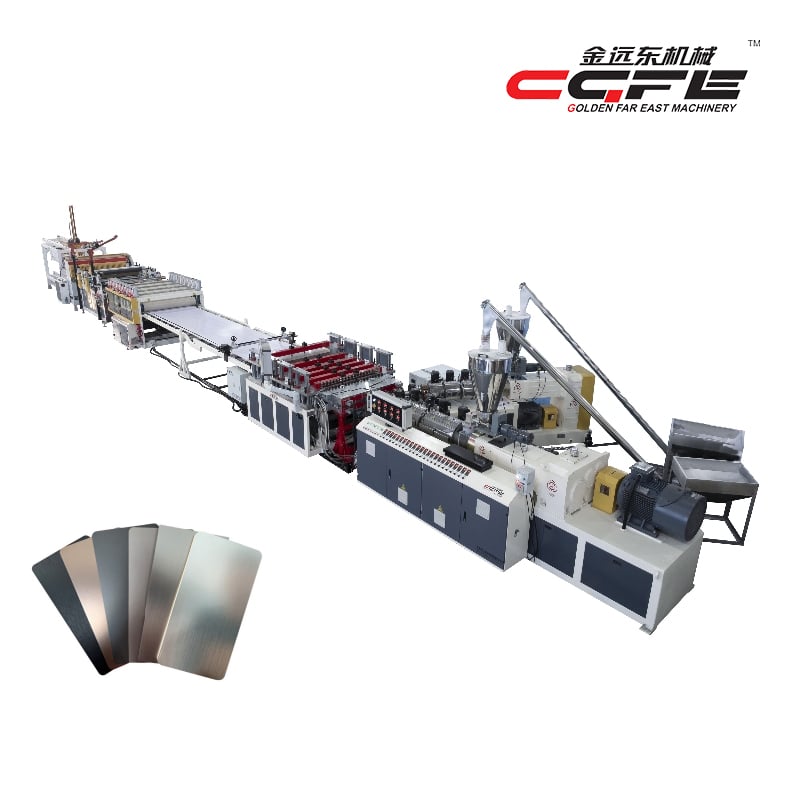
This article walks through the key selection criteria that determine which pvc ceiling panel production line is the right fit for different business scenarios. Whether you are setting up a new facility, upgrading existing equipment, or expanding into a new product category, the guidance here is designed to help you make a well-informed, technically grounded decision. The goal is not to recommend a single solution but to give you the analytical framework to identify the configuration that aligns with your specific production context.
Understanding the Core Components of a PVC Ceiling Panel Production Line
Extrusion System and Its Role in Output Quality
The extrusion unit is the heart of any pvc ceiling panel production line. It is responsible for melting and homogenizing the PVC compound before shaping it into the panel profile. The screw design, barrel length, and temperature control zones all directly influence the density, surface finish, and dimensional consistency of the finished panels. A line with a poorly calibrated extrusion system will produce panels with internal voids, uneven wall thickness, or surface defects that reduce market value.
For manufacturers targeting high-gloss decorative panels, the extrusion system must be capable of maintaining tight melt temperature tolerances. Lines designed for standard construction-grade panels may use simpler screw geometries, but premium decorative output demands more precise thermal management. When evaluating a pvc ceiling panel production line, always examine the extruder's L/D ratio, screw material, and the number of independently controlled heating zones, as these factors determine the ceiling of your product quality.
The drive system of the extruder also matters significantly. Servo-driven or inverter-controlled motors offer better energy efficiency and more stable screw speed, which translates into more consistent melt flow. This consistency is especially important when running formulations with high filler content, which is common in cost-optimized panel production. A robust extrusion system is the foundation upon which the rest of the pvc ceiling panel production line depends.
Calibration, Cooling, and Haul-Off Systems
After extrusion, the molten PVC profile enters the calibration and cooling section, where it is shaped to its final dimensions and solidified. The calibration table must maintain precise vacuum pressure and water temperature to ensure the panel retains its intended geometry without warping or shrinkage. A well-designed pvc ceiling panel production line will include a multi-stage cooling tank system that gradually reduces the panel temperature to prevent internal stress buildup.
The haul-off unit controls the linear speed at which the panel is pulled through the line. This speed must be synchronized with the extrusion rate to maintain consistent panel thickness and width. Lines with digital speed synchronization between the extruder and haul-off unit produce more dimensionally stable panels than those relying on manual adjustment. For operations running multiple panel widths or profiles, a haul-off system with quick-change tooling capability reduces downtime during product changeovers.
Cutting systems at the end of the line must also be evaluated carefully. Servo-driven flying saws or planetary cutters provide cleaner cuts and better length accuracy than basic pneumatic cutters. If your target market demands panels with tight length tolerances, the cutting system specification becomes a critical selection criterion for the pvc ceiling panel production line you choose.
Matching Line Capacity to Your Production Volume Requirements
Small and Medium Capacity Lines for Emerging Operations
For businesses entering the PVC ceiling panel market or operating in regions with moderate demand, a smaller-capacity pvc ceiling panel production line offers a practical entry point. These lines typically produce between 100 and 300 kilograms of panels per hour and require less floor space, lower initial investment, and simpler operator training. They are well-suited for contract manufacturers, regional distributors looking to add in-house production, or entrepreneurs establishing a new manufacturing operation.
The trade-off with smaller lines is that per-unit production costs tend to be higher due to lower throughput efficiency. However, for operations where order volumes are variable or product customization is frequent, the flexibility of a smaller pvc ceiling panel production line can outweigh the efficiency disadvantage. These lines also allow manufacturers to test new formulations or panel designs without committing large volumes of material.
When evaluating smaller lines, pay close attention to the quality of the die head and calibration tooling. On lower-capacity lines, the tooling quality has a disproportionately large impact on panel quality because there is less margin for process correction downstream. Investing in precision-machined tooling on a smaller pvc ceiling panel production line is a cost-effective way to maintain competitive product quality.
High-Capacity Lines for Industrial-Scale Output
Large-scale manufacturers supplying national distributors, construction contractors, or export markets require a pvc ceiling panel production line capable of sustained high-volume output. These lines typically operate at 400 kilograms per hour or more and are designed for continuous multi-shift operation. They incorporate heavier-duty mechanical components, more sophisticated automation systems, and larger cooling and calibration sections to handle the increased throughput.
High-capacity lines often include integrated quality monitoring systems such as online thickness gauges, surface inspection cameras, and automated rejection mechanisms. These features reduce the labor cost of quality control and help maintain consistent output standards across long production runs. For a pvc ceiling panel production line operating at industrial scale, automation is not a luxury but a practical necessity for maintaining competitiveness.
Energy consumption is a significant operating cost at high volumes, so the efficiency of the extruder drive, heating system, and cooling water circuit should be carefully evaluated. Lines with heat recovery systems or variable-frequency drives on cooling pumps can deliver meaningful energy savings over time. When calculating the total cost of ownership for a high-capacity pvc ceiling panel production line, energy costs over a five-year horizon often exceed the initial equipment investment.
Product Range and Profile Flexibility as Selection Criteria
Single-Profile Lines Versus Multi-Profile Configurations
Some manufacturers focus on a single panel profile and width, optimizing their pvc ceiling panel production line for maximum efficiency on that one product. This approach makes sense when serving a market with standardized product preferences and stable demand. Single-profile lines can be tuned to very tight tolerances and run with minimal operator intervention, making them highly cost-effective for commodity panel production.
However, markets that demand variety in panel width, surface texture, or structural profile require a more flexible pvc ceiling panel production line. Multi-profile lines are designed with quick-change die heads, adjustable calibration tooling, and flexible haul-off systems that allow the line to switch between different panel specifications with minimal downtime. This flexibility comes at a higher equipment cost but enables manufacturers to serve a broader customer base and respond to shifting market trends.
The decision between single-profile and multi-profile capability should be driven by a realistic assessment of your order book and market positioning. If your sales strategy depends on offering a wide catalog of panel options, a flexible pvc ceiling panel production line is a strategic asset. If your competitive advantage is price and volume on a standard product, a dedicated single-profile line will deliver better economics.
Lamination and Surface Finishing Integration
Many modern pvc ceiling panel production line configurations include inline lamination units that apply decorative films or foils to the panel surface during production. This integration eliminates a separate offline lamination step, reducing labor costs and the risk of surface contamination between processes. Inline lamination is particularly valuable for manufacturers producing wood-grain, marble-effect, or custom-printed decorative panels.
The lamination unit must be compatible with the panel surface temperature at the point of film application. If the panel is too hot, the film may distort or bubble; if too cool, adhesion may be insufficient. A well-engineered pvc ceiling panel production line will include a temperature-controlled pre-lamination zone that ensures consistent film bonding across the full panel width. Evaluating the lamination system's tension control and film tracking accuracy is essential for achieving a defect-free decorative surface.
For manufacturers who do not currently offer laminated panels but anticipate adding them to their product range, selecting a pvc ceiling panel production line with a lamination-ready design allows for future expansion without requiring a complete line replacement. This forward-compatibility is a valuable consideration when making a long-term capital investment.
Automation Level and Operational Efficiency
Manual Versus Semi-Automated Line Control
Entry-level pvc ceiling panel production line configurations rely on manual adjustment of key process parameters such as melt temperature, screw speed, and haul-off rate. While these lines have lower upfront costs, they require experienced operators to maintain consistent output quality. In markets where skilled labor is readily available and affordable, manual control can be a viable approach, particularly for smaller operations with limited automation budgets.
Semi-automated lines use programmable logic controllers to manage core process parameters while still requiring operator oversight for quality checks and material handling. This level of automation reduces the skill requirement for day-to-day operation and improves process repeatability. For a growing pvc ceiling panel production line operation, semi-automation represents a practical balance between cost and consistency.
The choice of automation level also affects your staffing model. A highly automated line may require fewer operators per shift but demands technicians with stronger electrical and programming skills for maintenance. Factor in the local availability of these skills when deciding on the automation level for your pvc ceiling panel production line, as a sophisticated system that cannot be maintained locally will create costly downtime.
Fully Automated Lines and Industry 4.0 Integration
At the high end of the market, fully automated pvc ceiling panel production line systems incorporate real-time process monitoring, closed-loop control, and data logging that supports predictive maintenance and production analytics. These systems can automatically adjust process parameters in response to detected deviations, maintaining output quality without operator intervention. For large-scale operations where consistency and uptime are critical, full automation delivers a measurable return on investment.
Industry 4.0 integration allows the pvc ceiling panel production line to communicate with enterprise resource planning systems, enabling real-time production tracking, material consumption monitoring, and order fulfillment coordination. This connectivity is increasingly expected by large industrial customers and export market buyers who require detailed production traceability. If your target customers include major construction contractors or international distributors, a digitally integrated line may be a competitive requirement rather than an optional upgrade.
When evaluating fully automated lines, assess the quality and responsiveness of the control system supplier's technical support. A sophisticated pvc ceiling panel production line with poor after-sales support is a significant operational risk. Ensure that remote diagnostics, software updates, and spare parts availability are clearly defined in the supply agreement before committing to a high-automation configuration.
Total Cost of Ownership and Long-Term Fit
Initial Investment Versus Lifecycle Cost Analysis
The purchase price of a pvc ceiling panel production line is only one component of its true cost. Maintenance requirements, energy consumption, tooling replacement cycles, and the cost of unplanned downtime all contribute to the total cost of ownership over the equipment's operational life. A line with a lower purchase price but higher maintenance frequency may ultimately cost more than a premium line with robust components and longer service intervals.
Conducting a five-year lifecycle cost analysis before selecting a pvc ceiling panel production line is a sound investment of time. This analysis should include projected energy costs based on the line's rated power consumption, estimated tooling replacement costs based on the materials being processed, and a realistic assessment of maintenance labor requirements. Lines that use standardized, widely available components typically have lower maintenance costs than those with proprietary parts that must be sourced from a single supplier.
Resale value is another factor worth considering. A well-maintained pvc ceiling panel production line from a reputable equipment supplier retains value better than a low-cost alternative, providing a financial cushion if your business strategy changes. This residual value should be factored into the total cost of ownership calculation when comparing equipment options.
Scalability and Future Expansion Planning
A pvc ceiling panel production line that fits your current needs but cannot scale with your business will require replacement sooner than anticipated, eroding the return on your initial investment. When evaluating options, consider whether the line can be upgraded with additional downstream equipment, higher-capacity extruders, or expanded automation systems as your production volumes grow. Modular line designs that support incremental upgrades offer a more capital-efficient path to scaling than monolithic systems that must be replaced entirely.
If you anticipate entering new product categories such as WPC panels, foam board, or co-extruded profiles, check whether the pvc ceiling panel production line you are considering can be adapted for these applications with tooling changes or minor modifications. Lines built on flexible platform architectures provide greater long-term value for manufacturers with diversified product strategies.
Supplier relationships also play a role in long-term fit. A pvc ceiling panel production line supplier who provides ongoing technical support, process optimization assistance, and access to new tooling designs as the market evolves is a more valuable partner than one who simply delivers equipment and moves on. Evaluate the supplier's track record, service network, and customer references as carefully as you evaluate the equipment specifications themselves.
FAQ
What output capacity should I look for in a pvc ceiling panel production line?
The right output capacity depends on your projected order volume and production schedule. For emerging operations or regional markets, a line producing 100 to 300 kilograms per hour is typically sufficient. For industrial-scale supply to national or export markets, lines rated at 400 kilograms per hour or more are more appropriate. Always size the pvc ceiling panel production line slightly above your current peak demand to allow for growth without immediate reinvestment.
How important is automation in a pvc ceiling panel production line?
Automation level should match your labor cost structure, operator skill availability, and quality consistency requirements. Manual lines work well in labor-abundant markets with experienced operators. Semi-automated lines offer a practical balance for growing operations. Fully automated lines are justified at high volumes where consistency, uptime, and data integration are business-critical. Avoid over-automating beyond what your technical support infrastructure can maintain.
Can a single pvc ceiling panel production line handle multiple panel profiles?
Yes, multi-profile pvc ceiling panel production line configurations are available and use quick-change tooling systems to switch between different panel widths, thicknesses, and surface profiles. The changeover time and tooling cost vary by line design. If your product catalog requires frequent profile changes, specify a line with a modular die head system and adjustable calibration tooling to minimize downtime and maximize production flexibility.
What should I evaluate beyond the equipment price when selecting a pvc ceiling panel production line?
Beyond purchase price, evaluate energy consumption, maintenance requirements, spare parts availability, tooling replacement cycles, and the supplier's after-sales support capability. A five-year lifecycle cost analysis will often reveal that a higher-priced pvc ceiling panel production line with lower operating costs and better support delivers superior total value compared to a lower-cost alternative with higher ongoing expenses and limited technical assistance.
Table of Contents
- Understanding the Core Components of a PVC Ceiling Panel Production Line
- Matching Line Capacity to Your Production Volume Requirements
- Product Range and Profile Flexibility as Selection Criteria
- Automation Level and Operational Efficiency
- Total Cost of Ownership and Long-Term Fit
-
FAQ
- What output capacity should I look for in a pvc ceiling panel production line?
- How important is automation in a pvc ceiling panel production line?
- Can a single pvc ceiling panel production line handle multiple panel profiles?
- What should I evaluate beyond the equipment price when selecting a pvc ceiling panel production line?