
 EN
EN

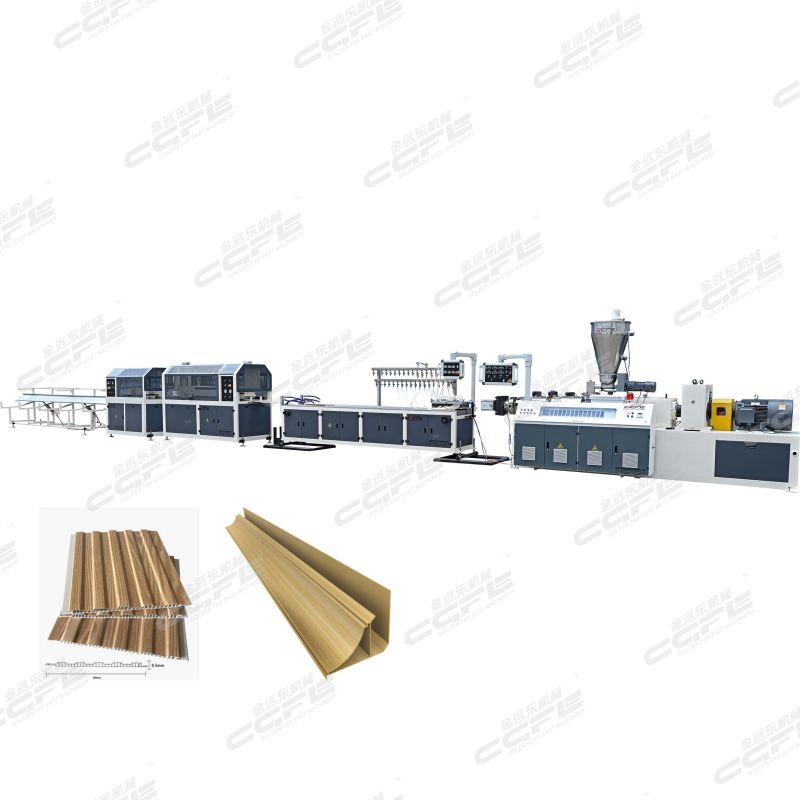
Selecting the right pvc profile extrusion line is one of the most consequential capital decisions a window and door manufacturer can make in 2026. The market has evolved significantly, with new drive technologies, smarter control systems, and tighter dimensional tolerances reshaping what buyers should expect from modern equipment. Getting this decision right means aligning machine specifications with your actual production goals, material formulations, and long-term capacity plans — not simply choosing the most powerful or the least expensive option available.
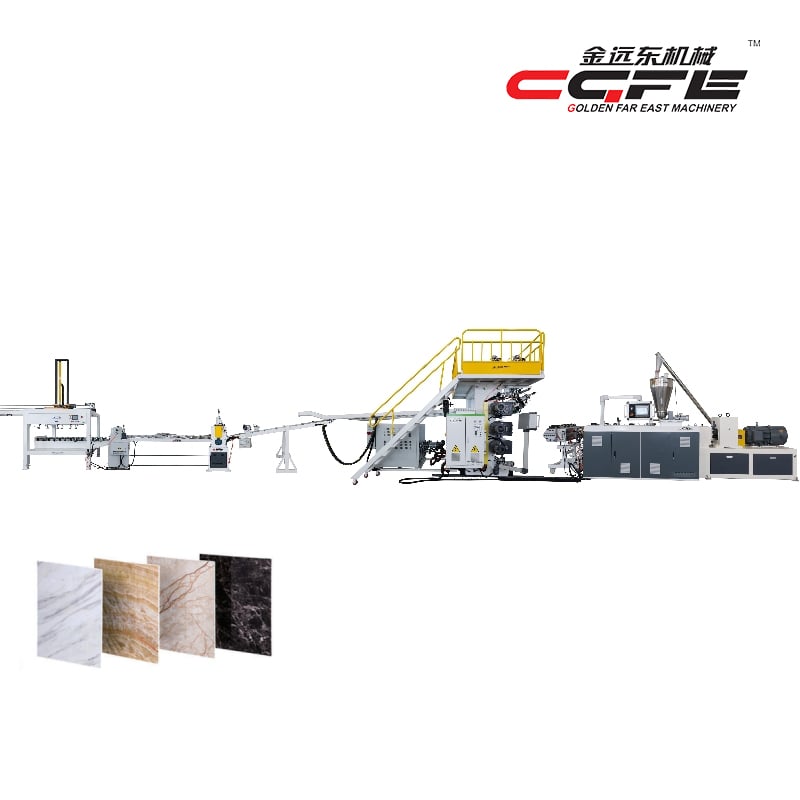
This guide walks through the critical selection criteria that procurement engineers, plant managers, and technical directors should evaluate before committing to a pvc profile extrusion line purchase. From screw geometry and die design to downstream calibration and automation level, every subsystem plays a role in determining whether your line delivers consistent quality, low scrap rates, and a competitive cost per meter over its operational lifetime. Understanding these factors in depth will help you ask the right questions and avoid the costly mismatches that often emerge months after installation.
Understanding What a PVC Profile Extrusion Line Actually Does
The Core Function of the Extrusion Process
A pvc profile extrusion line converts raw PVC compound — typically a dry blend of resin, stabilizers, lubricants, fillers, and impact modifiers — into continuous, dimensionally precise profiles used in window frames, door frames, curtain wall systems, and architectural trim. The process begins at the hopper, where compound is gravity-fed or force-fed into a heated barrel containing one or two intermeshing screws. As the material travels along the barrel, it is simultaneously conveyed, compressed, melted, and homogenized before being forced through a shaped die.
The die defines the cross-sectional geometry of the profile, and its design is one of the most technically demanding aspects of the entire pvc profile extrusion line. After exiting the die, the hot, semi-molten profile enters a calibration and cooling section where vacuum tanks and water baths lock in the final dimensions. A haul-off unit maintains consistent linear speed, and a cutting station produces finished lengths ready for downstream processing or packaging.
Understanding this sequence matters for selection because each stage introduces variables that affect output quality. A buyer who focuses only on extruder output rate without evaluating calibration capacity, cooling length, or haul-off precision will likely encounter dimensional drift and surface defects in production.
Twin-Screw vs. Single-Screw Configurations
The vast majority of pvc profile extrusion line installations for rigid PVC window and door profiles use conical or parallel twin-screw extruders rather than single-screw machines. This is because rigid PVC compound is thermally sensitive and requires gentle, distributive mixing rather than the high-shear melting that single-screw machines deliver efficiently for polyolefins. Twin-screw extruders process PVC dry blend directly without pre-pelletizing, which reduces thermal history and preserves stabilizer effectiveness.
Conical twin-screw extruders are the dominant choice for medium and high-output profile lines because they offer a favorable torque-to-screw-diameter ratio, compact footprint, and strong self-cleaning behavior between the screws. Parallel twin-screw configurations are used in some specialized applications where longer residence time or higher filler loading is required. When evaluating a pvc profile extrusion line, confirming the screw geometry, L/D ratio, and specific torque rating is essential to ensure the machine can handle your compound formulation at your target output rate without thermal degradation.
Key Technical Specifications to Evaluate
Extruder Output Rate and Screw Diameter
Output rate, expressed in kilograms per hour, is the most commonly cited specification for a pvc profile extrusion line, but it must always be interpreted in context. A machine rated at 300 kg/h on a simple solid profile may only achieve 180 kg/h on a complex multi-chamber window profile because the die restriction and calibration cooling capacity become the limiting factors. Always request output data that corresponds to the specific profile geometry and compound formulation you intend to run.
Screw diameter directly influences output capacity and the range of profiles a machine can run efficiently. Smaller diameter screws — in the 55 mm to 65 mm conical range — are well suited for narrow, lightweight profiles and offer precise control at lower throughputs. Larger diameter screws in the 75 mm to 92 mm range are designed for high-volume production of wide, multi-chamber profiles. Selecting a pvc profile extrusion line with a screw diameter that is significantly oversized for your typical profile weight per meter will result in poor melt quality at the low screw speeds required, leading to surface defects and dimensional instability.
Drive System and Energy Efficiency
The drive system of a pvc profile extrusion line has a direct impact on both product quality and operating cost. Traditional DC drive systems have largely been replaced by AC vector drives and permanent magnet servo drives in modern equipment. AC vector drives with closed-loop feedback offer excellent speed stability across a wide torque range, which is critical for maintaining consistent melt pressure and profile dimensions during long production runs.
Energy consumption is an increasingly important selection criterion in 2026, as electricity costs continue to rise in most manufacturing regions. Look for machines that specify specific energy consumption in kWh per kilogram of output rather than simply listing installed motor power. A pvc profile extrusion line with a high-efficiency gearbox, insulated barrel sections, and a variable-frequency drive on the main motor can reduce energy consumption by 20 to 35 percent compared to older designs running at fixed speed. Over a multi-shift production schedule, this difference translates into substantial annual savings that should be factored into total cost of ownership calculations.
Control System Sophistication
Modern pvc profile extrusion line equipment is expected to offer PLC-based control with touchscreen HMI, recipe storage, and real-time process monitoring as standard features rather than premium options. The ability to store and recall process recipes for each profile type eliminates operator-dependent setup variability and dramatically reduces changeover time. In a facility running 20 or more different profile geometries, this capability alone can recover several hours of productive time per week.
More advanced lines now offer integration with manufacturing execution systems and remote diagnostics via industrial Ethernet protocols. When evaluating a pvc profile extrusion line for a new or expanding facility, consider whether the control architecture supports data logging for process traceability, alarm management with root-cause guidance, and remote access for supplier technical support. These features reduce downtime and support continuous process improvement over the machine's operational life.
Downstream Equipment and Line Integration
Calibration and Cooling System Design
The calibration and cooling section is where the dimensional accuracy of the finished profile is ultimately determined, and it is frequently underspecified by buyers who focus too heavily on the extruder itself. A pvc profile extrusion line is only as precise as its calibration tooling and cooling capacity. Dry calibration sleeves, held under vacuum, define the outer geometry of the profile immediately after the die. The quality of the calibration tooling — its surface finish, dimensional accuracy, and thermal conductivity — directly affects surface gloss, wall thickness uniformity, and corner sharpness.
Cooling tank length must be matched to the line speed and profile cross-section. Insufficient cooling length forces the operator to reduce haul-off speed to allow adequate solidification, which caps output rate below the extruder's actual capacity. When comparing pvc profile extrusion line packages, request the recommended cooling tank configuration for your specific profile geometry and verify that the supplier's output claims are based on that configuration rather than on a simplified test profile.
Haul-Off, Cutting, and Stacking Systems
The haul-off unit must maintain a constant, precisely controlled pulling force and speed to prevent stretching or compression of the profile as it exits the cooling section. Caterpillar-type haul-offs with servo-driven tracks are the preferred choice for rigid PVC profiles because they distribute clamping force evenly and respond quickly to speed corrections from the control system. The haul-off speed must be synchronized with the extruder screw speed and melt pressure to maintain dimensional stability throughout the run.
Cutting systems for a pvc profile extrusion line are typically either planetary saw cutters or guillotine cutters, with planetary saws being preferred for clean, burr-free cuts on multi-chamber profiles. Automatic length measurement and cut-to-length control reduce material waste and eliminate the need for manual measurement during production. For high-volume operations, automated stacking and bundling systems downstream of the cutter further reduce labor requirements and improve throughput consistency.
Matching the Line to Your Production Strategy
Profile Complexity and Changeover Frequency
One of the most important but often overlooked selection criteria for a pvc profile extrusion line is the frequency and complexity of product changeovers in your production schedule. A facility that runs long, stable campaigns of a single profile geometry has very different equipment needs compared to a custom fabricator that changes profiles multiple times per shift. For high-changeover environments, the ease of die removal and installation, the speed of calibration tool exchange, and the time required to purge and restabilize the extruder are all critical factors.
Quick-release die clamping systems, modular calibration frames, and fast-response temperature control zones all contribute to reducing changeover time on a pvc profile extrusion line. Some equipment suppliers offer standardized die mounting interfaces that allow dies from multiple profile families to be exchanged without realigning the entire downstream section. Evaluating these features in the context of your actual production mix will give you a more accurate picture of effective line utilization than output rate specifications alone.
Scalability and Future Capacity Planning
Capital equipment decisions for a pvc profile extrusion line should account for anticipated production growth over a three-to-five-year horizon, not just current requirements. Purchasing a line that is already at the upper limit of its capacity envelope on day one leaves no room to absorb volume increases without additional capital investment. Conversely, significantly oversizing the line to accommodate speculative future demand results in poor process control at current production rates and higher energy cost per kilogram of output.
A practical approach is to select a pvc profile extrusion line with a screw diameter and drive system that can comfortably handle your current peak demand at approximately 70 to 80 percent of rated capacity, leaving headroom for growth. Confirm with the supplier whether the line can be upgraded — for example, by adding a longer cooling section, a higher-capacity haul-off, or an additional downstream station — without replacing the extruder itself. Modular line architectures that support incremental upgrades offer a lower total cost of ownership over the equipment's service life.
Supplier Evaluation and After-Sales Support
Technical Documentation and Training
The quality of technical documentation and operator training provided with a pvc profile extrusion line is a reliable indicator of the supplier's overall engineering competence and customer commitment. Comprehensive documentation should include detailed process parameter guidelines for common PVC compound formulations, troubleshooting matrices for common defects, preventive maintenance schedules with part numbers, and electrical and mechanical drawings in editable formats. Suppliers who provide only generic manuals translated from another language are signaling that after-sales support will be similarly limited.
On-site commissioning and operator training should be included as a contractual deliverable, not an optional add-on. During commissioning, the supplier's technician should demonstrate the line running your actual compound on your target profiles, document the baseline process parameters, and train your operators on startup, shutdown, and routine adjustment procedures. This baseline documentation becomes invaluable when troubleshooting process deviations months or years after installation.
Spare Parts Availability and Service Response
For a pvc profile extrusion line operating in a multi-shift production environment, unplanned downtime is extremely costly. Before finalizing a purchase, verify the supplier's spare parts inventory policy, lead times for critical wear components such as screw and barrel sets, and the availability of local or regional service engineers. A supplier who can only ship spare parts from an overseas warehouse with a four-to-six-week lead time represents a significant operational risk for a facility with tight delivery commitments.
Request a recommended spare parts list from the supplier and obtain pricing before signing the purchase agreement. Compare the total cost of the recommended initial spare parts inventory across competing suppliers, as this cost can vary substantially and should be included in the total acquisition cost comparison. Suppliers who offer remote diagnostic support via secure internet connection can often resolve control system issues and process optimization questions without requiring an on-site visit, which significantly reduces response time and service cost for a pvc profile extrusion line operating in a remote location.
FAQ
What is the typical production speed of a modern pvc profile extrusion line for window profiles?
Production speed for a pvc profile extrusion line running standard window profiles typically ranges from 1.5 to 4 meters per minute, depending on the profile cross-section, wall thickness, compound formulation, and cooling capacity. Lightweight, thin-wall profiles can run at the higher end of this range, while heavy multi-chamber profiles with thick walls require slower speeds to allow adequate cooling and dimensional stabilization. Output rate in kg/h is a more meaningful benchmark than linear speed alone because it accounts for profile weight per meter.
How do I determine the right screw diameter for my pvc profile extrusion line?
The right screw diameter depends on your target output rate, the weight per meter of your heaviest profile, and the number of production shifts per day. As a general guideline, calculate your required daily output in kilograms, divide by your available production hours, and add a 20 to 25 percent margin for startup losses and changeovers. Match this required kg/h figure to the output capacity of available screw diameters at a screw speed that falls in the middle of the machine's operating range, not at its maximum, to preserve process stability and equipment longevity.
What are the most common quality problems on a pvc profile extrusion line and how are they prevented?
The most common quality problems on a pvc profile extrusion line include surface roughness or 'sharkskin,' dimensional drift, warping or bowing, and discoloration. Surface roughness is typically caused by excessive melt temperature, incorrect die land geometry, or inadequate lubrication in the compound. Dimensional drift usually results from inconsistent haul-off speed, unstable melt pressure, or insufficient cooling. Warping is often linked to asymmetric cooling or uneven wall thickness in the die design. Discoloration indicates thermal degradation from excessive barrel temperature, long residence time, or inadequate stabilizer loading in the compound. Preventing these issues requires careful process setup, regular calibration of temperature sensors, and consistent compound quality.
How long does it take to commission a new pvc profile extrusion line?
Commissioning a new pvc profile extrusion line typically takes between three and ten working days on-site, depending on the complexity of the line, the number of profile dies being qualified, and the experience level of the operating team. Simple single-die commissioning with an experienced team can be completed in three to four days. Full commissioning of a complete line with multiple dies, downstream automation, and integration into a plant-level control system may require seven to ten days. Buyers should negotiate a clear commissioning scope in the purchase contract, specifying the number of profiles to be qualified, the acceptance criteria for dimensional tolerance and surface quality, and the training deliverables to be completed before the supplier's technician departs.
Table of Contents
- Understanding What a PVC Profile Extrusion Line Actually Does
- Key Technical Specifications to Evaluate
- Downstream Equipment and Line Integration
- Matching the Line to Your Production Strategy
- Supplier Evaluation and After-Sales Support
-
FAQ
- What is the typical production speed of a modern pvc profile extrusion line for window profiles?
- How do I determine the right screw diameter for my pvc profile extrusion line?
- What are the most common quality problems on a pvc profile extrusion line and how are they prevented?
- How long does it take to commission a new pvc profile extrusion line?