
 EN
EN

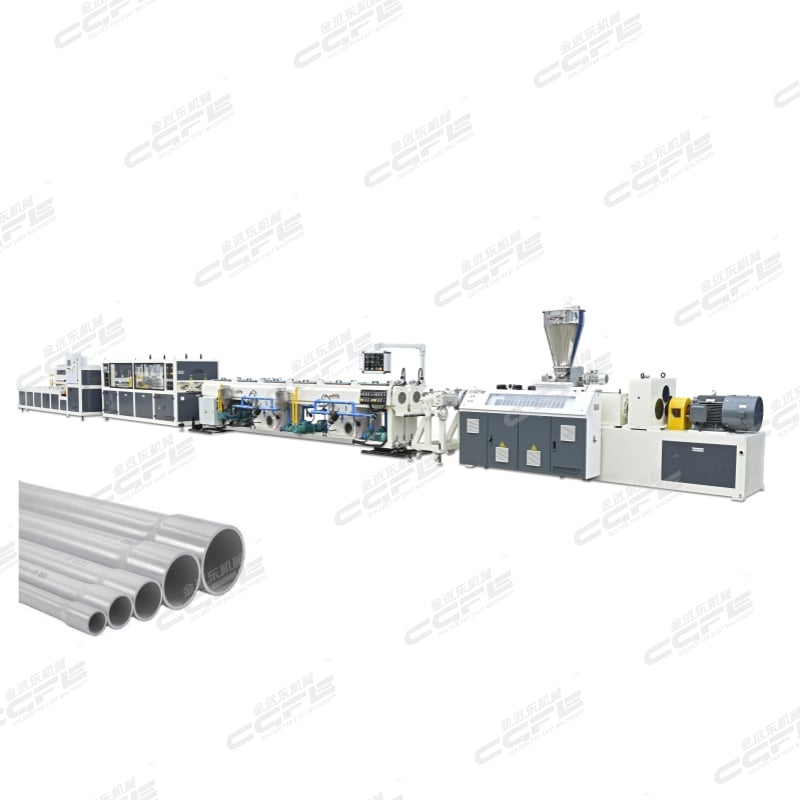
The pvc pipe extrusion line has undergone significant technological evolution over the past decade, and in 2026, it represents one of the most refined continuous manufacturing systems in the plastics processing industry. From raw material feeding to finished pipe output, every stage of the process is now governed by precision controls, energy-efficient drives, and intelligent monitoring systems that were simply not available in earlier generations of equipment. Understanding how this technology works is essential for manufacturers, plant engineers, and procurement decision-makers who want to optimize production quality, reduce waste, and stay competitive in a demanding market.
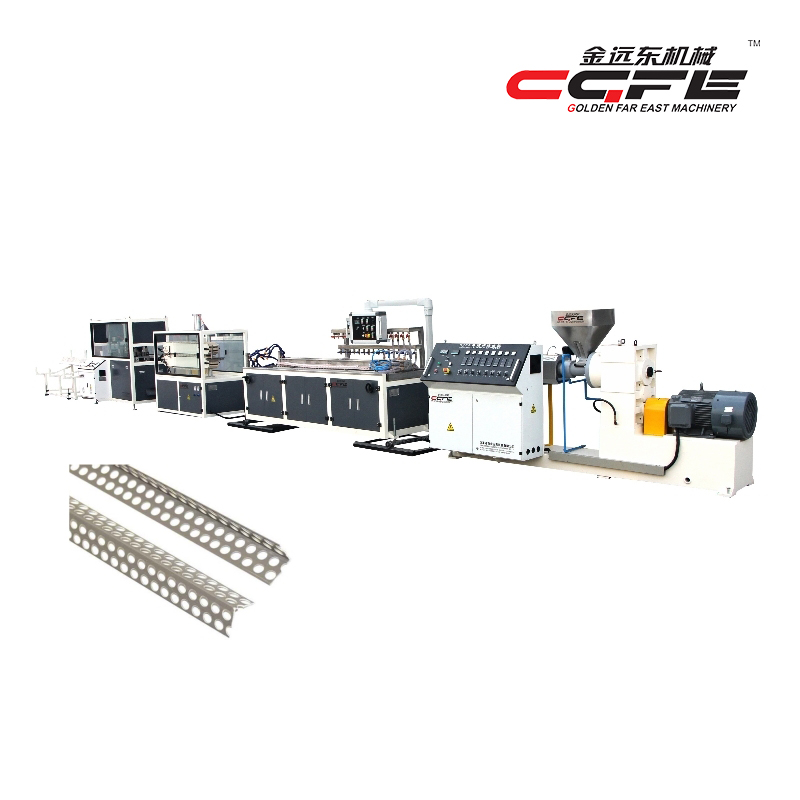
A modern pvc pipe extrusion line is not a single machine but a carefully integrated sequence of processing units, each performing a specific function that feeds directly into the next. The coordination between these units determines the dimensional accuracy, surface finish, mechanical strength, and throughput rate of the final pipe. In 2026, the integration of servo-driven systems, real-time data feedback, and modular line configurations has made the pvc pipe extrusion line more adaptable and efficient than ever before. This article walks through the complete working mechanism of this technology, section by section, so you can understand exactly what happens from compound input to pipe output.
The Raw Material Preparation and Feeding Stage
PVC Compound Formulation and Its Role in Line Performance
Before any extrusion begins, the quality and consistency of the PVC compound directly determine how well the pvc pipe extrusion line will perform. The compound typically consists of PVC resin blended with stabilizers, lubricants, impact modifiers, fillers, and processing aids. Each additive serves a specific function — stabilizers prevent thermal degradation during processing, lubricants control melt flow and reduce die buildup, and impact modifiers improve the toughness of the finished pipe.
In 2026, many facilities use pre-compounded dry blend or pelletized PVC that has been prepared in a high-speed mixer and cooled mixer combination. This ensures homogeneous distribution of all additives before the material enters the extruder. Inconsistent blending at this stage leads to surface defects, dimensional variation, and mechanical weakness in the finished pipe — problems that are difficult to correct downstream once the material is already in the barrel.
The feeding system on a modern pvc pipe extrusion line uses gravimetric or volumetric feeders to deliver a consistent mass flow rate of compound into the extruder hopper. Gravimetric feeders are preferred in high-precision applications because they compensate for bulk density variations in the compound, ensuring that the extruder receives a stable and predictable material input at all times.
Hopper Design and Material Conditioning
The hopper on a pvc pipe extrusion line is more than a simple storage vessel. In humid environments or when processing hygroscopic PVC grades, the hopper may be equipped with a drying or dehumidifying system to prevent moisture absorption. Excess moisture in PVC compound causes bubbles, surface roughness, and reduced mechanical properties in the extruded pipe.
Some advanced lines in 2026 incorporate hopper-level sensors and automated refill systems that maintain a consistent material level, preventing air pockets or surging that could disrupt the extrusion process. The transition from hopper to barrel is also carefully designed to prevent bridging — a condition where material clumps and blocks the feed throat, causing output fluctuations.
The Extrusion Process Inside the Barrel and Screw
Twin-Screw Extruder Mechanics for PVC Processing
PVC is a heat-sensitive material that degrades rapidly if overheated, which is why the pvc pipe extrusion line almost universally uses a conical or parallel twin-screw extruder rather than a single-screw design. The twin-screw configuration provides positive conveying, better mixing, and more controlled shear heating, all of which are critical when processing rigid PVC compounds.
Inside the barrel, the two intermeshing screws rotate in the same direction (co-rotating) or in opposite directions (counter-rotating), depending on the extruder design. For rigid PVC pipe production, counter-rotating twin screws are the standard choice because they generate lower shear rates, reducing the risk of thermal degradation while still achieving thorough plasticization of the compound.
The barrel is divided into multiple heating zones, each independently controlled by PID temperature controllers. In 2026, these controllers are integrated into the line's central HMI (human-machine interface), allowing operators to monitor and adjust all zone temperatures from a single screen. The temperature profile along the barrel is carefully calibrated to progressively melt and homogenize the PVC compound without exceeding its degradation threshold.
Melt Pressure, Screw Speed, and Output Rate Control
The relationship between screw speed, melt pressure, and output rate is one of the most critical control parameters on a pvc pipe extrusion line. Increasing screw speed raises output but also increases shear heat generation, which must be balanced against the barrel temperature settings to avoid overheating the melt. Modern lines use melt pressure transducers positioned at the barrel exit and die entry to provide real-time feedback to the control system.
In 2026, many pvc pipe extrusion line configurations use variable frequency drives (VFDs) on the main extruder motor, allowing precise screw speed adjustment without mechanical gearbox changes. This gives operators fine control over output rate and melt quality, and it also contributes to energy savings by matching motor power consumption to actual processing demand rather than running at fixed speed.
Melt pressure stability is directly linked to dimensional consistency in the finished pipe. Pressure fluctuations cause wall thickness variation, which can result in pipes that fail pressure testing or do not meet dimensional standards. Closed-loop pressure control systems on modern lines automatically adjust screw speed or haul-off speed to compensate for pressure drift, maintaining tight dimensional tolerances throughout a production run.
Die Head Design and Pipe Forming Mechanism
Pipe Die Geometry and Its Effect on Wall Thickness Distribution
The die head is the component that shapes the molten PVC into a pipe profile, and its design has a profound effect on the quality of the finished product. On a pvc pipe extrusion line, the pipe die consists of an outer die ring and an inner mandrel, with the annular gap between them defining the pipe wall thickness. The melt flows through this annular gap and exits as a continuous hollow tube.
In 2026, pipe dies for larger diameter lines (such as those producing pipes in the 160mm to 400mm range) are designed with spiral distributor channels that ensure uniform melt distribution around the full circumference of the die. Without this uniform distribution, the pipe wall would be thicker on one side than the other — a condition known as eccentricity — which weakens the pipe and wastes material.
The die is also equipped with centering bolts that allow fine adjustment of the mandrel position relative to the outer ring. Operators use these adjustments to correct any eccentricity detected during production. Some advanced pvc pipe extrusion line configurations now include automatic die centering systems that use wall thickness measurement feedback to make real-time adjustments without manual intervention.
Die Temperature Control and Melt Flow Optimization
The die head on a pvc pipe extrusion line is independently heated and temperature-controlled, separate from the barrel zones. Maintaining the correct die temperature is essential for achieving a smooth pipe surface and consistent melt flow. If the die is too cool, the melt viscosity increases, causing higher die pressure and potential surface roughness. If the die is too hot, the PVC may begin to degrade at the die lips, causing discoloration and buildup.
Modern die designs in 2026 incorporate streamlined flow channels that minimize dead zones where material could stagnate and degrade. The land length — the parallel section at the die exit — is carefully calculated to relax melt stresses before the pipe exits the die, reducing the tendency for post-extrusion distortion or warping.
Calibration, Cooling, and Haul-Off Systems
Vacuum Calibration and Water Cooling Tank Operation
Immediately after the pipe exits the die, it enters the calibration and cooling section, which is one of the most technically demanding parts of the pvc pipe extrusion line. The pipe is still soft and deformable at this point, and it must be sized to its final outer diameter while being cooled rapidly enough to maintain dimensional stability.
Vacuum calibration is the standard method used on modern pvc pipe extrusion line configurations. The pipe passes through a calibration sleeve — a precision-machined tube with the exact target outer diameter — while vacuum is applied through small holes in the sleeve wall. The vacuum draws the soft pipe outward against the sleeve surface, setting the outer diameter accurately. Simultaneously, cooling water flows over the pipe inside the vacuum tank, rapidly solidifying the outer surface.
After the vacuum calibration tank, the pipe passes through one or more additional cooling tanks where it is fully cooled to near ambient temperature. The length and water temperature of these cooling tanks are calculated based on the pipe diameter, wall thickness, and line speed. Insufficient cooling before the haul-off unit causes the pipe to deform under the grip pressure of the haul-off caterpillar tracks.
Haul-Off Unit and Cutting Station Coordination
The haul-off unit on a pvc pipe extrusion line uses caterpillar-style rubber tracks to grip the cooled pipe and pull it through the calibration and cooling section at a controlled, constant speed. The haul-off speed is one of the primary variables that controls the pipe wall thickness — increasing haul-off speed relative to extruder output reduces wall thickness, while decreasing it increases wall thickness.
In 2026, haul-off units are servo-driven and synchronized with the extruder output through the central control system. This synchronization ensures that the draw ratio remains constant even when extruder output fluctuates slightly, maintaining consistent wall thickness throughout the production run. The grip pressure of the caterpillar tracks is also carefully controlled to avoid marking or deforming the pipe surface.
At the end of the pvc pipe extrusion line, a planetary or traveling saw cutting station cuts the pipe to the specified length. The cutter travels with the pipe during the cutting cycle so that the pipe does not need to stop, maintaining continuous production. After cutting, the pipes are transferred to a stacking or bundling station for packaging and dispatch.
Control Systems and Industry 4.0 Integration in 2026
Centralized HMI and Process Data Management
One of the most significant advances in pvc pipe extrusion line technology in 2026 is the sophistication of the control and data management systems. Modern lines are equipped with centralized touchscreen HMI panels that display real-time data from every section of the line — barrel temperatures, melt pressure, screw speed, haul-off speed, cooling water temperature, and cutting length — all on a single interface.
Recipe management systems allow operators to store and recall complete production parameter sets for different pipe specifications. When switching from one pipe size or compound to another, the operator selects the appropriate recipe and the control system automatically adjusts all parameters to the stored values, reducing setup time and the risk of operator error. This capability is particularly valuable on lines that produce a wide range of pipe diameters and wall thicknesses.
Data logging and trend analysis tools on modern pvc pipe extrusion line control systems allow quality managers to review historical process data and correlate parameter variations with quality outcomes. This data-driven approach to process optimization is a key feature of Industry 4.0 integration in plastics manufacturing, enabling continuous improvement without relying solely on operator experience.
Inline Quality Measurement and Closed-Loop Feedback
Inline measurement systems are now a standard feature on high-performance pvc pipe extrusion line configurations. Laser or ultrasonic wall thickness gauges measure the pipe wall at multiple points around the circumference in real time, providing continuous feedback to the control system. If wall thickness drifts outside the specified tolerance, the system automatically adjusts haul-off speed or die centering to correct the deviation.
Outer diameter measurement using laser scanning systems provides similar closed-loop control over the pipe's outer dimensions. These systems can detect diameter changes of fractions of a millimeter and respond within seconds, ensuring that every meter of pipe produced meets the dimensional specification. This level of inline quality control significantly reduces scrap rates and the need for manual sampling and measurement.
In 2026, some pvc pipe extrusion line installations also incorporate vision systems that inspect the pipe surface for defects such as scratches, discoloration, or surface roughness. These systems use machine learning algorithms trained on defect image libraries to classify and flag surface anomalies, alerting operators before defective pipe accumulates in the production run.
FAQ
What is the typical output speed of a modern pvc pipe extrusion line?
Output speed varies significantly depending on pipe diameter and wall thickness. For smaller diameter pipes in the 20mm to 63mm range, line speeds can reach 3 to 6 meters per minute or higher. For larger diameter pipes in the 160mm to 400mm range, line speeds are typically in the range of 0.5 to 2 meters per minute. The limiting factor is usually the cooling capacity of the water tanks rather than the extruder output rate.
How does the pvc pipe extrusion line maintain consistent wall thickness?
Wall thickness consistency is maintained through the coordinated control of extruder screw speed, haul-off speed, melt pressure, and die centering. Modern lines use inline ultrasonic or laser wall thickness gauges that provide real-time measurements and feed data back to the control system, which automatically adjusts haul-off speed or die position to correct any deviation from the target wall thickness specification.
What are the main differences between a conical and parallel twin-screw extruder on a pvc pipe extrusion line?
A conical twin-screw extruder has screws that taper from a larger diameter at the feed end to a smaller diameter at the output end. This design provides high feeding capacity and gentle, low-shear plasticization, making it well suited for rigid PVC pipe production. A parallel twin-screw extruder has screws of uniform diameter throughout and is generally used for larger output rates or when processing compounds that require more intensive mixing. Both designs are used on pvc pipe extrusion line configurations, with the choice depending on pipe size range, output requirements, and compound characteristics.
How often does a pvc pipe extrusion line require maintenance?
Maintenance frequency depends on production intensity, compound abrasiveness, and the specific components involved. Screw and barrel wear is the most significant long-term maintenance concern, and wear rates depend heavily on the filler content of the PVC compound. Die heads require regular cleaning to remove any degraded material buildup. Cooling water systems need periodic descaling and filter cleaning. Most manufacturers recommend a structured preventive maintenance schedule with daily, weekly, and monthly inspection routines to prevent unplanned downtime and maintain consistent production quality on the pvc pipe extrusion line.
Table of Contents
- The Raw Material Preparation and Feeding Stage
- The Extrusion Process Inside the Barrel and Screw
- Die Head Design and Pipe Forming Mechanism
- Calibration, Cooling, and Haul-Off Systems
- Control Systems and Industry 4.0 Integration in 2026
-
FAQ
- What is the typical output speed of a modern pvc pipe extrusion line?
- How does the pvc pipe extrusion line maintain consistent wall thickness?
- What are the main differences between a conical and parallel twin-screw extruder on a pvc pipe extrusion line?
- How often does a pvc pipe extrusion line require maintenance?