
 EN
EN

In the competitive landscape of modern construction materials manufacturing, the decision to invest in specialized production equipment represents a critical strategic choice that can define operational efficiency, product quality, and market positioning for decades. Among the most significant of these decisions is the selection of a PVC profile extrusion line, a choice that directly impacts a manufacturer's ability to meet market demands, maintain consistent quality standards, and achieve sustainable profitability. Understanding why manufacturers across the globe consistently choose dedicated PVC profile extrusion systems requires examining the complex interplay of technical capabilities, economic considerations, and strategic business advantages that these production platforms deliver.
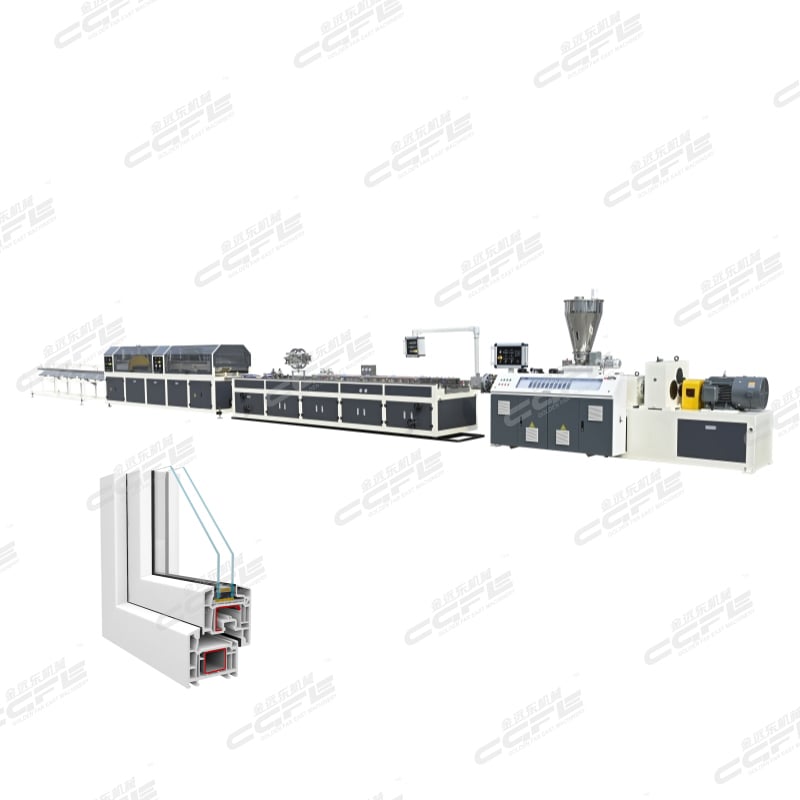
The fundamental reason manufacturers gravitate toward PVC profile extrusion lines lies in their unparalleled ability to transform raw polyvinyl chloride compounds into precisely dimensioned, consistently manufactured architectural profiles that meet rigorous industry standards. These sophisticated production systems integrate multiple processing stages into a cohesive manufacturing workflow that ensures dimensional accuracy, surface quality, and structural integrity across millions of linear meters of production. As building codes become increasingly stringent and customer expectations for performance and aesthetics continue to rise, manufacturers recognize that investing in purpose-built extrusion technology represents not merely an equipment purchase but a foundational commitment to quality, efficiency, and competitive differentiation in an increasingly demanding marketplace.
Technical Superiority and Production Precision
Advanced Temperature Control Systems
One of the primary reasons manufacturers choose a pvc profile extrusion line is the sophisticated temperature management capability that these systems provide throughout the entire production process. Modern extrusion lines incorporate multi-zone heating elements with independent temperature controllers that allow operators to establish precise thermal profiles along the barrel and die assembly. This granular temperature control ensures that PVC compound undergoes proper plasticization without thermal degradation, maintaining the material's mechanical properties and preventing discoloration or surface defects. The ability to maintain temperature consistency within narrow tolerances directly translates to dimensional stability in the finished profiles, reducing scrap rates and ensuring that every meter of production meets specified tolerances.
The heating zones in professional-grade extrusion lines typically range from eight to twelve independent control sections, each monitored by precision thermocouples that provide real-time feedback to digital controllers. This level of thermal precision allows manufacturers to optimize processing conditions for different PVC formulations, whether working with rigid compounds for structural applications or modified blends for specialty profiles. The temperature control systems also enable rapid changeovers between different product specifications, minimizing downtime and maximizing production flexibility. Manufacturers recognize that this technical capability directly impacts their ability to maintain quality consistency across production runs while accommodating the diverse requirements of different customer segments and application specifications.
Dimensional Accuracy and Geometric Consistency
The exceptional dimensional precision delivered by dedicated PVC profile extrusion lines represents another compelling reason for manufacturer adoption. These systems incorporate calibration equipment that actively shapes and cools the extruded profile immediately after it exits the die, ensuring that the material solidifies in precisely the intended geometry. Vacuum calibrators, water spray cooling systems, and precision sizing sleeves work in coordinated sequence to maintain cross-sectional dimensions within tolerances measured in hundredths of millimeters. This level of precision is essential for profiles that must fit together in assemblies such as window and door systems, where even minor dimensional variations can compromise seal integrity, operational smoothness, and overall system performance.
Beyond basic dimensional control, advanced extrusion lines provide geometric consistency across the entire length of produced profiles, eliminating the bow, twist, and wall thickness variations that plague inferior production systems. The calibration section length, cooling water temperature management, and haul-off speed synchronization all contribute to this geometric stability. Manufacturers understand that dimensional precision directly affects their rejection rates, assembly efficiency at customer facilities, and ultimately their reputation for quality in the marketplace. A pvc profile extrusion line that consistently delivers profiles within specification reduces costly rework, minimizes material waste, and strengthens customer relationships through reliable product performance.
Surface Quality and Aesthetic Excellence
Surface finish quality represents a critical selection factor that drives manufacturers toward specialized pvc profile extrusion line technology. The surface characteristics of extruded profiles depend on multiple processing parameters including die design, melt temperature uniformity, cooling rate control, and post-extrusion handling systems. Professional extrusion lines incorporate highly polished die surfaces, optimized flow channel geometry, and controlled cooling sequences that produce profiles with smooth, glossy surfaces free from flow marks, die lines, and surface irregularities. This surface quality is particularly important for visible architectural applications where aesthetic appearance directly influences customer satisfaction and product marketability.
The die design sophistication found in quality extrusion lines extends beyond simple profile shaping to include features that actively manage melt flow distribution, eliminate stagnation zones, and ensure uniform residence time for all material flowing through the system. These design considerations prevent the material degradation and surface defects that arise from localized overheating or extended thermal exposure. Additionally, modern systems incorporate inline surface treatment capabilities such as embossing rollers or co-extrusion systems for decorative films, enabling manufacturers to produce value-added profiles with wood-grain textures, metallic finishes, or color variations. This versatility in surface finishing expands market opportunities and allows manufacturers to differentiate their product offerings in competitive markets.
Economic Efficiency and Operational Advantages
Energy Consumption Optimization
Energy efficiency represents a significant economic driver behind manufacturer decisions to invest in modern pvc profile extrusion line technology. Contemporary extrusion systems incorporate variable frequency drives on all major motors, allowing precise speed control and reducing electrical consumption during startup, changeover, and reduced-capacity operation. The screw and barrel designs have evolved to maximize heat generation through mechanical shearing rather than relying solely on external heating elements, significantly reducing electrical demand while improving melt quality. Insulation systems around heating zones minimize thermal losses, while optimized cooling systems use recirculation and heat recovery to reduce water and energy consumption in the calibration and cooling stages.
Manufacturers conducting lifecycle cost analysis quickly recognize that energy consumption represents one of the largest ongoing operational expenses in profile extrusion. Modern pvc profile extrusion line designs can reduce energy consumption by twenty to thirty percent compared to older generation equipment, translating to substantial cost savings over the equipment's operational lifetime. These efficiency gains become particularly significant in regions with high electricity costs or for manufacturers operating multiple production shifts. The reduced energy footprint also aligns with corporate sustainability initiatives and increasingly stringent environmental regulations, providing both economic and compliance advantages that strengthen the business case for investing in advanced extrusion technology.
Labor Efficiency and Automation Integration
The operational efficiency gains enabled by automated pvc profile extrusion line systems strongly influence manufacturer equipment selection decisions. Modern extrusion lines incorporate centralized control systems with touchscreen interfaces that allow a single operator to monitor and adjust multiple process parameters simultaneously. Automated material feeding systems, integrated quality monitoring sensors, and programmable recipe management eliminate manual interventions that previously required multiple operators and introduced consistency variations. Cutting systems with programmable length control, automated stacking equipment, and integrated material handling reduce downstream labor requirements while improving safety and reducing product damage during handling.
The labor efficiency advantages extend beyond simple headcount reduction to encompass improved process consistency, reduced training requirements, and enhanced operational flexibility. Automated systems execute processes with perfect repeatability, eliminating the variations that arise from operator technique differences or attention lapses during extended production runs. Recipe management systems allow rapid changeovers between different products, with all process parameters automatically adjusted to pre-programmed specifications. This capability enables manufacturers to economically produce smaller batch sizes, respond quickly to customer orders, and maintain diverse product portfolios without the complexity and inconsistency that manual changeovers introduce. These operational advantages directly impact manufacturing costs, delivery lead times, and customer service capabilities.
Material Utilization and Waste Reduction
Material efficiency represents another compelling economic reason manufacturers choose dedicated pvc profile extrusion line equipment. The precise process control provided by modern extrusion systems minimizes startup scrap, reduces out-of-specification production, and enables efficient regrind utilization. Advanced systems reach production specifications within minutes of startup rather than the extended stabilization periods required by less sophisticated equipment, dramatically reducing the material waste associated with process initialization. Real-time monitoring systems detect process deviations before significant quantities of defective material are produced, allowing immediate corrections that prevent waste generation.
The ability to effectively incorporate recycled material represents an increasingly important aspect of material efficiency. Quality pvc profile extrusion line systems include mixing and feeding equipment capable of blending virgin compound with properly prepared regrind material while maintaining consistent product quality. This capability allows manufacturers to reclaim value from edge trim, startup scrap, and production rejects, converting material that would otherwise represent total loss into usable feedstock. As raw material costs fluctuate and environmental pressures increase, the economic value of effective waste reduction and material reclamation continues to grow, strengthening the business justification for investing in extrusion technology that maximizes material utilization efficiency.
Quality Consistency and Market Competitiveness
Reproducible Quality Standards
The ability to consistently reproduce quality standards across production runs represents a fundamental reason manufacturers select professional-grade pvc profile extrusion line equipment. Construction industry customers increasingly demand documented quality consistency, with specified tolerances for dimensions, mechanical properties, and appearance characteristics. Meeting these requirements requires manufacturing systems capable of maintaining process stability over extended production periods and reproducing results consistently across different batches, operators, and time periods. Modern extrusion lines achieve this reproducibility through integrated process monitoring, automatic parameter adjustment, and comprehensive data logging that documents every aspect of production conditions.
Quality management systems integrated with pvc profile extrusion line controls enable real-time statistical process control, automatically tracking key parameters and alerting operators when measurements approach control limits. This proactive approach prevents the production of out-of-specification material rather than simply detecting defects after they occur. The data logging capabilities provide complete traceability, allowing manufacturers to document production conditions for every batch and demonstrate compliance with quality specifications to customers and regulatory authorities. This documentation capability has become increasingly important as building codes incorporate performance verification requirements and as liability considerations drive demand for manufacturing traceability.
Certification Compliance and Regulatory Alignment
Compliance with industry certifications and regulatory standards represents another critical factor driving manufacturer investment in advanced pvc profile extrusion line technology. Window and door profiles must meet stringent performance standards related to structural strength, thermal insulation, weatherability, and fire safety. Achieving certification from organizations requires demonstrated production consistency and documented quality control procedures. The sophisticated process control and monitoring capabilities of modern extrusion lines provide the foundation for these quality management systems, enabling manufacturers to achieve and maintain certifications that open access to regulated markets and premium customer segments.
The regulatory landscape for building products continues to evolve, with increasing emphasis on energy efficiency, environmental impact, and occupant safety. Manufacturers recognize that investing in pvc profile extrusion line technology with documented capabilities positions them to adapt to changing requirements without fundamental equipment replacements. The ability to adjust processing parameters, implement new formulations, and document production conditions provides the flexibility needed to respond to regulatory evolution. This forward compatibility protects manufacturer investments and ensures continued market access as standards become more stringent.
Product Differentiation and Market Positioning
The capability to produce differentiated products represents a strategic advantage that influences manufacturer decisions to invest in advanced extrusion technology. Markets for standard commodity profiles have become increasingly competitive with compressed margins, driving manufacturers to develop specialized products that command premium pricing. A sophisticated pvc profile extrusion line enables production of complex geometries, multi-cavity designs, co-extruded color accents, and specialty formulations that create competitive differentiation. The technical capabilities of the extrusion system directly determine the range of products a manufacturer can feasibly produce and the speed with which new designs can be commercialized.
Product innovation increasingly drives competitive success in the building products industry, with customers seeking profiles that offer enhanced thermal performance, improved aesthetics, easier installation, or specialized functional characteristics. Manufacturers equipped with flexible, technically capable extrusion lines can respond to these market demands by developing proprietary profile designs that create sustainable competitive advantages. The ability to quickly prototype new designs, optimize processing conditions, and scale to commercial production represents a strategic capability that extends far beyond basic manufacturing efficiency to encompass market leadership and premium positioning.
Strategic Business Considerations
Capital Investment Justification
Understanding the capital investment requirements and return justification for pvc profile extrusion line equipment helps clarify why manufacturers make these substantial commitments. While the initial capital outlay for a complete extrusion line represents a significant financial decision, manufacturers evaluate this investment against the operational advantages, quality improvements, and competitive positioning that the equipment enables. Comprehensive financial analysis considers not only equipment costs but also installation expenses, operator training, maintenance infrastructure, and the operational savings and revenue enhancements that the new capability delivers.
The return on investment calculation for a modern pvc profile extrusion line typically incorporates multiple value streams including reduced labor costs through automation, decreased energy consumption through efficient design, lower material waste through precise control, reduced quality-related costs through consistent production, and enhanced revenue through improved product quality and expanded product range. Many manufacturers find that these combined benefits deliver payback periods of three to five years, with the equipment providing productive service for fifteen to twenty years with proper maintenance. This long operational lifetime and the sustained competitive advantages the equipment provides make the capital investment decision strategically sound for manufacturers committed to the PVC profile market.
Supply Chain Resilience and Manufacturing Control
Manufacturing independence and supply chain control represent increasingly important strategic considerations that drive investment in dedicated pvc profile extrusion line capacity. Recent disruptions in global supply chains have highlighted the vulnerabilities of depending on external suppliers for critical components. Manufacturers with in-house extrusion capability gain supply security, production scheduling flexibility, and the ability to respond rapidly to customer demands without dependency on third-party manufacturing capacity. This control extends to proprietary designs, formulation confidentiality, and the protection of competitive advantages that might be compromised through external manufacturing relationships.
The strategic value of manufacturing control includes the ability to manage inventory levels, optimize production scheduling for efficiency, and maintain direct quality oversight throughout the manufacturing process. These capabilities become particularly valuable during periods of market volatility, material shortages, or rapid demand fluctuations. Manufacturers with dedicated extrusion capacity can adjust production priorities, allocate capacity among product lines, and respond to urgent customer requirements with agility that external manufacturing arrangements cannot provide. This operational flexibility translates to improved customer service, reduced inventory carrying costs, and enhanced competitive responsiveness.
Technology Evolution and Future Readiness
Forward compatibility and technology evolution represent final strategic considerations in manufacturer decisions to invest in modern pvc profile extrusion line equipment. The building products industry continues evolving with emerging requirements for enhanced thermal performance, recycled content utilization, and digital manufacturing integration. Manufacturers recognize that equipment investments must provide not only current production capabilities but also the foundation for adapting to future requirements. Modern extrusion lines incorporate modular designs, upgradable control systems, and expandable configurations that enable capability enhancement without complete equipment replacement.
The integration of Industry 4.0 technologies including predictive maintenance systems, production optimization algorithms, and supply chain connectivity represents an evolving capability area where advanced pvc profile extrusion line platforms provide strategic advantages. Equipment with sophisticated sensors, comprehensive data collection, and open control architectures can be enhanced with analytics capabilities that optimize production efficiency, predict maintenance requirements, and integrate with enterprise resource planning systems. Manufacturers investing in technology-forward equipment position themselves to leverage these emerging capabilities as they mature, ensuring that their production infrastructure remains competitive throughout its operational lifetime.
FAQ
What production capacity should manufacturers expect from a PVC profile extrusion line?
Production capacity varies significantly based on profile complexity, wall thickness, and specific system configuration, but typical pvc profile extrusion line systems produce between one hundred and four hundred kilograms per hour of finished profiles. Window and door profiles with complex geometries and multiple chambers generally operate toward the lower end of this range, while simpler profiles can achieve higher throughput rates. The actual production capacity depends on screw diameter, screw design, drive power, cooling system capacity, and downstream equipment speed. Manufacturers should work with equipment suppliers to specify systems matched to their specific product requirements and production volume targets.
How long does it take to train operators on a new PVC profile extrusion line?
Operator training duration depends on prior extrusion experience and system complexity, but manufacturers typically require two to four weeks for comprehensive training on a new pvc profile extrusion line. This training covers startup and shutdown procedures, parameter adjustment, troubleshooting common issues, die changeover procedures, and quality monitoring protocols. Operators with previous plastics processing experience generally require less time to achieve proficiency, while those new to extrusion need more extensive instruction. Equipment suppliers typically provide initial training during installation and commissioning, with additional support available during the startup production period. Ongoing skill development continues as operators gain experience with the specific characteristics of different formulations and product designs.
What maintenance requirements do PVC profile extrusion lines have?
Regular maintenance for a pvc profile extrusion line includes daily cleaning of die and calibration equipment, weekly lubrication of drive components and moving parts, monthly inspection of heating elements and cooling system components, and periodic screw and barrel wear assessment. The extruder screw and barrel typically require professional refurbishment or replacement after processing several million kilograms of material, with wear rates depending on formulation abrasiveness and processing conditions. Calibration equipment seals, vacuum pump maintenance, and cooling system cleaning represent ongoing maintenance requirements that ensure consistent production quality. Manufacturers should establish preventive maintenance schedules based on equipment supplier recommendations and maintain spare parts inventory for critical wear components to minimize unplanned downtime.
Can existing PVC profile extrusion lines be upgraded with new technology?
Many components of existing pvc profile extrusion line systems can be upgraded to incorporate newer technology, though the feasibility and cost-effectiveness depend on the age and condition of the base equipment. Control system upgrades represent one of the most common and beneficial improvements, replacing older relay-based or basic PLC controls with modern touchscreen interfaces and advanced process monitoring capabilities. Drive system upgrades to variable frequency technology can improve energy efficiency and process control. Downstream equipment including calibrators, haul-offs, and cutting systems can often be replaced or enhanced without modifying the core extruder. However, fundamental limitations in screw design, barrel configuration, or structural capacity may constrain upgrade potential for very old equipment. Manufacturers should conduct comprehensive technical and economic analysis comparing upgrade costs and resulting capabilities against new equipment investment to determine the optimal approach for their specific situation.
Table of Contents
- Technical Superiority and Production Precision
- Economic Efficiency and Operational Advantages
- Quality Consistency and Market Competitiveness
- Strategic Business Considerations
-
FAQ
- What production capacity should manufacturers expect from a PVC profile extrusion line?
- How long does it take to train operators on a new PVC profile extrusion line?
- What maintenance requirements do PVC profile extrusion lines have?
- Can existing PVC profile extrusion lines be upgraded with new technology?