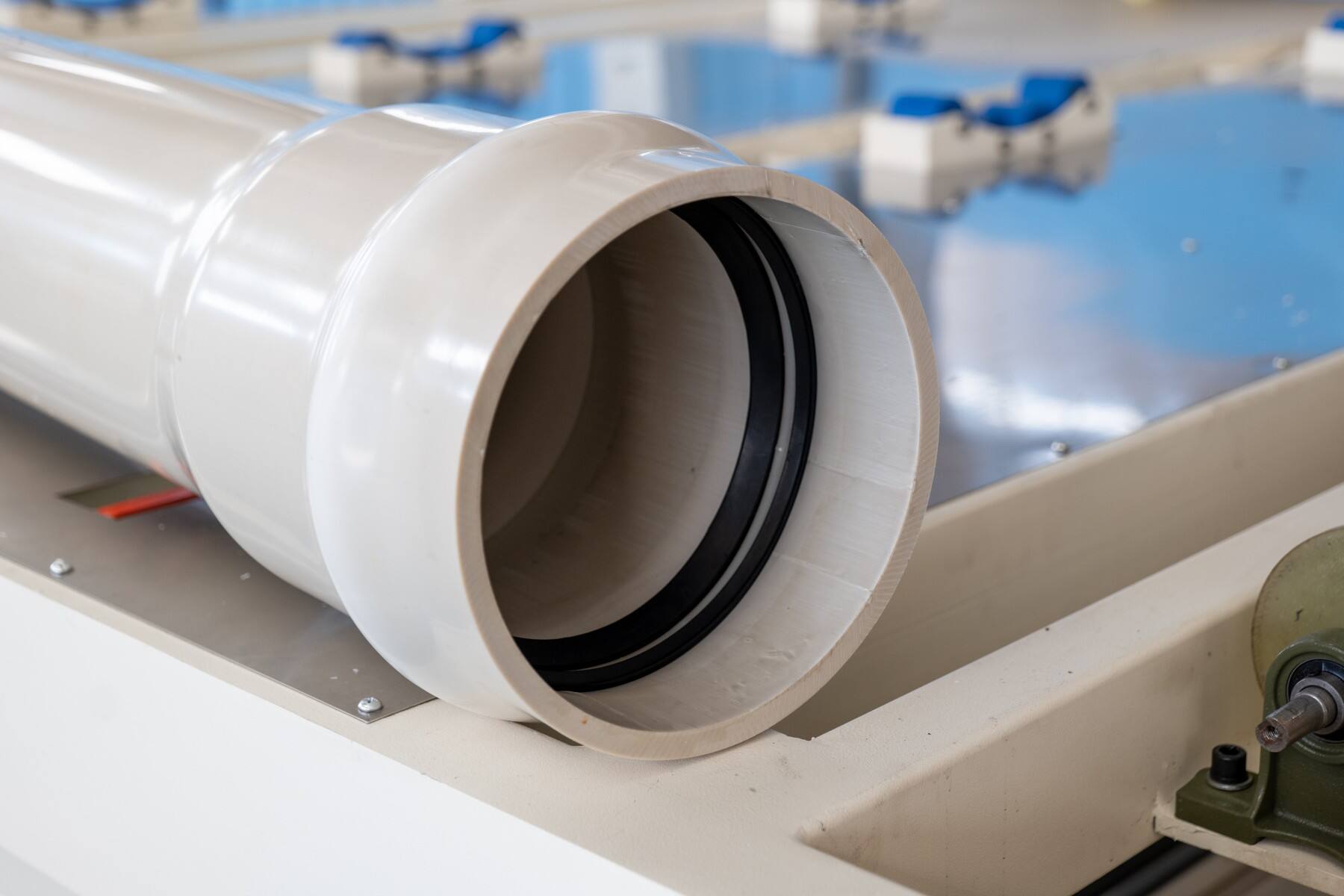
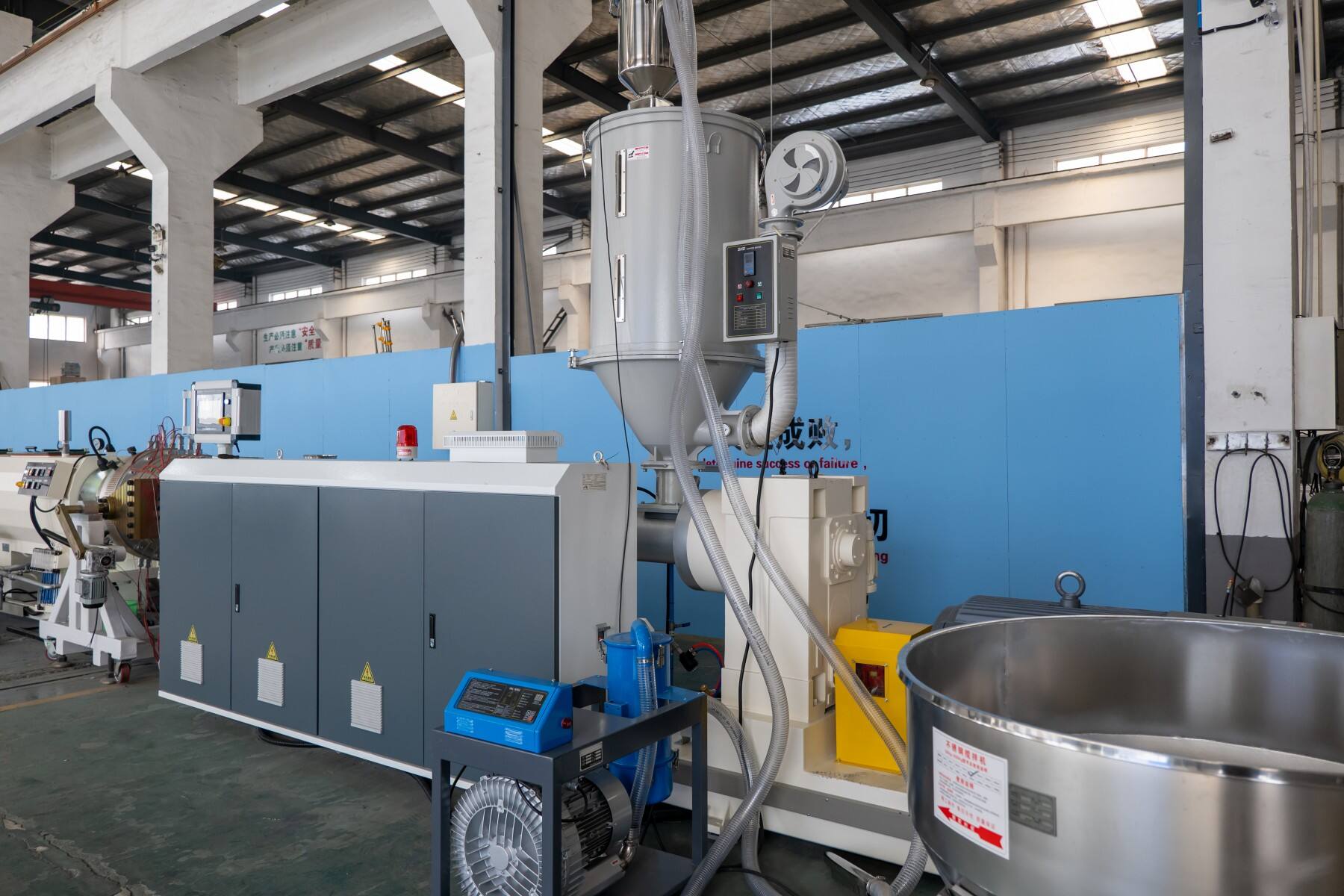
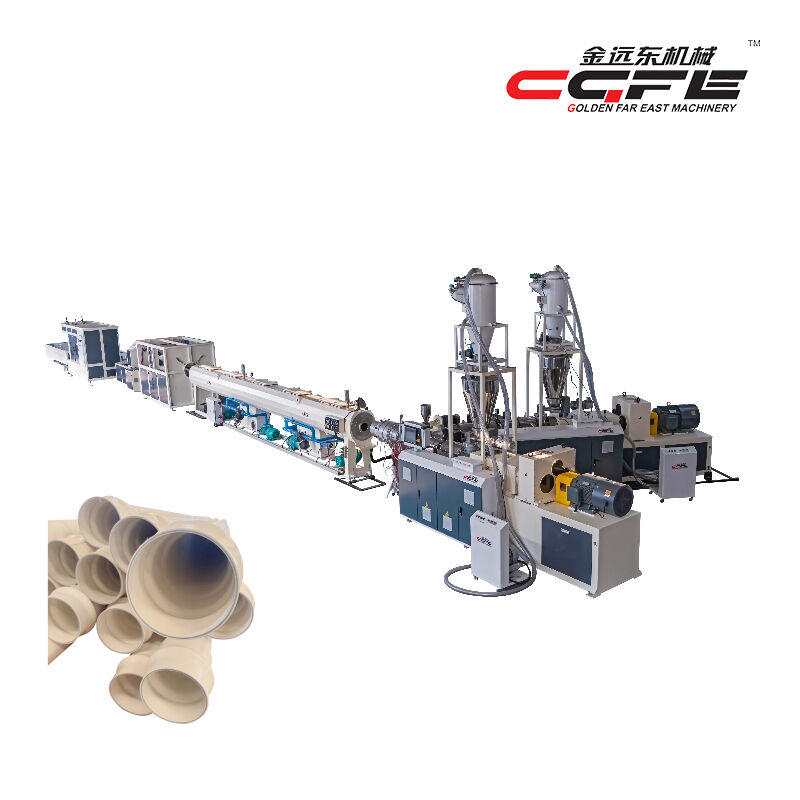
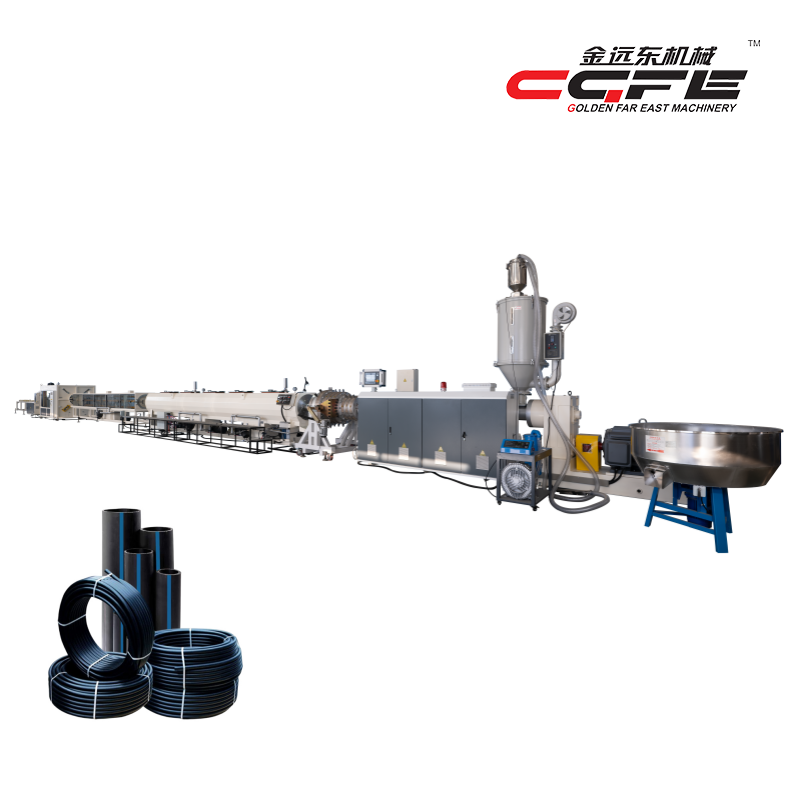
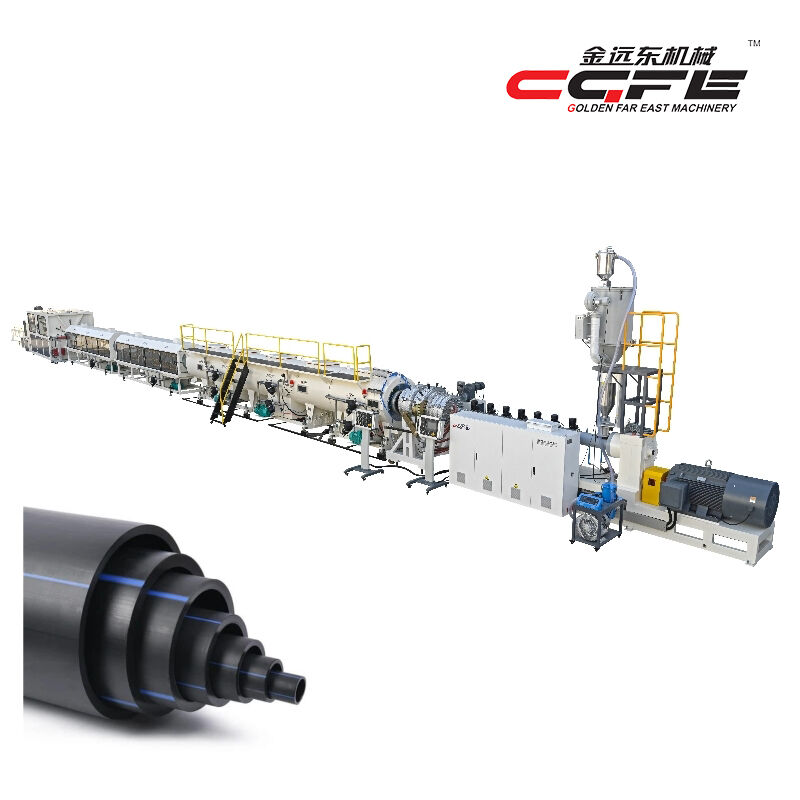
corrugated pipe extrusion line
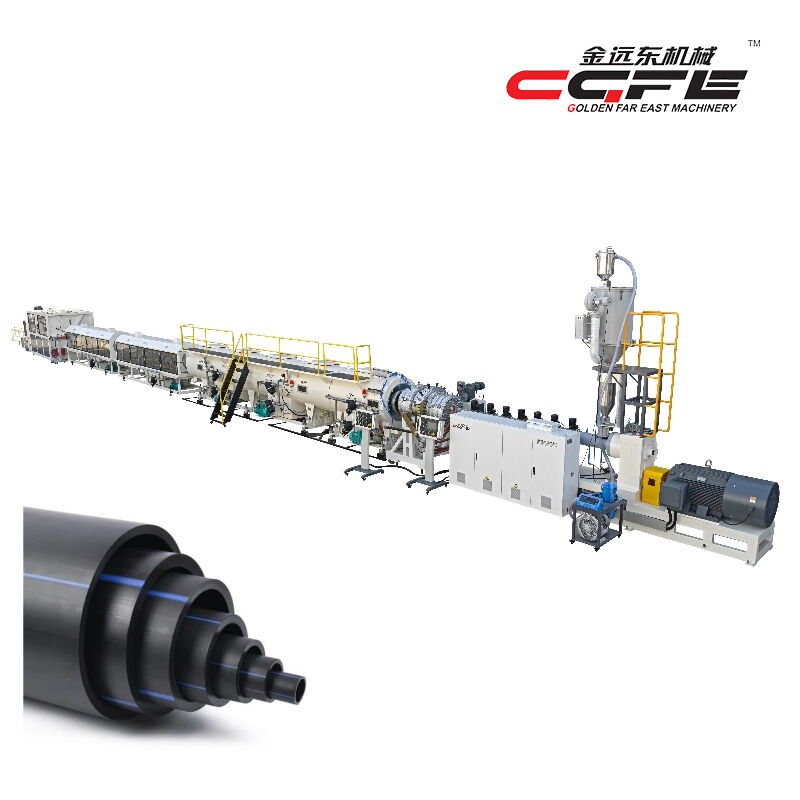
The corrugated pipe extrusion line represents a sophisticated manufacturing system designed to produce high-quality corrugated pipes for various industrial and infrastructure applications. This advanced production equipment combines precision engineering with automated control systems to create durable, flexible piping solutions that meet demanding performance standards. The corrugated pipe extrusion line operates through a continuous process that transforms raw plastic materials into finished corrugated pipes with consistent wall thickness and uniform corrugation patterns. The system incorporates multiple stations including material feeding units, extruders, corrugation forming equipment, cooling systems, and cutting mechanisms. Each component works in synchronized harmony to ensure optimal production efficiency and product quality. The technological features of the corrugated pipe extrusion line include precise temperature control throughout the manufacturing process, automated diameter adjustment capabilities, and real-time monitoring systems that track production parameters. Advanced servo motors provide accurate speed control while programmable logic controllers manage the entire operation sequence. The equipment features modular construction allowing for easy maintenance and component replacement when necessary. Modern corrugated pipe extrusion lines incorporate energy-efficient heating systems and optimized cooling circuits that reduce operational costs while maintaining consistent output quality. The applications for products manufactured by corrugated pipe extrusion lines span numerous industries including telecommunications, electrical installations, drainage systems, and protective cable housing. These pipes serve critical functions in underground utility networks, building construction projects, and industrial facilities where reliable protection for cables and wiring systems is essential. The flexibility and durability of corrugated pipes make them ideal for applications requiring resistance to environmental factors such as moisture, chemicals, and mechanical stress. Infrastructure projects rely heavily on these pipes for storm water management, sewage systems, and utility protection in both urban and rural environments.


 EN
EN