Home > PRODUCTS > Plastic Profile Production Line > PVC Ceiling Panel Production Line
Place of Origin: |
Jiangsu, China |
Brand Name: |
CGFE |
Model Number: |
SJSZ65/132 or SJSZ80/156 |
Certification: |
CE, ISO9001 |
1set |
|
Price: |
USD 36000 or USD 45000 |
Packaging Details: |
Wood pallet, PE film package. |
Delivery Time: |
30 days after receipt of deposit |
Payment Terms: |
FOB, CFR, CIF, DAP, etc. |
Supply Ability: |
20 sets each month |
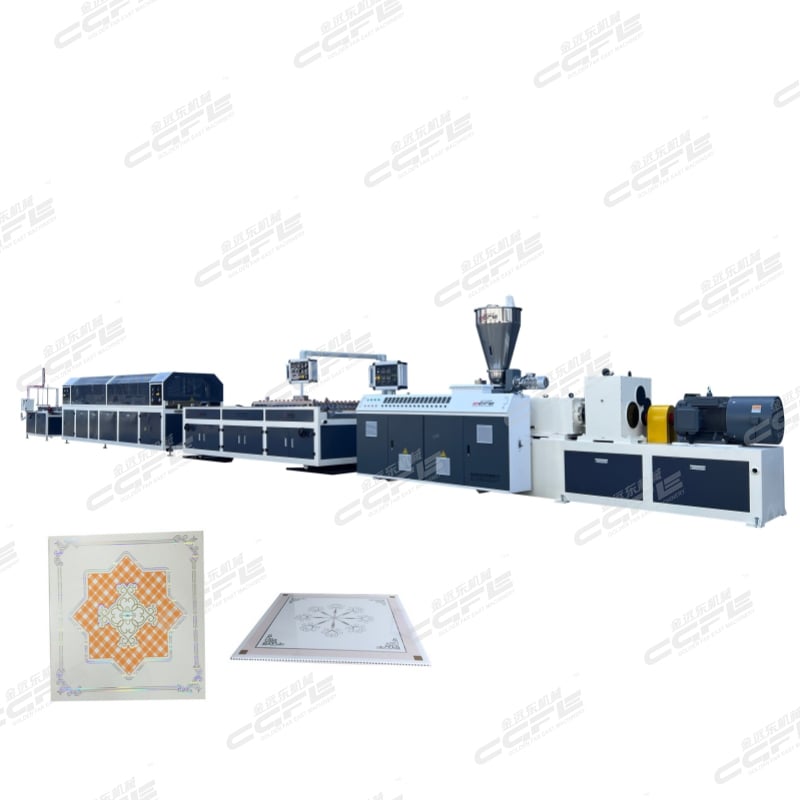
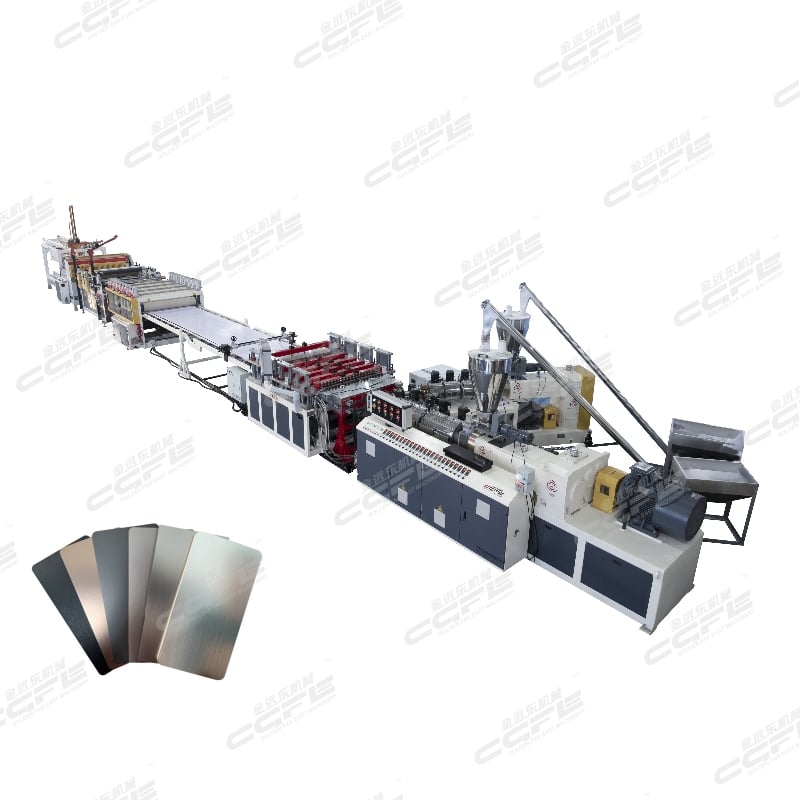
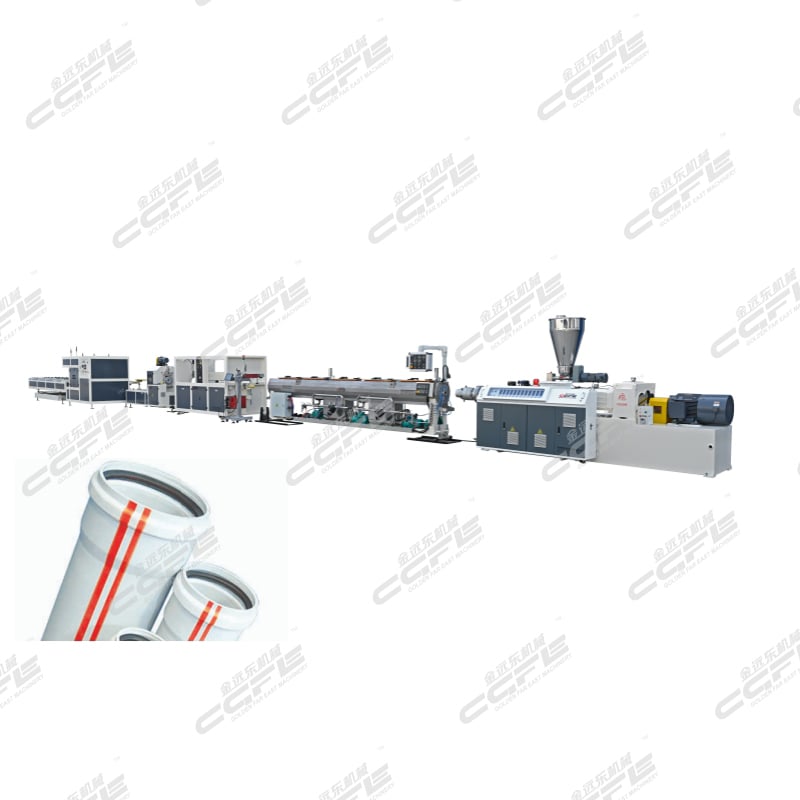
The PVC Ceiling Panel production line is an automated plastic extrusion equipment designed for the continuous production of polyvinyl chloride ceiling and wall panels. Due to its low cost, easy installation, waterproof and moisture-proof properties, as well as a wide range of colors, this production line is widely used in the architectural decoration industry.
The following is a detailed description of the PVC ceiling tile production line, including the process flow, main equipment composition, technical parameters, and characteristics:
1. Basic definition
The PVC ceiling tile production line primarily utilizes a conical twin-screw extruder to mix PVC resin powder with stabilizers, fillers (such as calcium carbonate), color powder, and other auxiliary materials. After heating and plasticizing the mixture, it is extruded through a mold for shaping, followed by vacuum cooling and traction cutting, ultimately producing long strips of rigid plastic ceiling tiles.
2. Production process flow
The process flow of a standard PVC gutter panel production line is as follows:
Mixing system:
Add PVC resin, calcium powder (calcium carbonate), stabilizer, lubricant, processing aid, and color masterbatch into a high-speed mixer according to a specific formula.
Utilize frictional heat to mix the materials evenly and preheat them, then place them into a cold mixer for cooling to prevent the materials from agglomerating.
Extrusion:
The mixed powder material is fed into the conical twin-screw extruder through an automatic feeder.
The material undergoes shearing, compression, and heating within the barrel, and after melting and plasticizing, it is extruded through a specific T-shaped die head.
Calibration & Cooling:
The extruded high-temperature profile enters the vacuum setting table.
The plate is made to adhere tightly to the inner wall of the shaping mold through vacuum adsorption, while cooling water is sprayed to initially shape and cool the plate.
Hauling:
The plate is pulled out at a constant speed by a multi-roller tractor (usually of the crawler or rubber roller type), ensuring the dimensional stability and surface flatness of the plate.
Cutting:
The automatic cutting machine (saw cutting or flying knife cutting) cuts off continuous boards according to the set length (usually 3 meters or 4 meters).
Stacking:
The finished boards are conveyed to the stacking racks via conveyor belts and collected and packaged by manual or automatic palletizers.
3. Main equipment composition of production line
A complete production line typically includes the following core equipment:
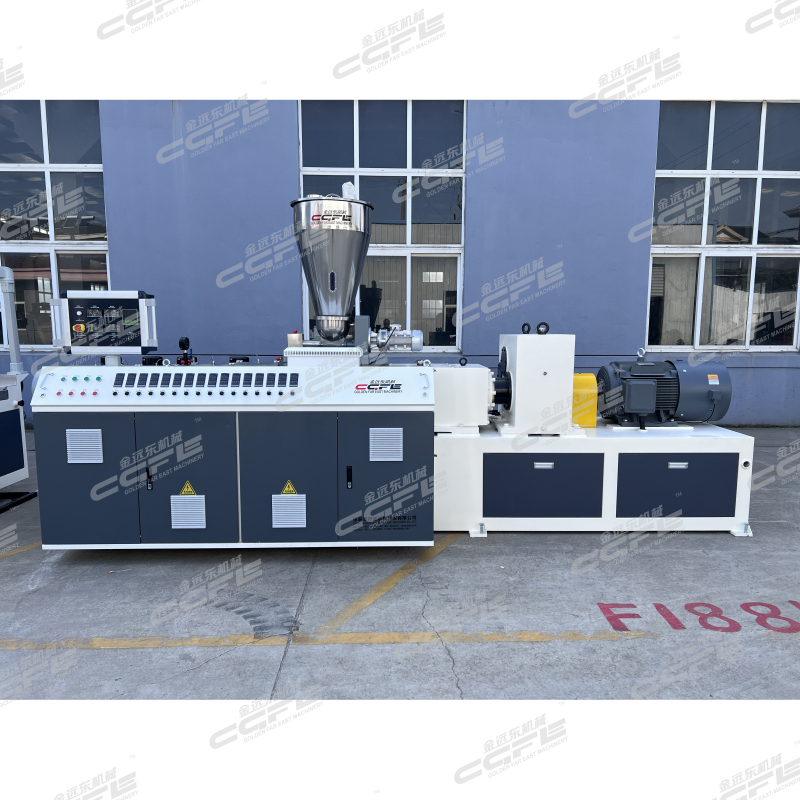
SJSZ series conical twin-screw extruder: a core component, featuring good plasticization, high output, and strong adaptability.
Fastener plate mold: determines the pattern (such as brushed, frosted, printed) and cross-sectional shape (usually hollow or solid) of the fastener plate.
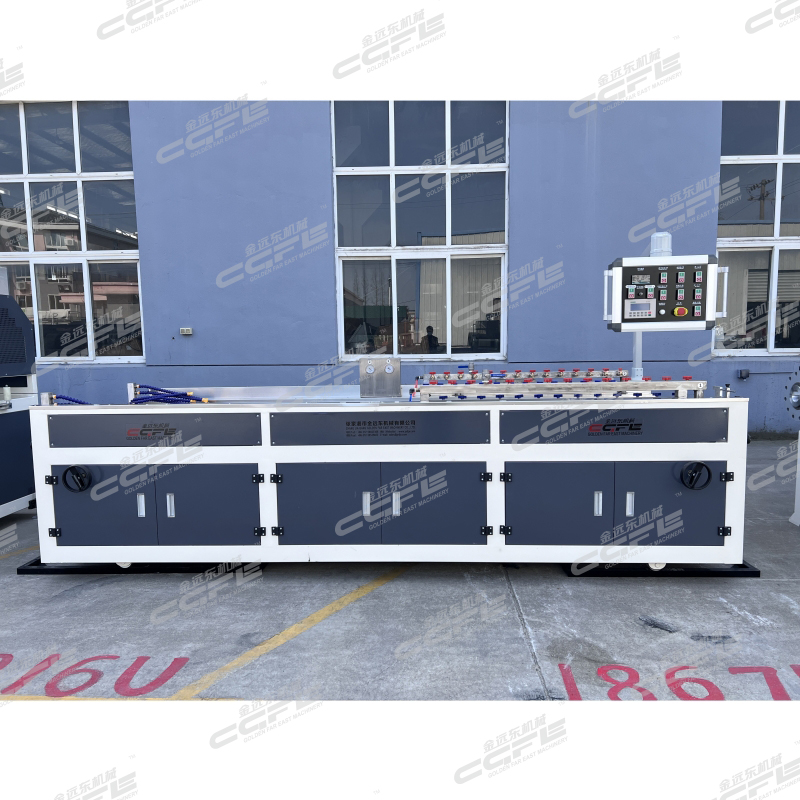
Vacuum sizing table: Equipped with a water circulation system and a vacuum system, it is used for precise control of the thickness and width of the board.
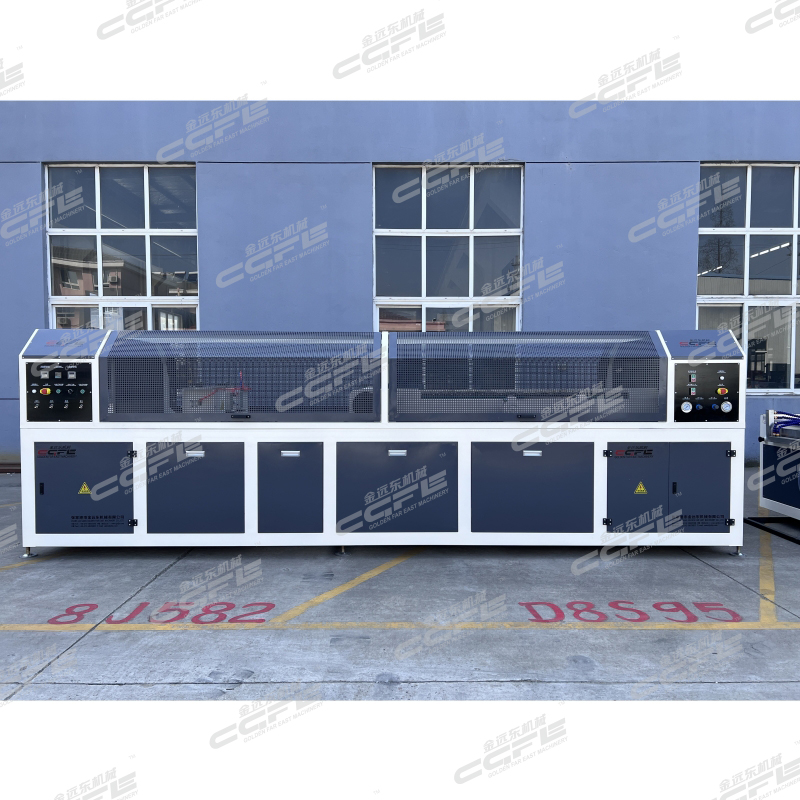
Traction machine: Provides stable traction force to eliminate internal stress in the plate.
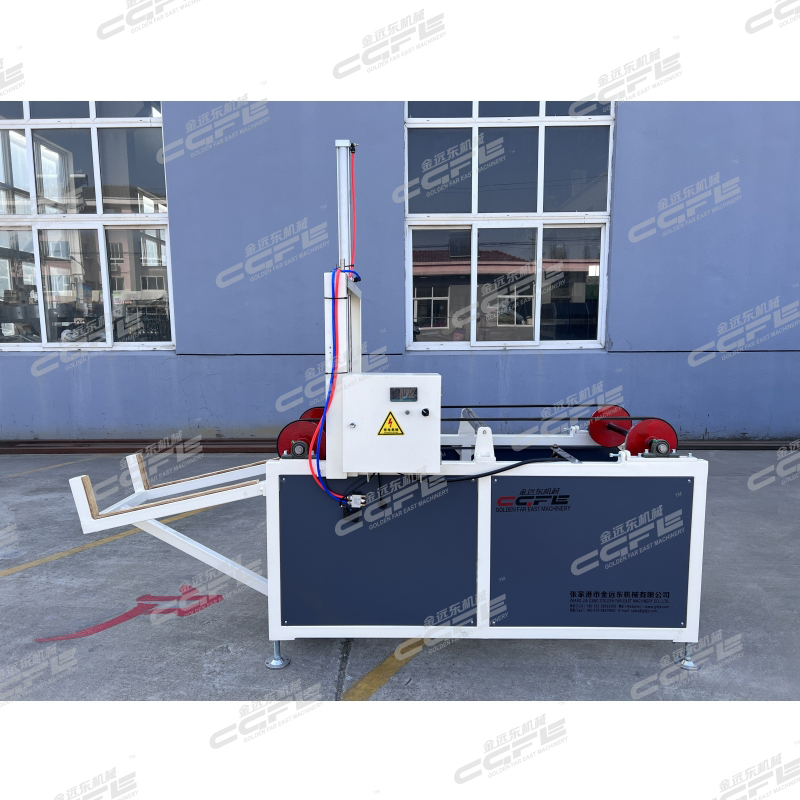
Cutting machine: Equipped with a fixed length counting device, capable of automatic cutting.
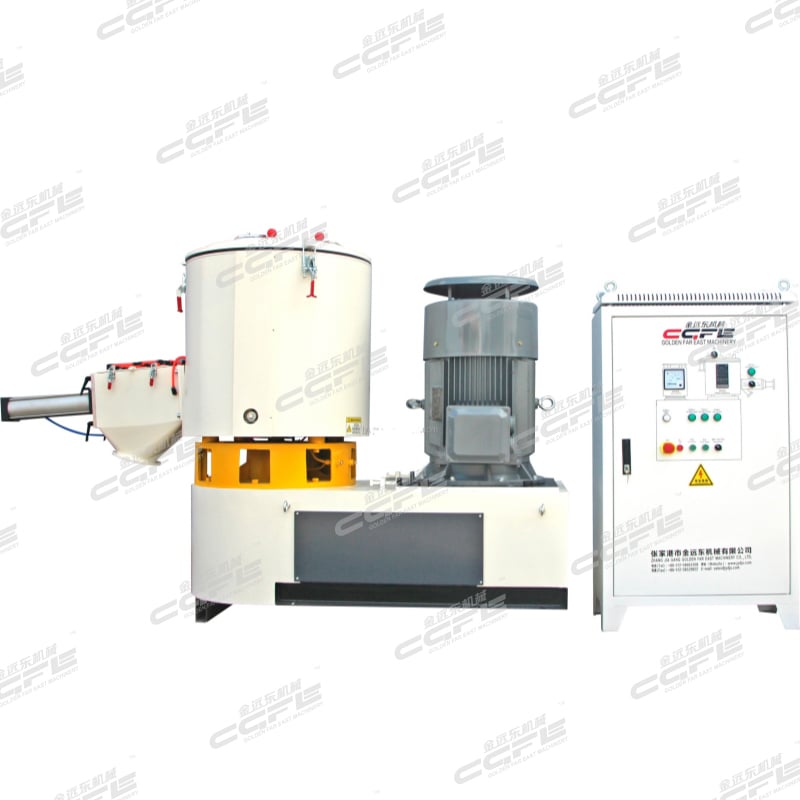
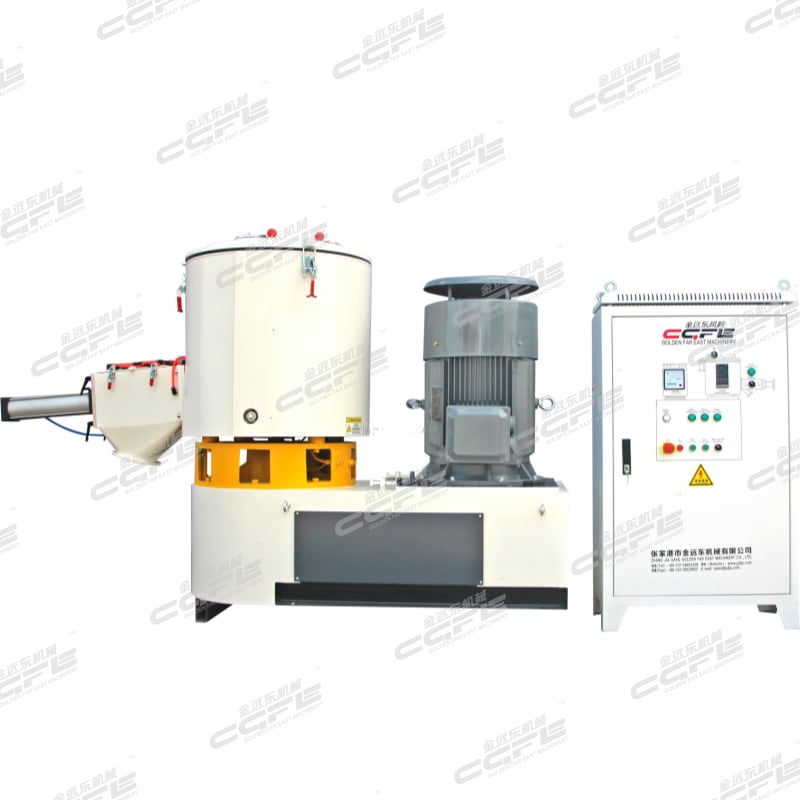
Mixing unit: consisting of a high-speed hot mixer and a low-speed cold mixer.
Option 1:
Model |
JYD-600 |
PLC control system |
Option |
Extruder model |
SJSZ65/132 |
Main motor power (kw) |
37 |
Output (kg/h) |
≤250 |
mold |
Customized |
Vacuum calibration table length |
4m |
Pumps |
Vacuum pumps, water pumps |
Haul-offs machine |
Rubber caterpillars |
Cutting machine |
Cylinder cutting & Saw cutting |
Online film transfer & lamination |
Option |
Option 2:
Model |
JYD-600 |
PLC control system |
Option |
Extruder model |
SJSZ80/156 |
Main motor power (kw) |
55 |
Output (kg/h) |
≤400 |
mold |
Customized |
Vacuum calibration table length |
4m |
Pumps |
Vacuum pumps, water pumps |
Haul-offs machine |
Rubber caterpillars |
Cutting machine |
Cylinder cutting & Saw cutting |
Online film transfer & lamination |
Option |
The reason why the PVC ceiling tile production line remains enduring in the plastic building materials industry is due to its multi-dimensional competitive advantages. These advantages encompass various aspects such as investment returns, production costs, technological maturity, market adaptability, and product performance.
The following is an analysis of the main competitive advantages of the PVC ceiling tile production line:
1. Extremely high raw material filling rate (core of cost control)
This represents the most notable technical and economic advantage of the PVC ceiling tile production line.
High calcium powder filling: The characteristics of PVC resin allow for the addition of an extremely high proportion of calcium carbonate (calcium powder) in the formulation, with a filling amount that can even reach 40%-60%.
Cost reduction: The price of calcium carbonate is significantly lower than that of PVC resin. The production line is capable of stably producing boards with high filler content, which directly and significantly reduces the cost of raw materials, thereby enhancing the profit margin or price competitiveness of the product.
2. Mature technology and equipment stability
Process standardization: After decades of development, the extrusion process of PVC ceiling tiles has become highly mature, with standard solutions for screw design, mold runner, and cooling and solidification technology.
Low failure rate: Equipment (such as the SJZ series conical twin extruder) has a sturdy structure and stable operation, requiring relatively low technical skills from operating workers. It is easy to learn and use, reducing the labor threshold and management difficulty for enterprises.
3. Short return on investment (ROI)
Low initial investment: Compared to the production of PVC pipes or profiles, the equipment cost for a gutter production line is relatively low, and it occupies a moderate area (approximately 30-40 meters in length).
Quick return on investment: Due to the high demand in the market and controllable raw material costs, for most investors, the equipment investment cost can usually be recovered within 6 months to 1 year, making it a typical "quick and easy" project.
4. Flexible market adaptability (customization capability)
The production line exhibits strong flexibility and is capable of responding quickly to market changes:
Versatile designs: By changing molds, products with different widths (200/250/300mm), thicknesses, and cross-sections (hollow, solid) can be produced.
Rich surface craftsmanship:
Printing / Laminating: A laminating machine can be added to produce high-end gussets with imitation wood grain, marble grain, cloth grain, and other patterns.
Transfer printing: Enhancing three-dimensional effect through thermal transfer technology.
High gloss/matte finish: It can be achieved by adjusting the polishing degree of the mold.
High scrap utilization rate: The leftover materials and scraps generated during the production process can be directly crushed and blended back into the raw materials at a certain ratio for reuse, achieving almost zero waste.
5. The inherent market advantage of the product due to its rigid demand
The products produced by the production line possess the following characteristics, ensuring sustained market demand:
King of cost-effectiveness: Compared to aluminum ceiling tiles, gypsum boards, or integrated ceiling systems, PVC ceiling tiles are the most affordable.
Functional and practical: With excellent waterproof, moisture-proof, and mold-proof properties, it is the first choice for suspended ceilings in humid southern regions, self-built houses in rural areas, rental houses, factory workshops, bathrooms, and kitchens.
Easy to install and maintain: No professional heavy-duty equipment is required for installation, and the snap-on installation is simple and quick. For later cleaning, just wipe with a cloth.
6. Wide range of application scenarios and export potential
Domestic market: Apart from the kitchen and bathroom areas in urban home decor, PVC ceiling tiles occupy a dominant position in third- and fourth-tier cities, rural markets, and engineering renovations (such as hospital corridors, school dormitories, and factory ceilings).
International market: In developing countries and regions such as Southeast Asia, the Middle East, Africa, and South America, PVC ceiling tiles are very popular building materials due to the hot and humid climate and price sensitivity, presenting significant export potential.
summary
The competitive advantage of the PVC ceiling tile production line lies in its utilization of mature equipment technology to produce products that meet the public's demands (waterproof, affordable, easy to install) at an extremely low cost (high calcium powder filling).
For investors, this is a high-quality project with low risk, fast return on investment, and moderate technical threshold; for consumers, this is an economical and practical decoration solution.

Copyright © 2026 Zhangjiagang Golden Far East Machinery Co., Ltd. All rights reserved.

 EN
EN