hdpe pipe production line
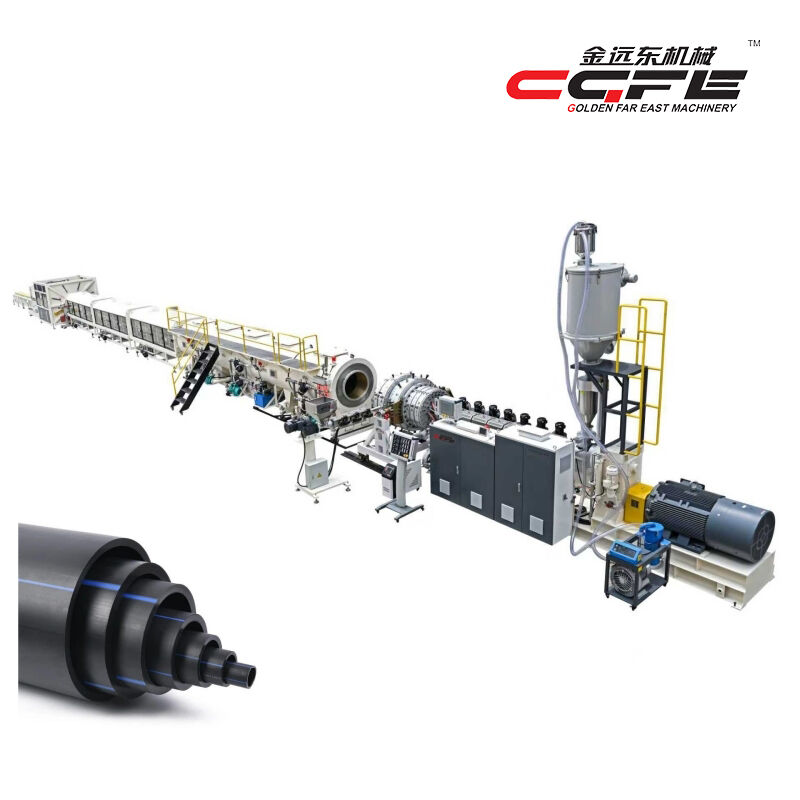
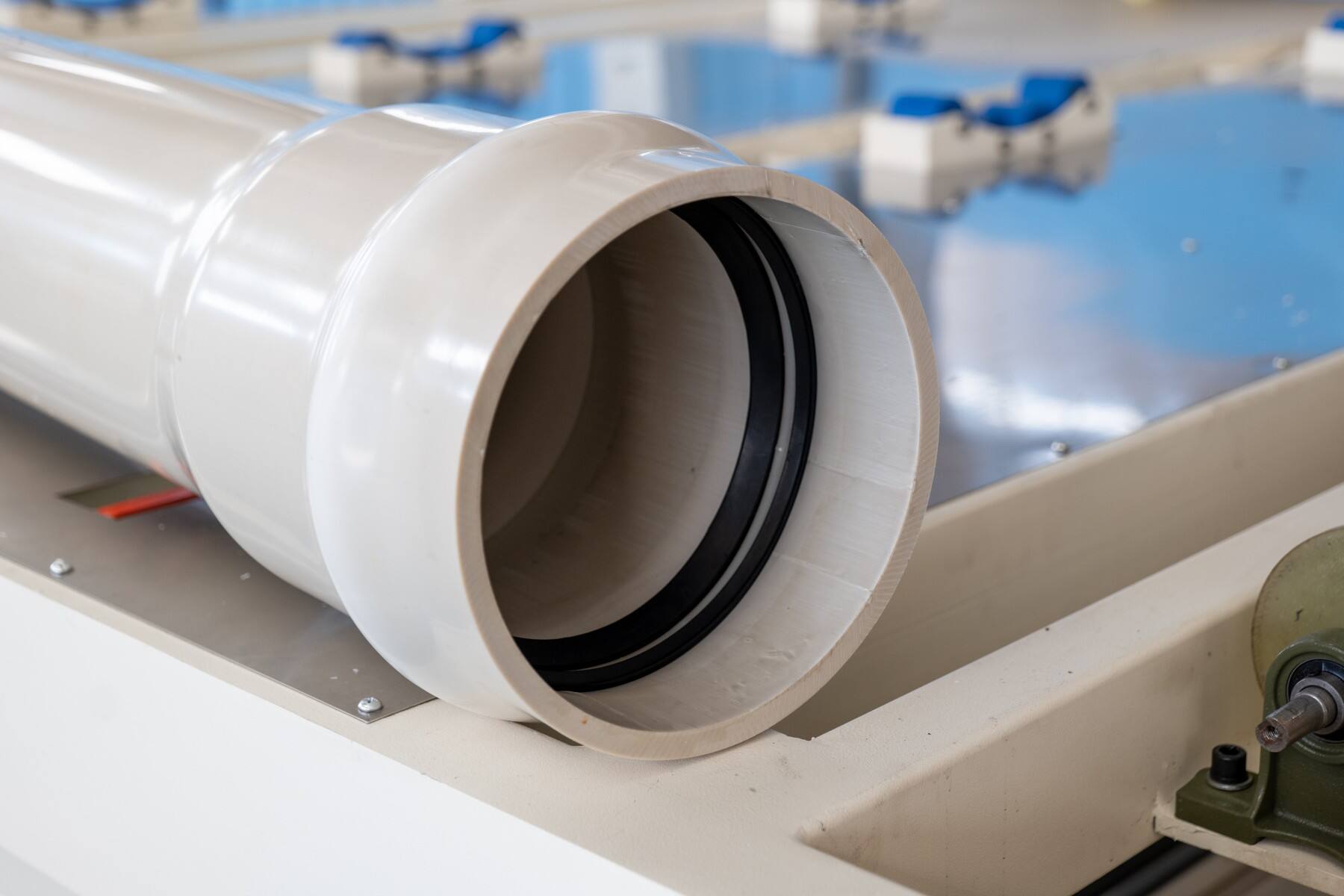
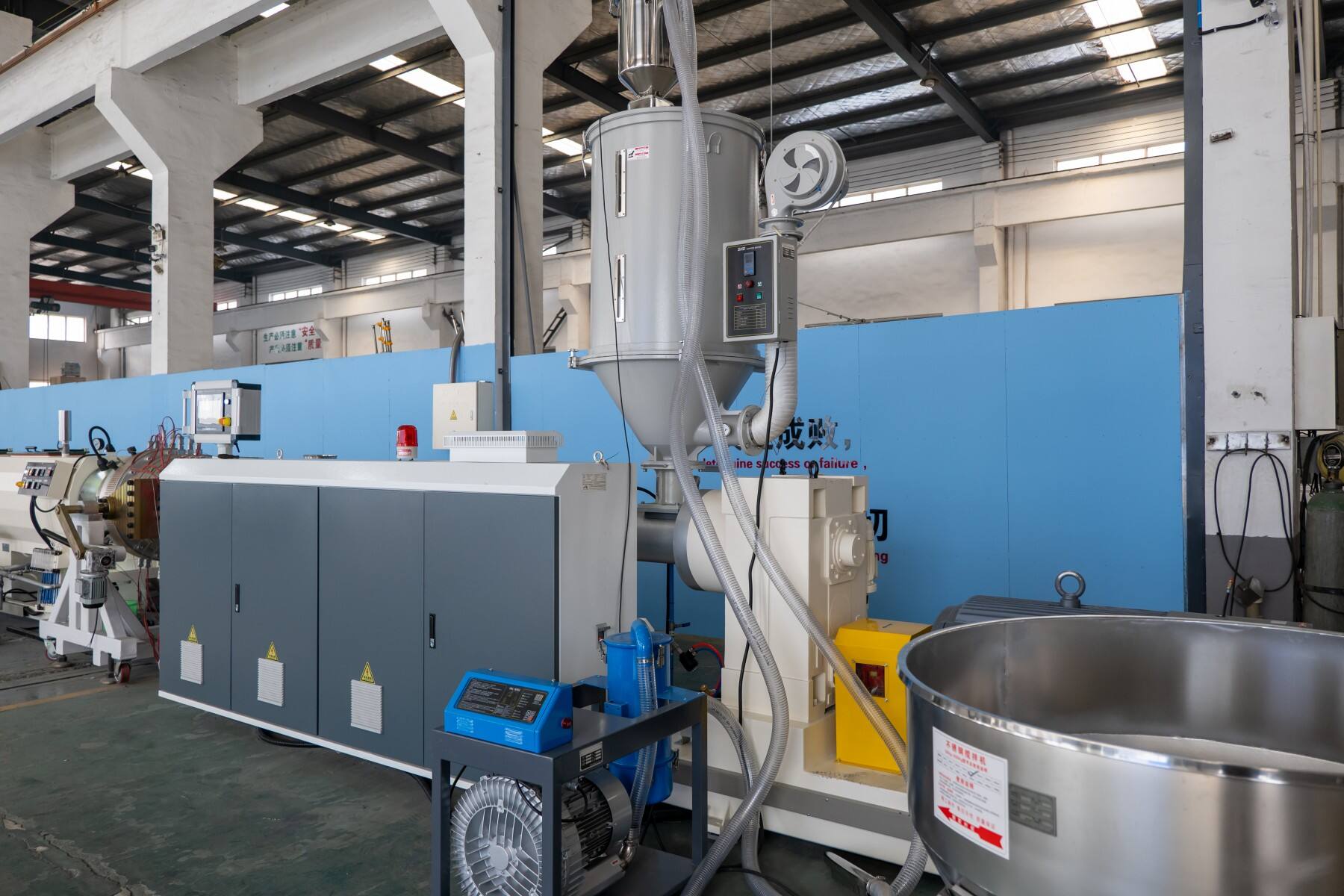
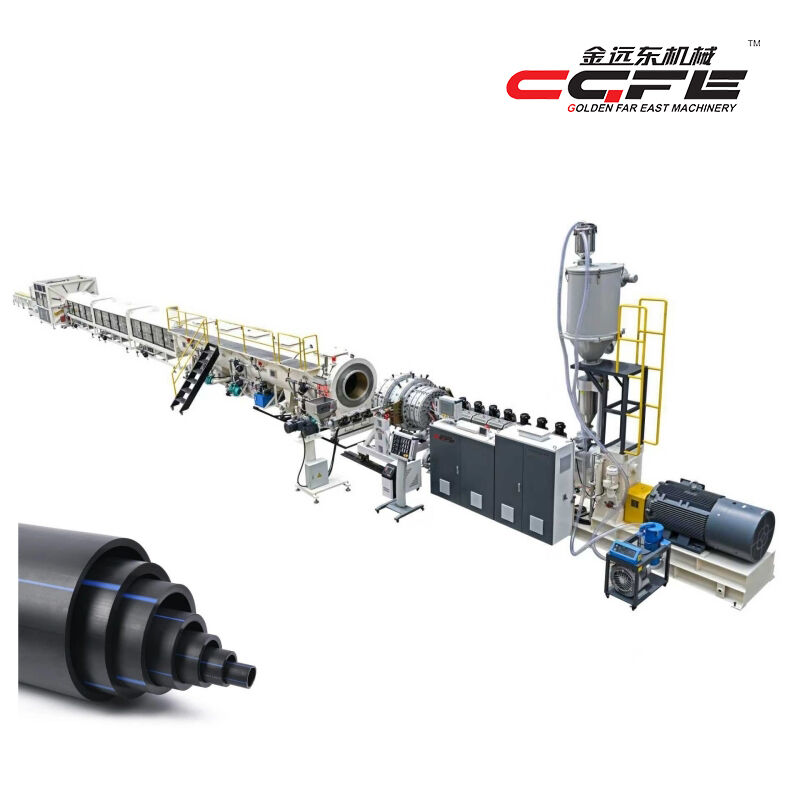
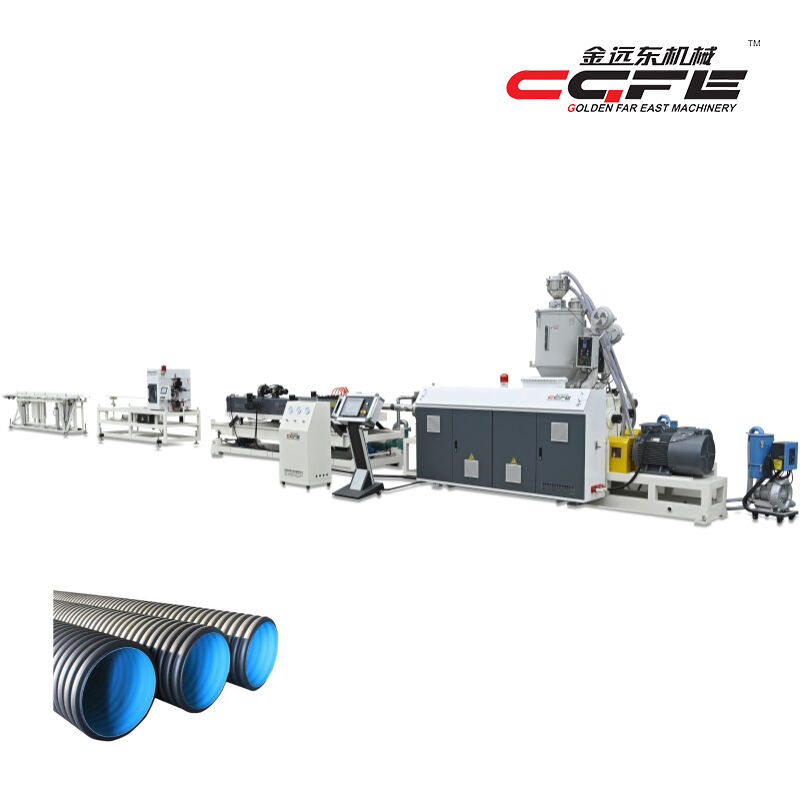
The hdpe pipe production line represents a sophisticated manufacturing system designed to produce high-density polyethylene pipes through advanced extrusion technology. This comprehensive production system integrates multiple components including raw material feeding systems, extruders, calibration tanks, cooling systems, haul-off units, and cutting mechanisms to create durable plastic pipes. The hdpe pipe production line operates through a continuous process where polyethylene resin is heated, melted, and formed into precise pipe dimensions. The main functions of this production system encompass material preparation, where raw HDPE pellets are dried and fed into the system, followed by the extrusion process where materials are heated and shaped through specialized dies. Temperature control systems maintain optimal processing conditions throughout the manufacturing cycle, ensuring consistent pipe quality and structural integrity. The technological features of the hdpe pipe production line include programmable logic controllers for automated operation, advanced temperature monitoring systems, precision calibration equipment, and quality control mechanisms. These systems work together to produce pipes with excellent chemical resistance, flexibility, and long service life. The production line can manufacture pipes in various diameters ranging from small residential applications to large industrial installations. Applications for pipes manufactured by the hdpe pipe production line span multiple industries including water supply systems, sewage treatment facilities, gas distribution networks, agricultural irrigation, mining operations, and industrial fluid transport. The versatility of this manufacturing system allows for customization of pipe specifications including wall thickness, diameter ranges, and specialized formulations for specific applications. Modern hdpe pipe production line systems incorporate energy-efficient technologies, reducing operational costs while maintaining high production output rates. The automated nature of these systems ensures consistent product quality while minimizing manual intervention and potential human error during the manufacturing process.


 EN
EN