
 EN

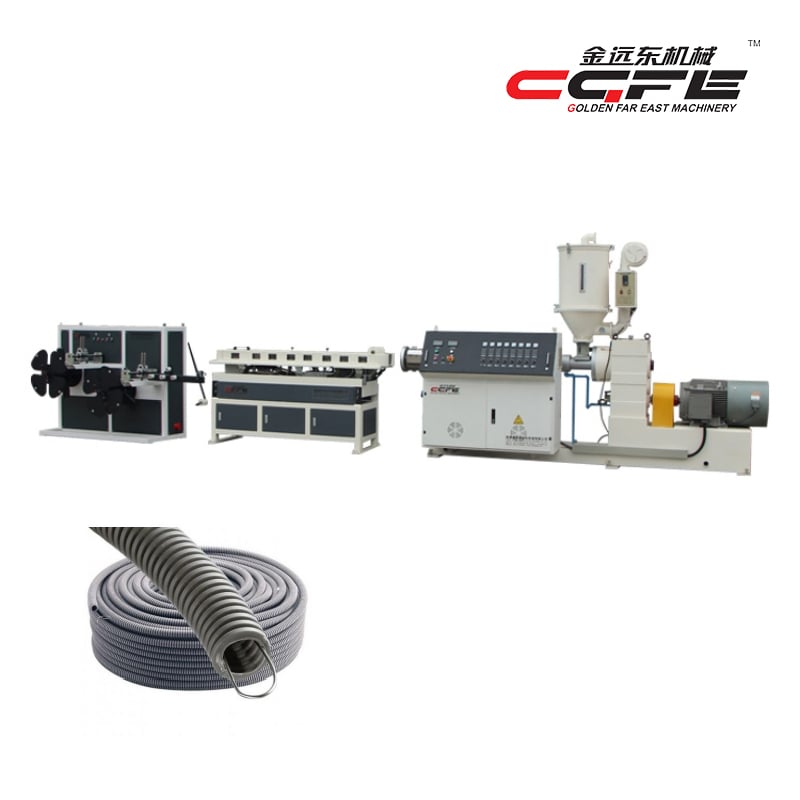
Choosing the right PE pipe extruder is one of the most important decisions a plastic pipe manufacturer can make. Your production capacity, product quality, operational costs, and long-term profitability depend directly on selecting equipment that matches your specific production requirements and business goals. A PE pipe extruder represents a significant capital investment, so understanding the key selection factors before purchase ensures you avoid costly mistakes and optimize your manufacturing process.

Whether you are launching a new production line or upgrading existing equipment, the decision framework for a PE pipe extruder must account for multiple technical, operational, and financial dimensions. This guide explores the critical factors that industry professionals evaluate when selecting a PE pipe extruder that will deliver consistent quality, meet market demands, and provide reliable performance for years to come.
Production Capacity and Throughput Requirements
Understanding Your Target Output Volume
Production capacity stands as the foundational selection criterion for any PE pipe extruder. You must first calculate your required output in kilograms per hour, considering both current demand and projected growth over the next three to five years. A PE pipe extruder operating below its design capacity runs inefficiently and increases cost per unit, while one operating constantly above its rating experiences accelerated wear and produces inconsistent quality. Analyze your sales forecasts, market opportunities, and customer commitments to determine the appropriate throughput range for your PE pipe extruder.
Matching Extruder Specifications to Production Plans
Different PE pipe extruder models deliver vastly different throughput levels. Machines designed for small-diameter pipes typically process 50–150 kilograms per hour, while PE pipe extruder systems handling large-diameter pipes can exceed 500 kilograms per hour. Selecting a PE pipe extruder with capacity 10 to 20 percent above your peak demand provides operational flexibility and accounts for inevitable efficiency variations. This buffer also allows your PE pipe extruder to maintain consistent output during equipment maintenance windows and temporary production disruptions.
Material Compatibility and Polymer Specifications
Selecting Equipment for Your Resin Type
Not every PE pipe extruder performs equally across all polyethylene grades and formulations. High-density polyethylene (HDPE), medium-density polyethylene (MDPE), and linear low-density polyethylene (LLDPE) each present different processing challenges related to viscosity, thermal sensitivity, and shear characteristics. Your PE pipe extruder must feature a barrel design, screw configuration, and heating system specifically engineered for your target resin type. Processing incompatible materials through an undersized or incorrectly configured PE pipe extruder leads to degradation, discoloration, and mechanical property loss in finished pipes.
Temperature Control and Thermal Management
Precision temperature management within the PE pipe extruder barrel directly influences polymer chain integrity and final product performance. Polyethylene materials require stable processing temperatures typically between 180 and 240 degrees Celsius, depending on resin grade and additives. A quality PE pipe extruder incorporates multiple heating zones, robust temperature sensors, and responsive cooling systems to maintain tight thermal control. Inadequate temperature regulation in a PE pipe extruder causes gelation, surface defects, and reduced mechanical strength in your finished pipes.
Technical Performance and Precision Features
Screw Design and Material Uniformity
The screw geometry inside your PE pipe extruder determines how efficiently plastic melts, mixes, and homogenizes before exiting the die. Modern PE pipe extruder designs feature optimized screw pitch, compression ratios, and flights engineered to minimize shear stress while ensuring complete material fusion. A well-designed PE pipe extruder screw prevents dead zones where material might degrade or remain insufficiently plasticized. Conversely, poorly optimized screw geometry in a PE pipe extruder creates pressure spikes, inconsistent melt quality, and variable wall thickness across production runs.
Die Design and Dimensional Accuracy
The extrusion die mounted to your PE pipe extruder shapes raw polymer into finished pipe geometry. Superior die design in a PE pipe extruder system ensures uniform wall distribution, prevents weld lines, and maintains dimensional consistency throughout production. Modern PE pipe extruder equipment includes adjustable mandrels and pressure-balancing features that compensate for material flow variations. Dies optimized for your specific pipe diameter and wall thickness work harmoniously with your PE pipe extruder's capacity to produce products meeting ASTM D2239 and ISO 4427 standards.
Cooling and Calibration Systems
After exiting the die, fresh polymer pipe requires carefully controlled cooling to lock in dimensional accuracy and mechanical properties. Your PE pipe extruder must interface with external cooling tanks, spray systems, or calibration equipment that rapidly reduce pipe temperature while maintaining roundness and wall thickness. Modern PE pipe extruder systems incorporate vacuum sizing systems and water-cooling sprays that work in concert with the extrusion unit. Inadequate cooling infrastructure downstream of your PE pipe extruder defeats the precision gains achieved in barrel and die design.
Equipment Reliability and Long-Term Operational Considerations
Build Quality and Component Durability
A reliable PE pipe extruder demonstrates heavy-duty construction, premium bearing systems, and wear-resistant internal components engineered to withstand continuous operation. The barrel liners, screw, and die components inside your PE pipe extruder experience intense friction and thermal cycling daily. Selecting a PE pipe extruder built from quality materials with robust engineering minimizes unexpected downtime and extends service intervals. Long-term cost of ownership for a PE pipe extruder depends as much on component durability and replacement part availability as on initial purchase price.
Maintenance Accessibility and Spare Parts Availability
The most durable PE pipe extruder still requires routine maintenance, screw replacement, and occasional repair interventions. Equipment vendors should provide clear documentation, readily available spare components, and responsive technical support for your PE pipe extruder. A PE pipe extruder with difficult-to-access internal components or obsolete part designs creates expensive maintenance episodes and production delays. Verify that your PE pipe extruder supplier maintains local inventory of wear parts and offers rapid shipping for emergency replacements.
Automation and Process Control Integration
Modern manufacturing demands that your PE pipe extruder integrate seamlessly with digital process control systems, data logging, and predictive maintenance platforms. Advanced PE pipe extruder systems feature programmable logic controllers (PLCs), real-time pressure and temperature monitoring, and automated alarm systems that alert operators to developing problems before critical failures occur. Digital integration with your PE pipe extruder enables consistent production parameters, reduces operator variance, and supports continuous improvement initiatives.
FAQ
What production capacity should I choose for my PE pipe extruder?
Select a PE pipe extruder capacity 10 to 20 percent above your projected peak demand to accommodate growth and maintain operational efficiency. Consider current sales forecasts, target market segments, and five-year business expansion plans when sizing your PE pipe extruder. Operating a PE pipe extruder significantly below capacity increases unit costs and reduces profitability, while chronic overload degrades equipment lifespan and product quality.
How do I ensure a PE pipe extruder handles my specific resin type?
Verify that your PE pipe extruder features barrel design, screw configuration, and heating systems explicitly engineered for your polyethylene grade (HDPE, MDPE, or LLDPE). Request material processing data sheets and reference customers using identical resin formulations with the PE pipe extruder model you are considering. Processing mismatched materials through an incompatible PE pipe extruder causes degradation and inferior pipe properties.
What maintenance intervals should I expect from a PE pipe extruder?
A well-designed PE pipe extruder operated within specifications typically requires screw and barrel inspection every 1000 to 2000 operating hours. Bearing replacement, seal maintenance, and component lubrication should follow the equipment manufacturer's recommended service schedule. Regular maintenance of your PE pipe extruder prevents catastrophic failures, maintains product consistency, and extends overall equipment lifespan significantly.