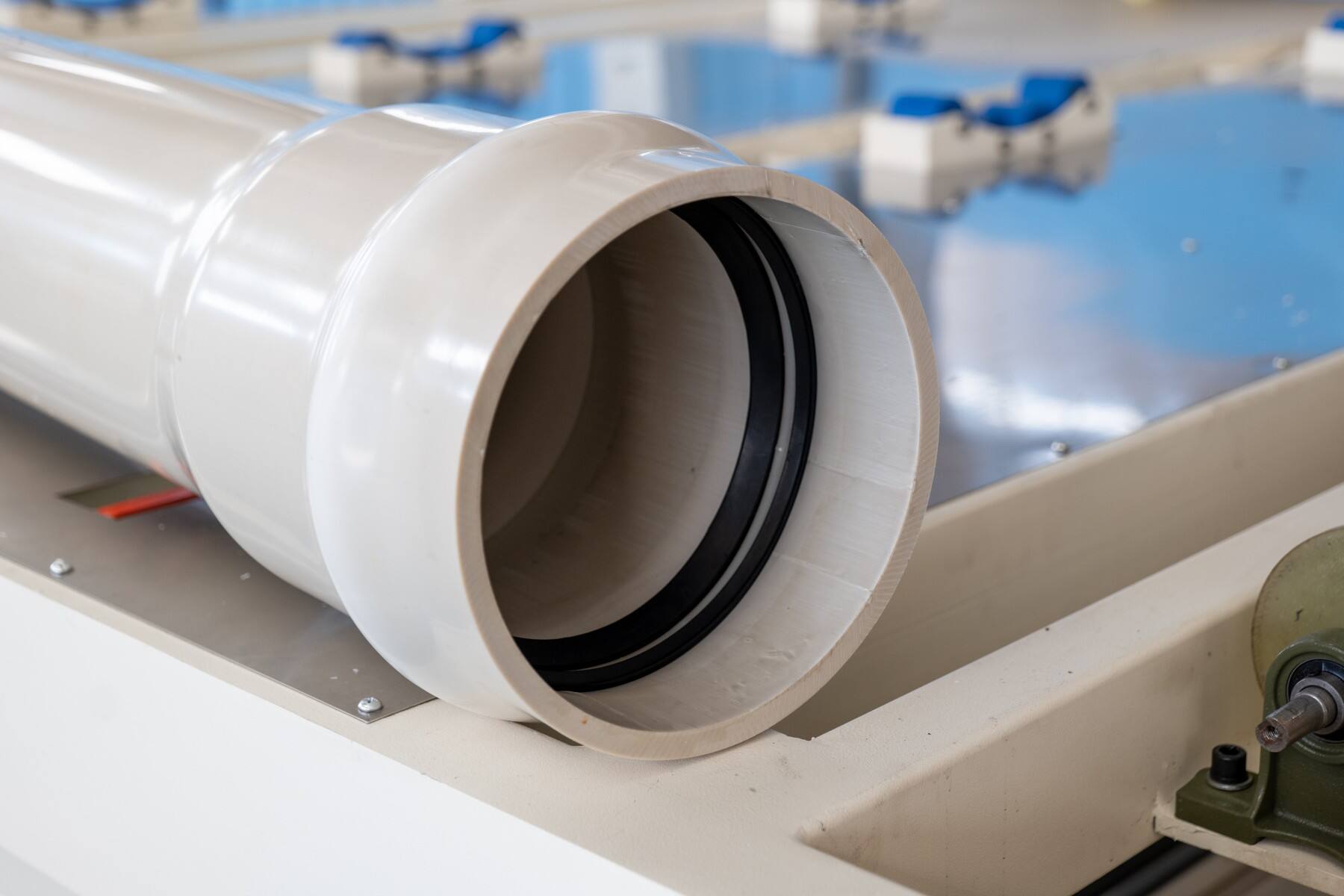
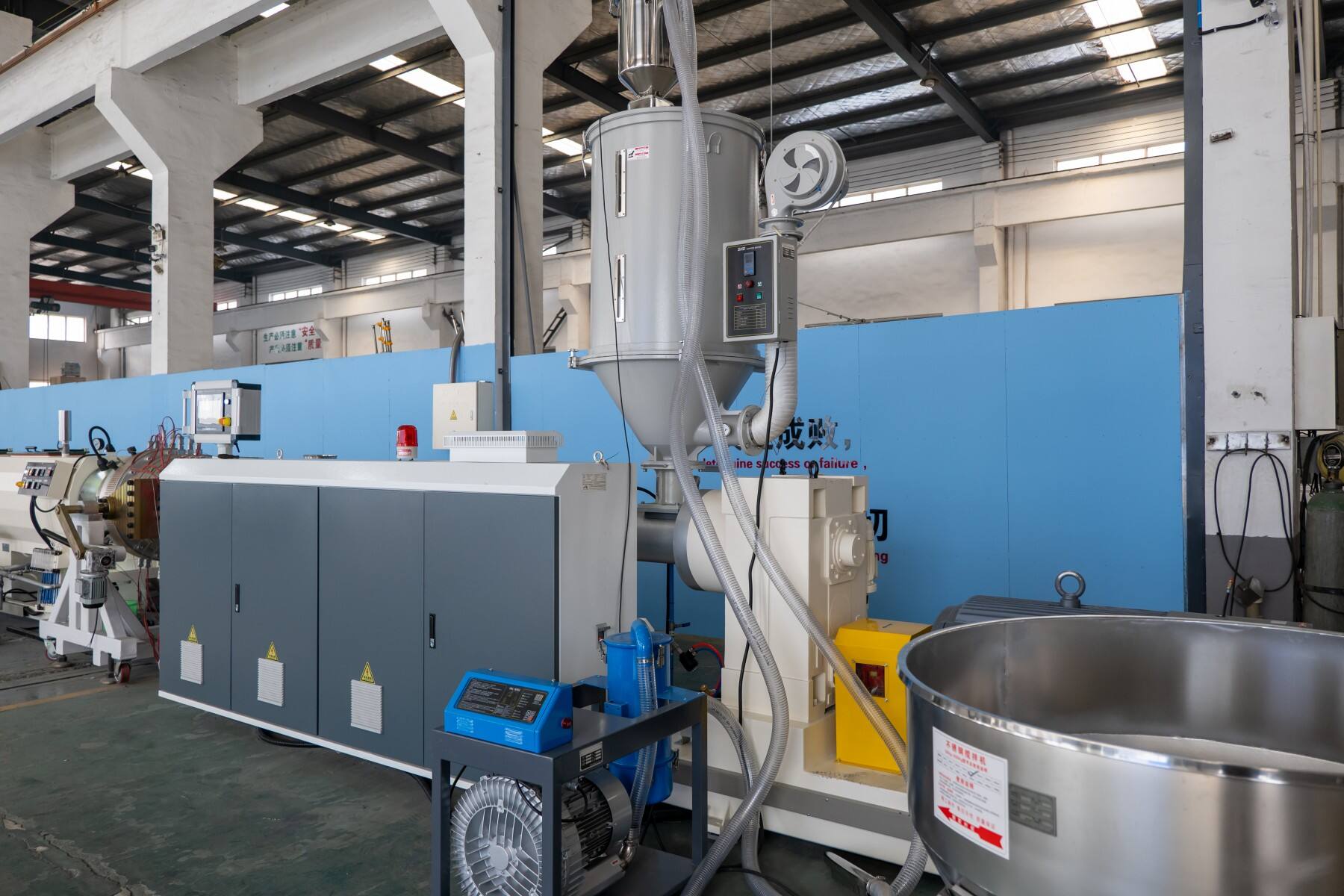
Automated Quality Control and Production Monitoring Systems
The upvc profile machine integrates comprehensive automated quality control and production monitoring systems that revolutionize manufacturing precision and consistency. These sophisticated systems employ advanced sensors, measurement devices, and data analysis capabilities to ensure every produced profile meets exact specifications while maintaining optimal production efficiency. The automated quality control framework continuously monitors critical parameters including dimensional accuracy, surface quality, color consistency, and structural integrity throughout the production process. High-resolution cameras capture detailed images of profile surfaces, detecting minute defects such as scratches, discoloration, or texture irregularities that might compromise product quality. Laser measurement systems provide real-time dimensional verification, comparing actual profile dimensions against programmed specifications with micron-level precision. These measurements encompass wall thickness, overall dimensions, and geometric tolerances critical for proper fitting and performance in final applications. The production monitoring capabilities extend beyond quality control to encompass comprehensive process optimization. Integrated data collection systems record production parameters, material consumption, energy usage, and output rates, providing valuable insights for continuous improvement initiatives. This information enables manufacturers to identify optimization opportunities, reduce waste, and enhance overall equipment effectiveness. The automated systems generate detailed production reports that support quality certifications and customer documentation requirements. Real-time alerts notify operators of any deviations from normal operating parameters, enabling immediate corrective actions before defective products are produced. The upvc profile machine monitoring systems include predictive maintenance capabilities that analyze equipment performance trends and recommend maintenance schedules to prevent unexpected downtime. Historical data analysis reveals patterns that help optimize production schedules, material usage, and energy consumption. The automated quality control systems reduce dependence on manual inspections, eliminating human error while providing more comprehensive and consistent evaluation of product quality. Integration with enterprise resource planning systems enables seamless data flow between production and business management systems, supporting informed decision-making at all organizational levels. These advanced monitoring capabilities position manufacturers to meet increasingly stringent quality standards while maintaining competitive production costs through optimized operations and reduced waste generation.


 EN
EN