
 EN

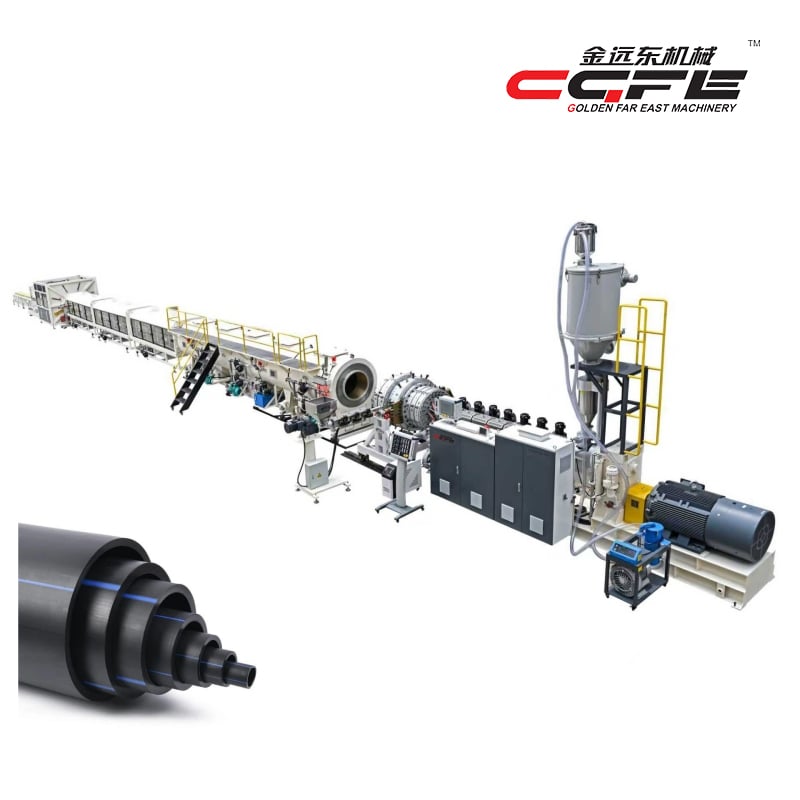
An HDPE pipe production line represents a sophisticated integration of industrial machinery and engineering that transforms raw polyethylene materials into finished pipes ready for deployment across water distribution, gas conveyance, and industrial applications. Understanding how an HDPE pipe production line operates provides critical insight into the quality control, efficiency, and scalability that modern manufacturing demands. The HDPE pipe production line process involves multiple coordinated stages, from material preparation through final output, each designed to ensure structural integrity, dimensional accuracy, and long-term durability of the final product.

The operation of an HDPE pipe production line reflects decades of industrial evolution, combining mechanical precision with material science expertise. Today's hdpe pipe production line systems are engineered to handle volumes ranging from small-diameter laboratory applications to large-scale infrastructure projects with diameters exceeding 400 millimeters. Each component within the hdpe pipe production line infrastructure serves a distinct purpose, working in synchronized harmony to deliver consistent output that meets international quality standards and customer specifications.
Raw Material Preparation and Feed Systems
Material Input and Quality Control
The initial stage of any hdpe pipe production line begins with raw material preparation, where polyethylene resin pellets are introduced into the system. These raw materials must meet strict composition and density specifications before entering the hdpe pipe production line, as impurities or incorrect formulation directly compromise the final pipe's performance characteristics. Quality control personnel verify material certificates, conduct batch testing, and calibrate material feeds to ensure the hdpe pipe production line operates with consistent feedstock throughout the production cycle.
Hopper Systems and Conveyance
The hdpe pipe production line incorporates specialized hopper systems that regulate material flow into the extruder. These hoppers are designed with precise geometry to maintain steady pressure and prevent material bridging or interruptions that would disturb the hdpe pipe production line workflow. Gravimetric or volumetric feeders ensure that the hdpe pipe production line receives the exact amount of material required for the target pipe diameter and wall thickness, preventing shortages or excess that would waste resources or compromise dimensional accuracy.
Extrusion and Forming Process
Heating and Melting in the Extruder
Once materials enter the hdpe pipe production line, they pass into the extruder where heating zones progressively increase temperature to around 200 to 240 degrees Celsius, depending on the material grade and desired processing characteristics. The rotating screw within the hdpe pipe production line extruder creates mechanical shear that mixes and homogenizes the molten polymer, eliminating air pockets and ensuring uniform melt quality. Temperature control throughout the hdpe pipe production line extrusion stage is critical because overheating degrades polymer chains while underheating prevents adequate flow into the pipe die.
Die Design and Pipe Forming
The hdpe pipe production line die represents the tooling heart of the operation, shaped to create the exact internal and external dimensions required for the target pipe specification. As molten polymer exits the extruder and enters the hdpe pipe production line die, it is forced through orifices that determine pipe diameter, wall thickness, and surface profile. For the hdpe pipe production line to produce consistent results, the die must maintain precise temperature equilibrium and experience minimal pressure fluctuations, which is why advanced systems incorporate multiple heating zones within the die itself.
Cooling, Vacuum Application, and Haul-Off
Water Cooling and Vacuum Sizing
Immediately after emerging from the die, the newly formed pipe from the hdpe pipe production line enters a water-cooled sizing section where controlled cooling preserves dimensional accuracy while the polymer is still pliable. The hdpe pipe production line applies vacuum pressure to the pipe's exterior surface, drawing it firmly against the inner wall of a precision-sized mandrel that ensures the pipe conforms to specification. This vacuum application within the hdpe pipe production line prevents surface waviness, out-of-roundness, and dimensional drift that would otherwise occur as the material cools and contracts at varying rates.
Haul-Off Equipment and Tension Control
The hdpe pipe production line includes variable-speed haul-off equipment that gradually withdraws the cooling pipe at a rate synchronized with material extrusion from the die. Tension sensors integrated throughout the hdpe pipe production line monitor pulling force and automatically adjust haul-off speed to maintain consistent wall thickness and prevent sagging or distortion. Modern hdpe pipe production line systems employ programmable logic controllers that dynamically balance extrusion rate against haul-off speed, maintaining the precise relationship that ensures uniform product quality throughout the production run.
Cutting, Quality Inspection, and Output
Pipe Length Control and Cutting
As the hdpe pipe production line advances the cooled pipe toward the discharge end, an automatic cutting station measures pipe length and triggers pneumatic or hydraulic cutting mechanisms at precise intervals. The hdpe pipe production line cutting system must be positioned downstream of the cooling section to allow complete solidification, preventing material deformation that would otherwise occur if cutting forces were applied to semi-crystalline polymer. Each hdpe pipe production line is configured with programmable length settings that allow operators to switch between standard lengths or accommodate custom specifications without requiring tooling changes.
Final Inspection and Output Logistics
The hdpe pipe production line incorporates visual inspection stations that monitor surface quality, verify dimensional accuracy using non-contact laser measurement, and detect defects that would compromise serviceability. Pipes that pass inspection proceed through the hdpe pipe production line exit to collection tables or specialized palletizing equipment designed to prevent damage during handling. Throughout the hdpe pipe production line operation, data logging systems record production parameters, allowing operators to trace any batch back to specific processing conditions and ensuring traceability that meets industry certification requirements.
FAQ
What raw materials does an hdpe pipe production line process?
An hdpe pipe production line processes high-density polyethylene resin pellets, typically supplied in standardized grades that specify density, melt flow index, and color. Additives such as carbon black for UV protection, stabilizers to prevent degradation, and pigments for identification may be integrated into the hdpe pipe production line feedstock depending on end-use requirements. Quality resin ensures the hdpe pipe production line produces pipes with consistent mechanical properties, long service life, and environmental resistance.
How does temperature control affect hdpe pipe production line output quality?
Temperature management throughout the hdpe pipe production line directly impacts polymer flow behavior, solidification rate, and final material properties. If the hdpe pipe production line maintains extrusion temperatures too high, polymer chains degrade and mechanical strength decreases; if too low, the hdpe pipe production line experiences high pressure and uneven wall thickness. Operators monitor temperature zones continuously during hdpe pipe production line operation to maintain the narrow window where material flows predictably while preserving structural integrity.
What pipe diameters can a typical hdpe pipe production line accommodate?
Modern hdpe pipe production line systems are engineered to produce pipes ranging from small diameters of 16 millimeters up to 400 millimeters or larger, depending on the equipment specifications and installed die tooling. An hdpe pipe production line designed for a maximum 400-millimeter diameter would require a proportionally larger extruder, die assembly, and cooling infrastructure than a unit specified for smaller dimensions. hdpe pipe production line capacity specifications should be clearly documented so operators understand the equipment's operating envelope.