Home > PRODUCTS > Plastic Profile Production Line > PS Picture Frame & Panel Production Line
Place of Origin: |
Jiangsu, China |
Brand Name: |
CGFE |
Model Number: |
SJ100 + SJ50 |
Certification: |
CE, ISO9001 |
1set |
|
Price: |
USD 40000 |
Packaging Details: |
Wood pallet, PE film package. |
Delivery Time: |
30 days after receipt of deposit |
Payment Terms: |
FOB, CFR, CIF, DAP, etc. |
Supply Ability: |
20 sets each month |
PS grid plate (polystyrene grid plate) is a lightweight decorative panel made primarily from polystyrene (PS) through processes such as extrusion, molding, or thermoforming. It has rapidly emerged in the fields of architecture and interior decoration in recent years. Due to its unique material properties, it exhibits significant advantages in terms of environmental protection, installation, aesthetics, and cost.
The following are the core competitive advantages and application features of PS grating panels as of early 2026:
Core Advantages
1. Extreme lightweight design to reduce structural load
With a low density (typically 1.04–1.08 g/cm³), its weight is only 1/5–1/3 of traditional wood boards, metals, or stones.
It is particularly suitable for scenarios that are sensitive to load-bearing requirements, such as suspended ceilings in high-rise buildings, renovation of old houses, and temporary exhibition halls.
Transportation and handling do not require heavy equipment and can be operated manually, significantly saving logistics and labor costs.
2. High toughness and dimensional stability
Although made of plastic, the bending strength is significantly enhanced through the design of grille structures, such as Great Wall pattern, square grid, vertical stripes, etc.
It is resistant to cracking and deformation, and has superior impact resistance compared to ordinary PVC boards.
It can remain stable in environments with significant temperature and humidity variations, such as the rainy season in the south or heated rooms in the north.
3. Environmentally friendly and recyclable, aligning with the trend of green building
PS material itself is non-toxic and formaldehyde-free (if using food-grade or brand new material), and its combustion products are mainly CO₂ and water (requiring professional treatment).
It can be recycled and regenerated at 100%. Some brands (such as INTCO) have established a closed-loop recycling system.
The production energy consumption is lower than that of aluminum and steel materials, with a small carbon footprint, meeting the requirements of LEED and green building material certification.
4. Easy to install, supports paint-free quick installation
It often adopts buckle-type, plug-in type, or adhesive installation, without the need for joists or complex substrate treatment.
The surface has been coated or colored, eliminating the need for painting and sanding. It can be installed and used immediately, shortening the construction period by more than 30%.
It can be directly applied over existing walls (such as tiles or latex paint) to achieve "renovation without demolition".
5. Strong aesthetic expression and diverse styles
The surface can be finished with various decorative finishes such as high gloss, matte, skin feel, wood grain, stone pattern, and solid color.
The grille features a variety of designs (such as 160mm/200mm Great Wall pattern, geometric hollow-out, wavy pattern, etc.), creating a sense of light and shadow layers and spatial rhythm.
It is widely used in background walls, wall panels, partitions, commercial exhibitions, hotel lobbies, etc., combining modernity with Zen aesthetics.
Model |
JYD-300 |
PLC control system |
Option |
Extruder model |
SJ100+SJ50 |
Main motor power (kw) |
75kw and 22kw |
Output (kg/h) |
≤150 |
mold |
Customized |
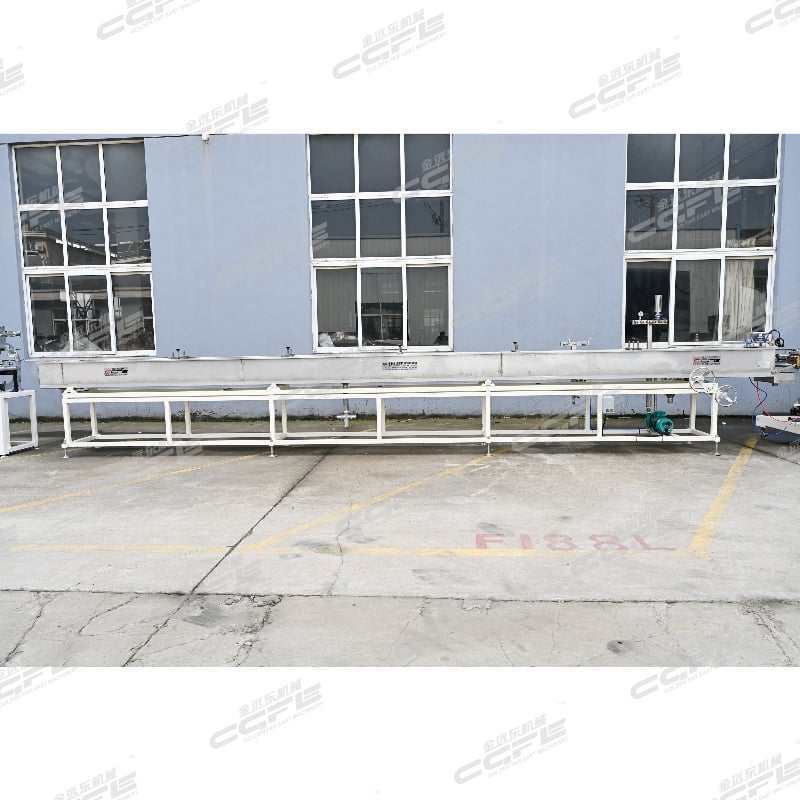
Vacuum calibration table length |
8m |
Pumps |
Vacuum pump |
Haul-offs machine |
Rubber caterpillars |
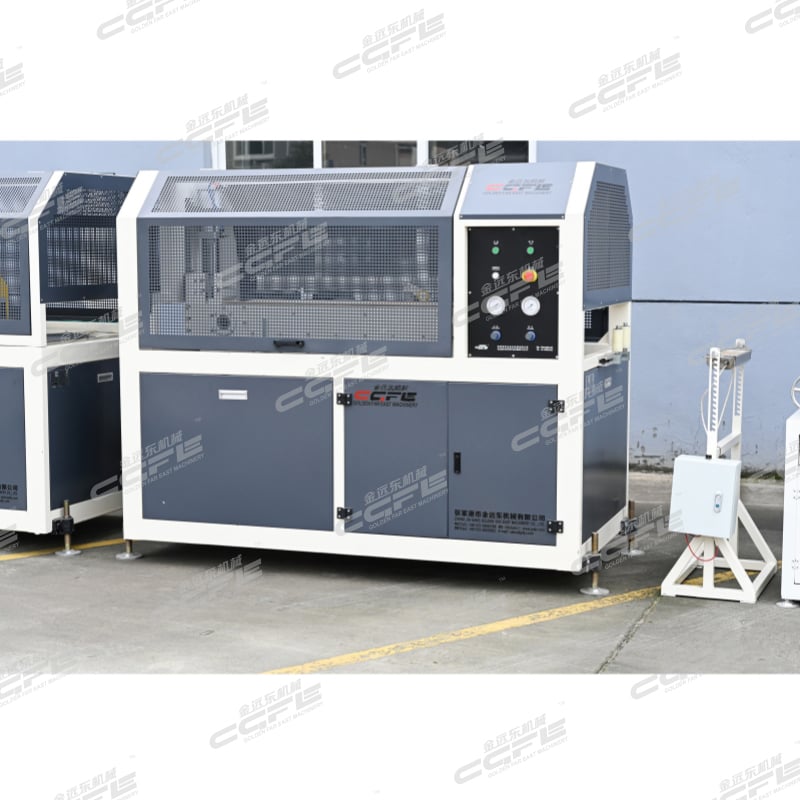
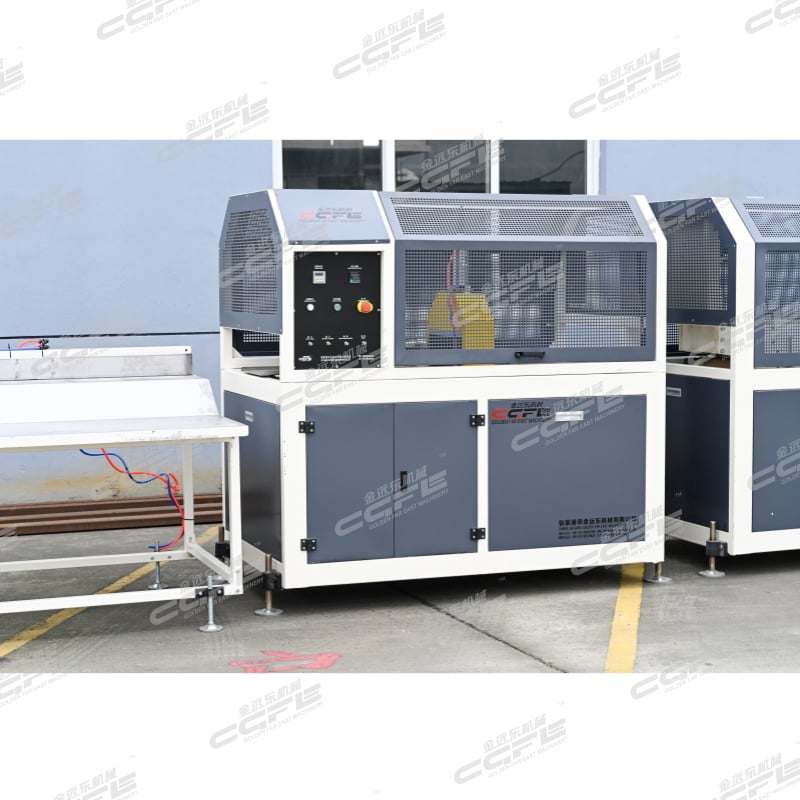
Cutting machine |
Saw cutting |
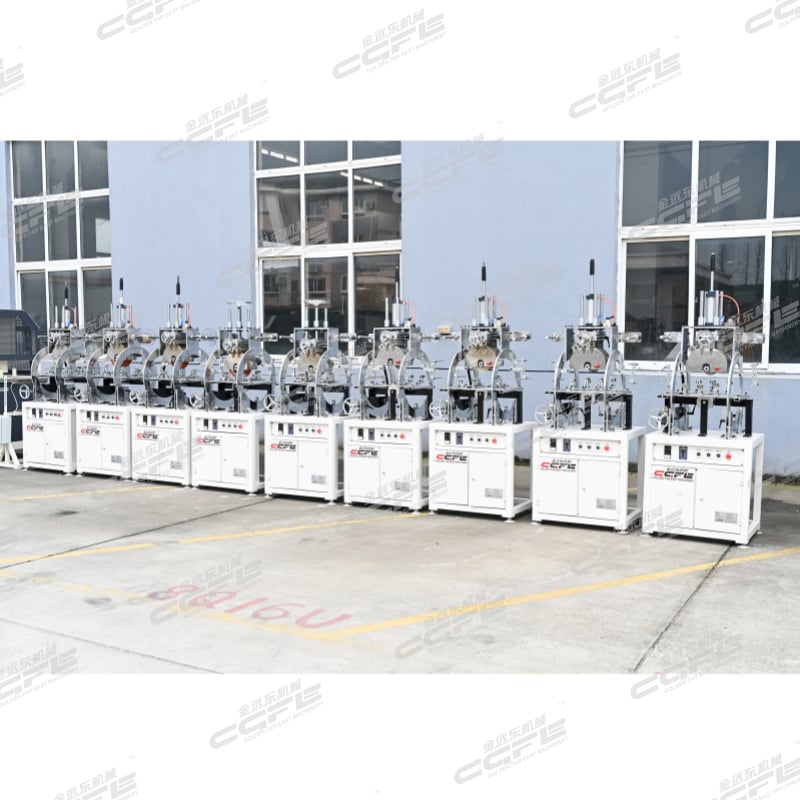
Hot stamping |
Online hot stamping |
Competitive Advantage:
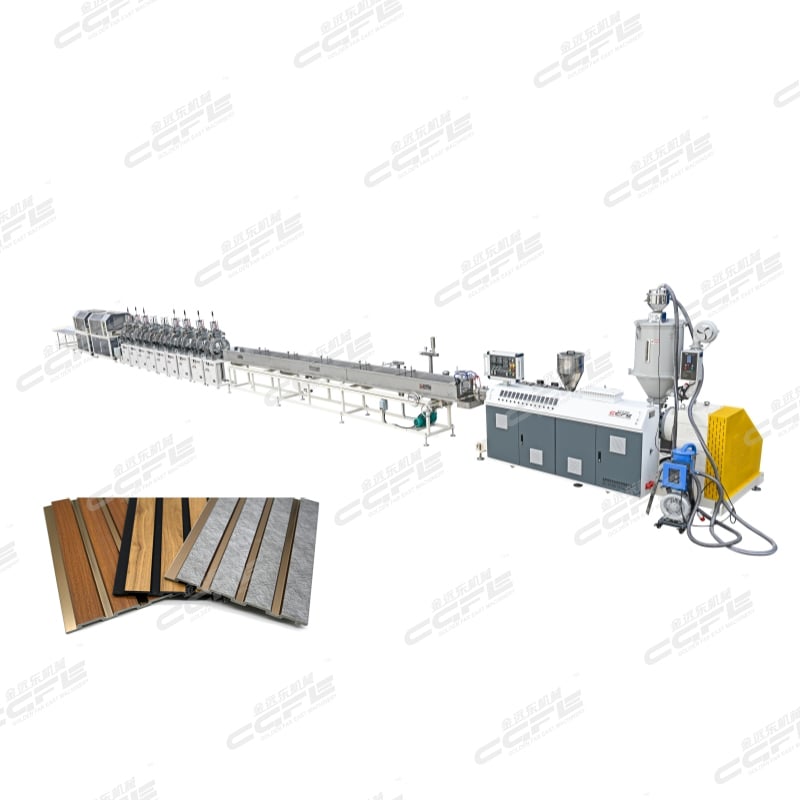
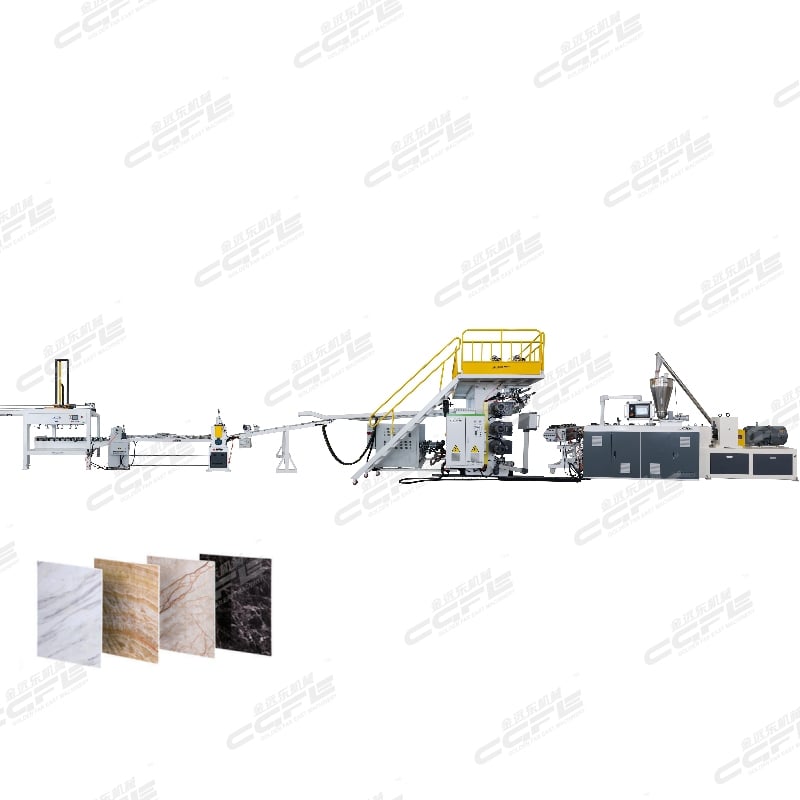
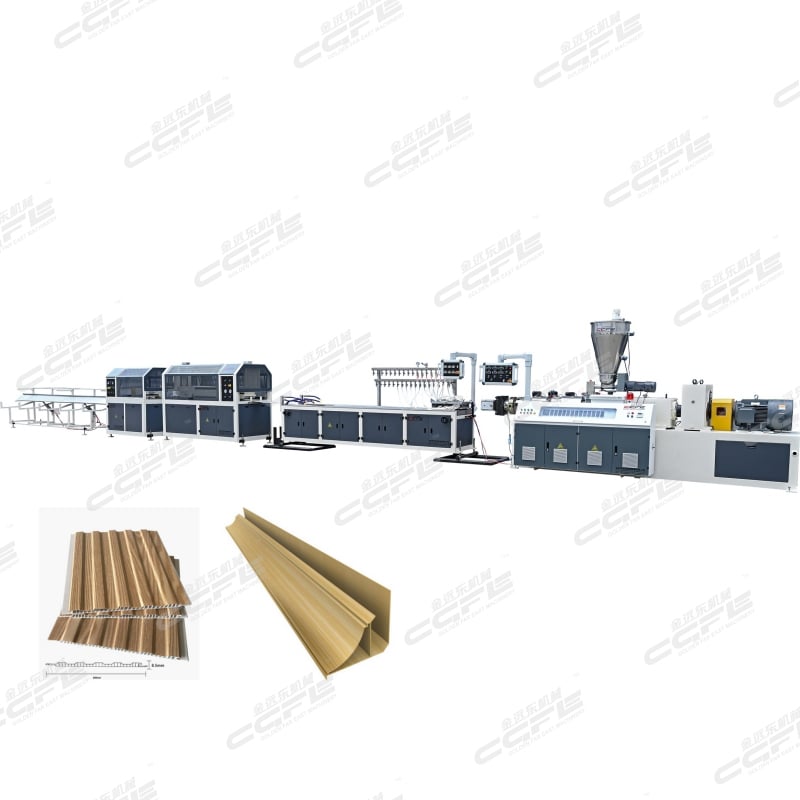
The PS wall panel production line refers to an automated industrial equipment system specifically designed for producing lightweight decorative wall panels (such as grating panels, integrated wall panels, foam boards, etc.) using polystyrene (PS) as the main raw material. This production line integrates core technologies such as plastic extrusion, thermoforming, surface treatment, and intelligent control, and is widely used in modern prefabricated construction, interior quick-assembly, and commercial space decoration.
Below is a detailed description of mainstream PS wallboard production lines as of 2026:
I. Core component modules
Module Function Description
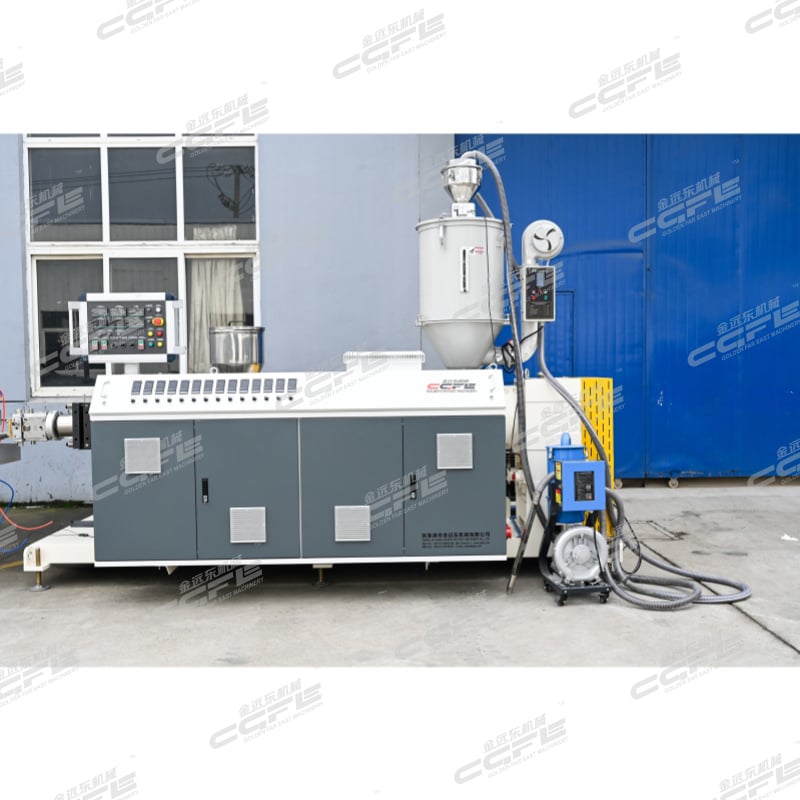
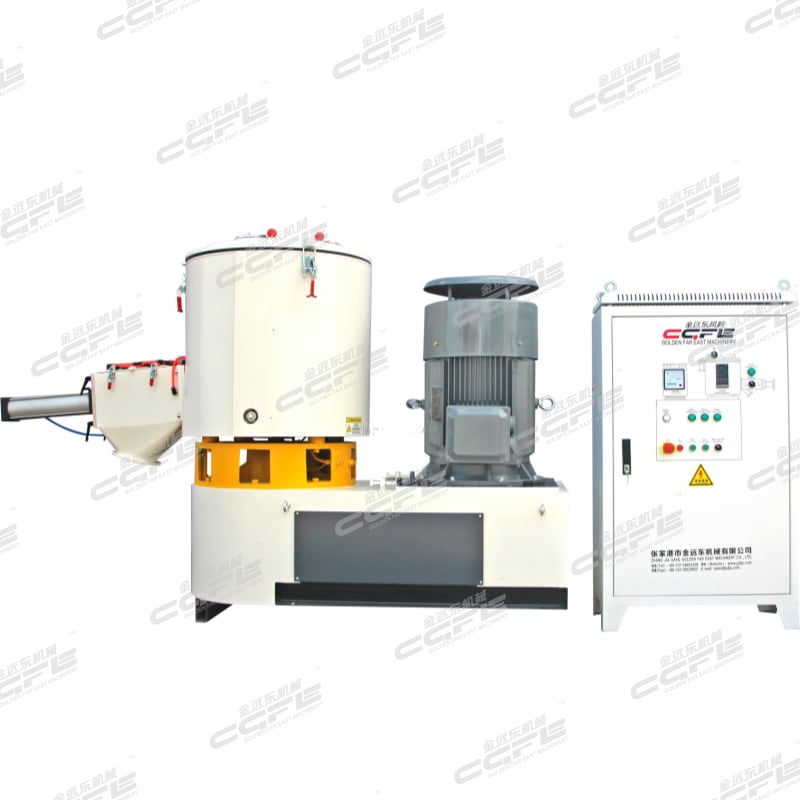
1. The raw material pretreatment system includes a PS granule dryer (dew point ≤-40℃), an automatic feeder, and a mixer (capable of adding additives such as colorant, flame retardant, and UV stabilizer), ensuring clean raw materials and precise proportioning.
2. Single/Double Screw Extrusion Main Machine: The main machine typically has a power of 30–75 kW and adopts a parallel twin-screw design, ensuring uniform plasticization. It is suitable for formulations with high filler content or low recycled material ratios. The temperature control accuracy is ±1℃, ensuring melt stability.
3. Screen changing and filtering system: Hydraulic screen changer (120–200 mesh), effectively removes impurities, prevents die blockage, and enhances the surface smoothness of the plate.
4. T-shaped die head or hanger-type die head: With a width range of up to 600–1200mm and thickness adjustment capabilities (2–25mm), it is suitable for solid boards, grid boards, or micro-foam structures.
5. Three-roller/five-roller calendering and setting device: High-precision mirror rollers (hardness HRC60+) are paired with vacuum adsorption cooling to ensure flatness of the board surface and a thickness tolerance of ≤±0.2mm.
6. Traction and Cutting System: Servo-controlled tractor (speed range 0.5–8m/min), utilizing laser positioning combined with pneumatic/flying knife cutting, achieving a length error of ≤±1mm.
7. Surface treatment unit (optional) can integrate post-processing sections such as laminating, UV coating, embossing, sanding, etc., achieving decorative effects such as wood grain, skin feel, and high gloss.
8. Automatic stacking and packaging line: The mechanical arm or conveyor belt automatically performs palletizing, supports bundling and labeling, and is compatible with logistics transportation.
II. Key Technical Features
✅ High efficiency and energy saving: Equipped with a variable frequency motor and a waste heat recovery system, the unit energy consumption is approximately 0.35–0.45 kWh/kg.
✅ Flexible production: By changing the die head and roller, multiple products such as solid boards, grating boards, micro-foamed boards, and hollow boards can be switched and produced on the same production line.
✅ Intelligent control: Equipped with Siemens PLC + HMI human-machine interface as standard, it supports recipe storage, fault alarm, and remote monitoring. Only 2-4 single-line operators are required.
✅ Environmental compatibility: It can be blended with 10%–30% food-grade recycled PS (such as recycled materials from CD cases and packaging boxes) without affecting performance and appearance.

Copyright © 2026 Zhangjiagang Golden Far East Machinery Co., Ltd. All rights reserved.

 EN
EN