Product General Information:
Place of Origin: |
Jiangsu, China |
Brand Name: |
CGFE |
Model Number: |
SJZ80/156 |
Certification: |
CE, ISO9001 |
Commercial Terms of Products:
Minimum Order Quantity: |
1set |
Price: |
USD 42000 |
Packaging Details: |
Wood pallet, PE film package. |
Delivery Time: |
30 days after receipt of deposit |
Payment Terms: |
FOB, CFR, CIF, DAP, etc. |
Supply Ability: |
20 sets each month |
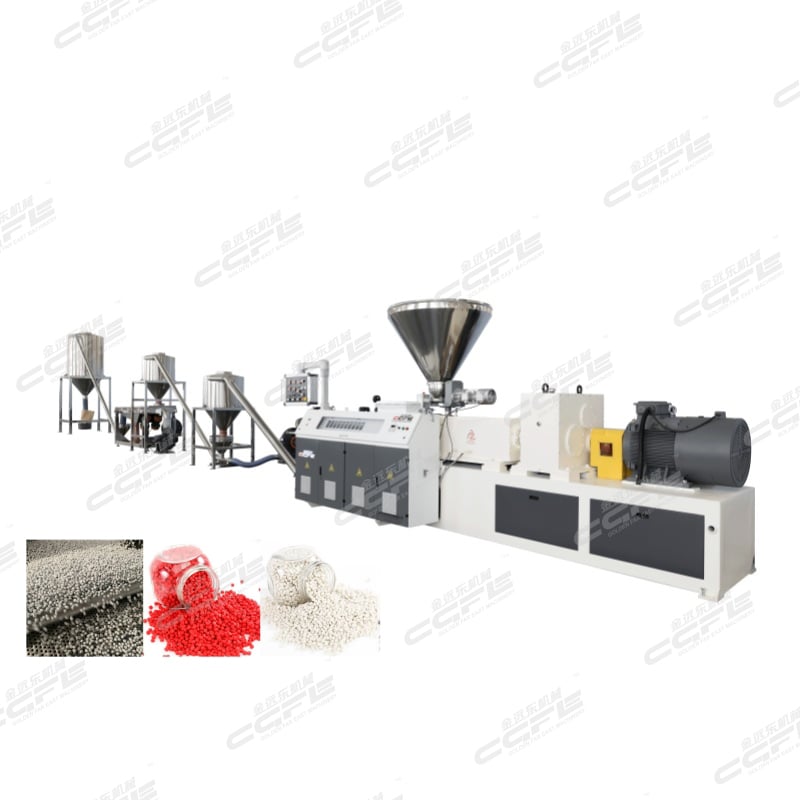
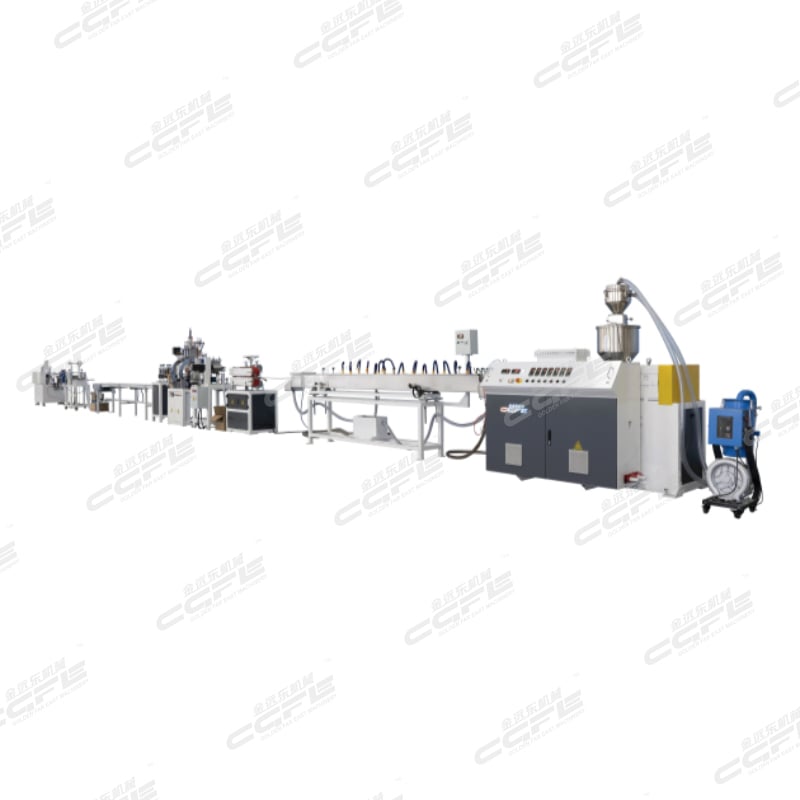
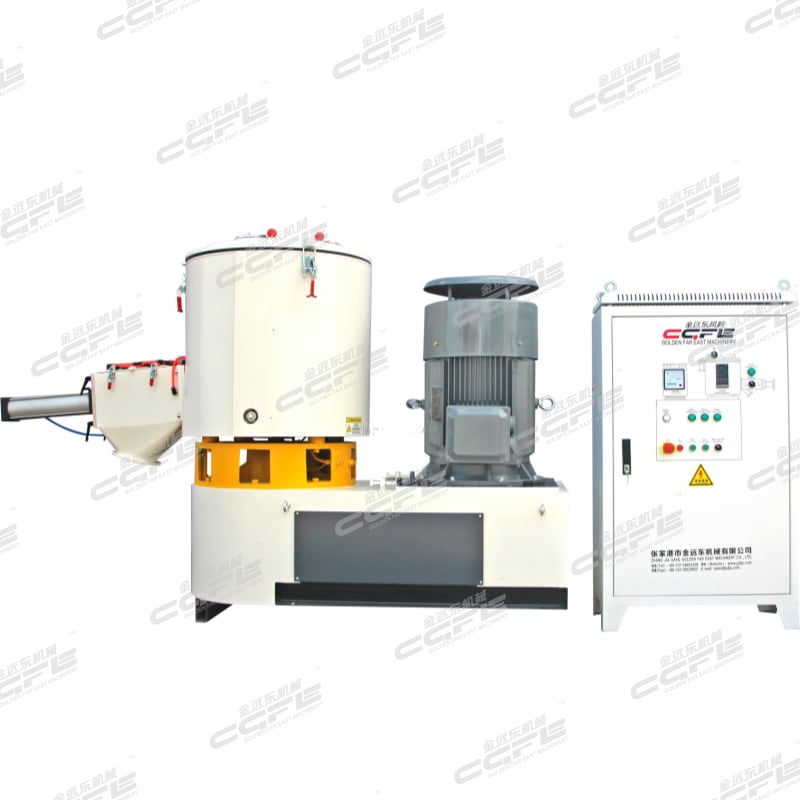
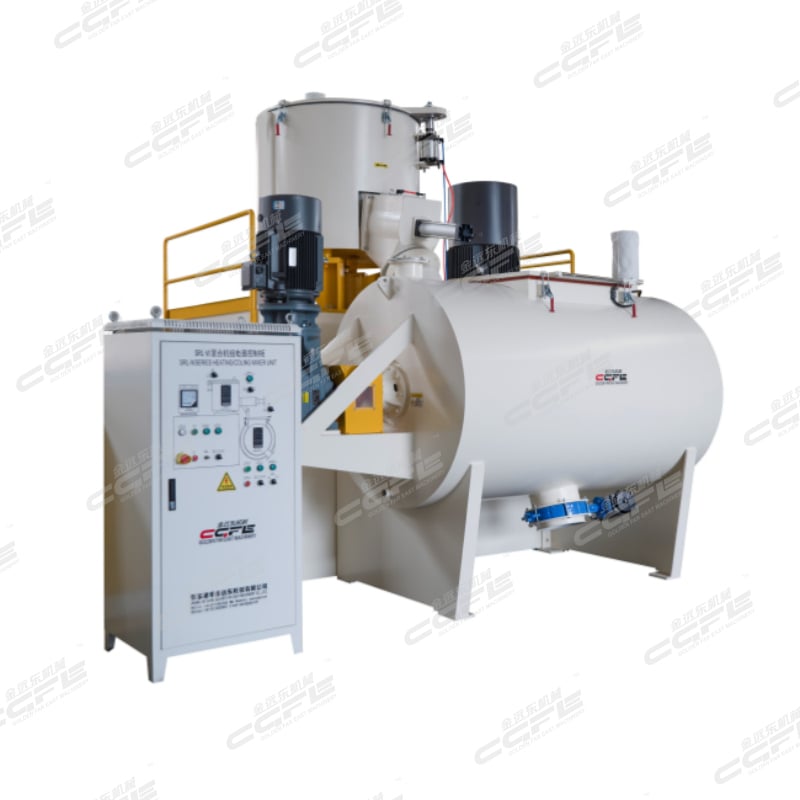
The PVC granulator is a specialized plastic processing equipment designed to convert polyvinyl chloride (PVC) raw materials, such as powder, recycled materials, or scraps, into uniform and regular granules through processes including heating, plasticization, mixing, extrusion, and granulation. These granules serve as raw materials for subsequent molding processes like injection molding, extrusion, and blow molding, and are widely applied in industries like pipes, profiles, films, cable compounds, and artificial leather.
The main components of a PVC granulator are:
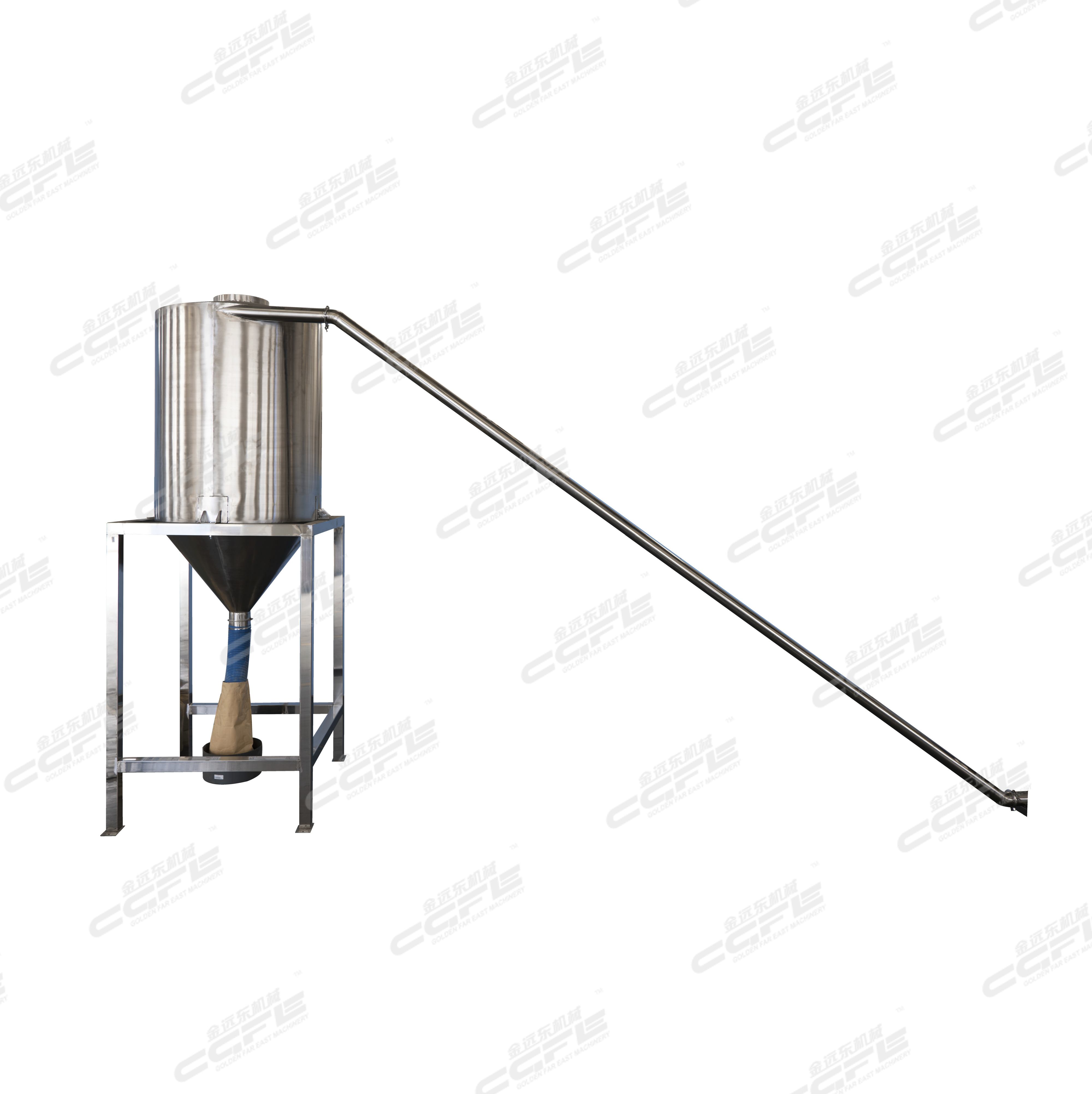
● Feeding system
Forced feeders (such as twin-screw side feeders or gravimetric feeders) are commonly used to ensure that PVC powder enters the main machine stably and uniformly, avoiding bridging or uneven feeding.
● Plasticizing and mixing main machine
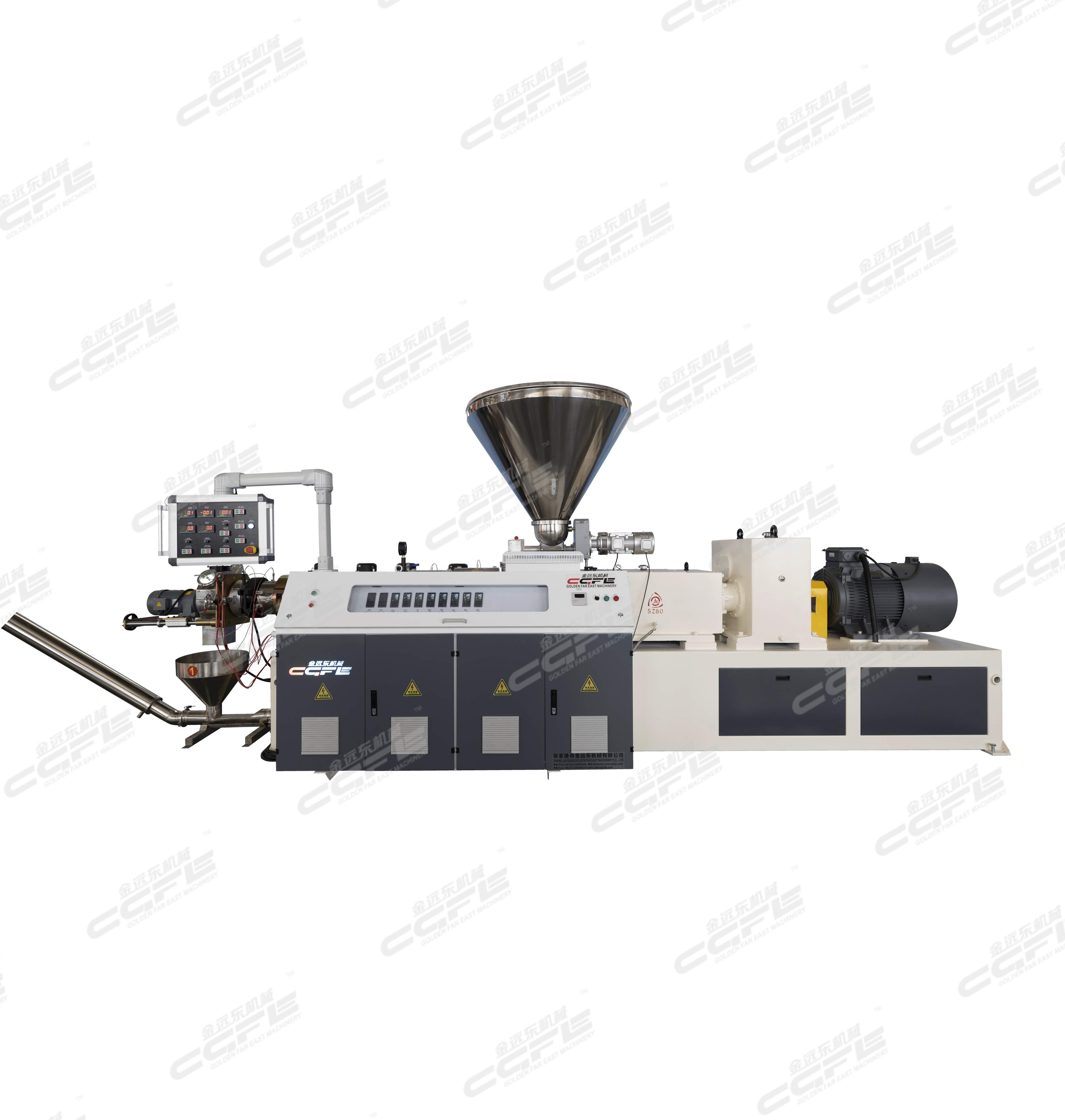
Mostly twin-screw extruders (conical or parallel twin screws) are used, as they possess excellent shear control, venting performance, and mixing capabilities, making them particularly suitable for heat-sensitive materials such as PVC.
The screw design should ensure gentle shearing to prevent PVC from decomposing at high temperatures (as PVC is prone to releasing HCl gas).
● Temperature control and cooling system
Precise temperature control in zones (typically 5-8 zones) is employed, with temperatures usually maintained between 160-190°C to avoid thermal degradation.
The barrel is often equipped with water cooling or air cooling devices for rapid temperature adjustment.
● Exhaust device
A vacuum exhaust port is provided to remove moisture, volatiles, and HCl gas generated during the plasticization process of PVC, thereby enhancing the purity and stability of the particles.
● Screen changing and filtration system
Hydraulic or manual screen changers are used to filter impurities, ensuring the purity of the melt and protecting downstream equipment.
● Die head hot granulation
Using the die face thermal granulation method, molten PVC strips are directly cut into granules by a rotating cutter at the outlet of the die head. The granules have a regular shape and produce little dust, making them suitable for high-efficiency continuous production, especially for soft or filled PVC materials.
● Control system
PLC + touch screen human-machine interface, achieving automatic control and monitoring of parameters such as temperature, speed, feeding amount, and pelletizing speed.
Model |
SJSZ80/156 |
PLC control system |
Option |
Extruder model |
SJSZ80/156 |
Main motor power (kw) |
55 |
Output (kg/h) |
≤400 |
mold |
Hot cutting die head |
Cooling |
Blower cooling |
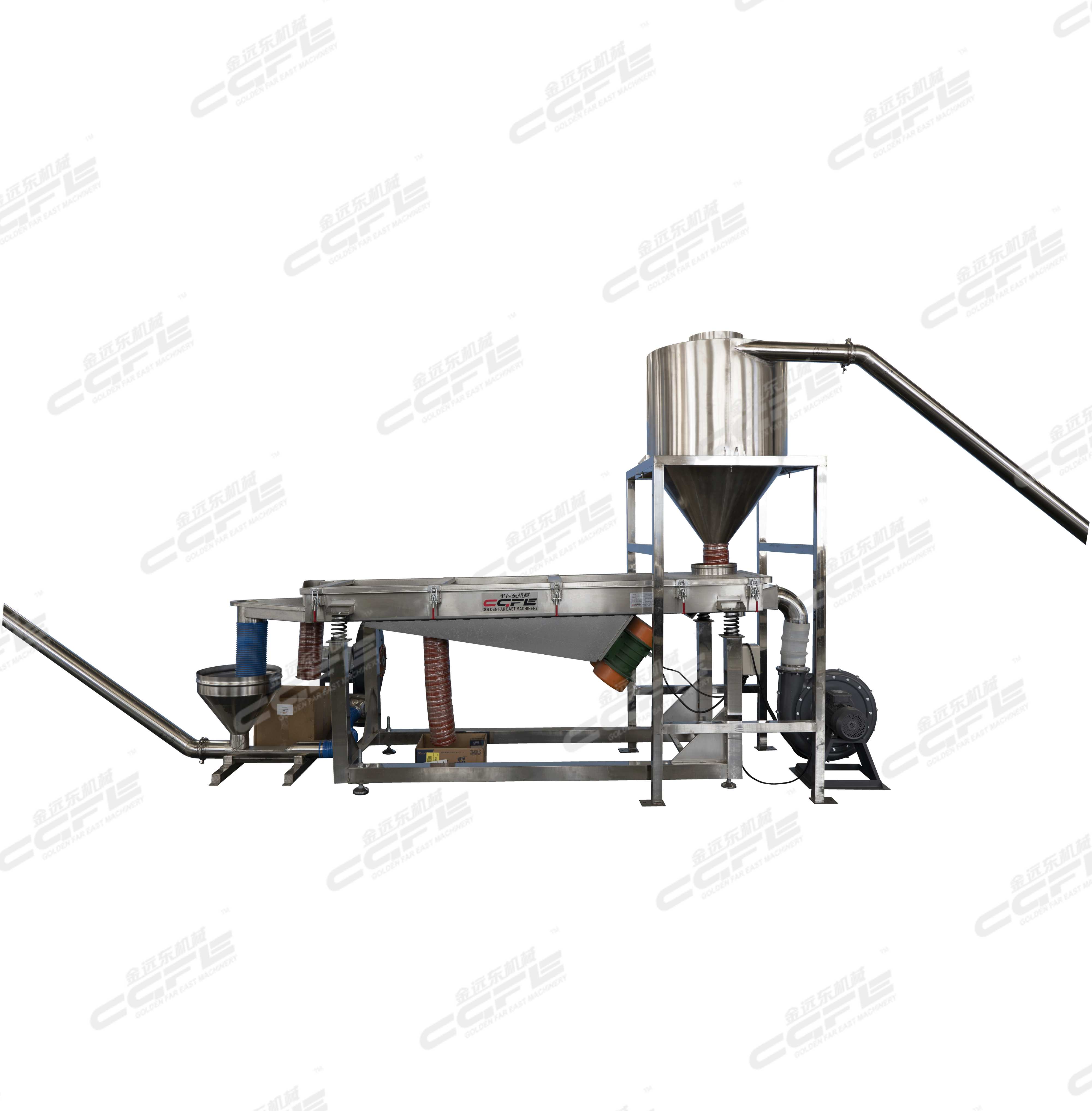
Vibration sieve |
1set |
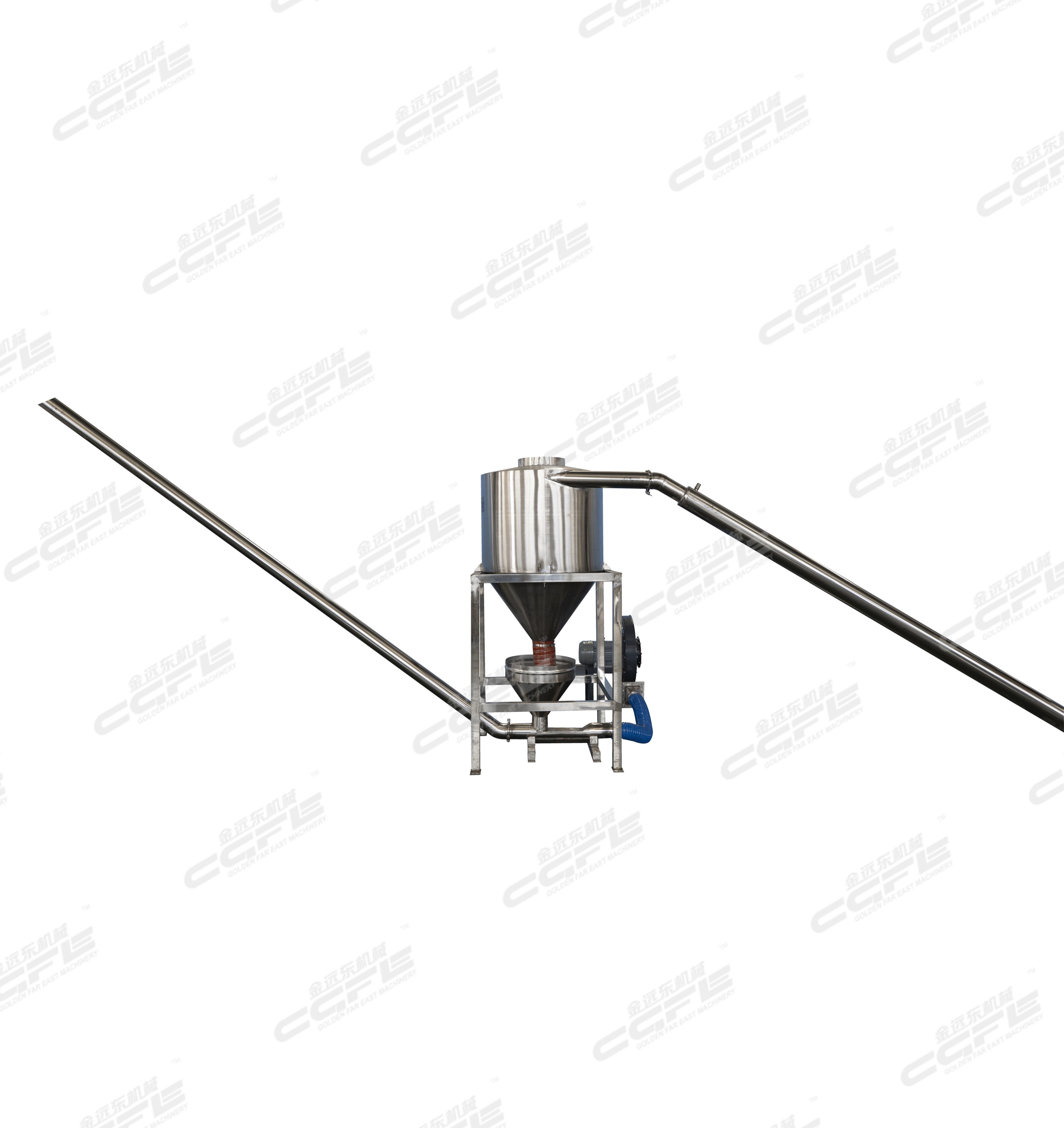
Cooling material |
Pipeline with water cooling |
PVC granulators play an important role in the plastic recycling and modification industry, and their competitive advantages are mainly reflected in equipment design, process adaptability, operational efficiency, and a deep understanding of PVC material characteristics. The following are the core competitive advantages of PVC granulators compared to general granulation equipment or competitor products:
1. Specially optimized for heat sensitive PVC materials
Low shear screw design: avoids PVC decomposition (releasing HCl) caused by high shear heat generation, ensuring material stability.
Precise temperature control system: Multi zone independent PID control, temperature fluctuation ≤ ± 2 ° C, to prevent local overheating.
Corrosion resistant material: The screw and barrel are coated with nitride steel, bimetallic alloy, or Hastelloy to resist HCl corrosion and extend their lifespan.
Universal granulators often suffer from PVC discoloration, black spots, bubbles, and other issues due to excessive cutting or rough temperature control.
2. Efficient exhaust and volatilization ability
Equipped with a dual stage vacuum exhaust system (atmospheric pressure+high vacuum), it effectively removes moisture, plasticizer volatiles, and HCl gas generated during decomposition.
Significantly improve the purity and mechanical properties of recycled or high filling materials.
This is the key to the success or failure of PVC recycling granulation - ordinary single exhaust models are difficult to meet high demand applications.
3. Advantages of hot cutting technology for die heads
High particle consistency: Hot cutting particles are directly completed on the mold surface, with round particles, no tailing, and less dust.
High degree of automation: The cutter speed is synchronized with the extrusion, supporting continuous 24-hour operation.
Strong applicability: It can handle viscous or high filling systems such as soft PVC (such as cable materials) and high calcium powder filling materials (such as floor materials).
4. Adaptability to high filling and recycled materials
Can stably process hard PVC containing 30% to 60% calcium carbonate, or soft recycled materials containing plasticizers.
Forced feeding+twin-screw positive displacement conveying to solve the problems of bridging and slipping of powder materials.
Especially suitable for high-value recycling scenarios such as pipe/profile factory scraps, discarded wire skins, medical waste, etc.
5. Intelligent and energy-saving design
PLC+Industrial Internet of Things (IoT) platform, supporting remote monitoring, fault warning, and process data tracing.
The servo drive system is 15% to 30% more energy-efficient than traditional motors and reduces energy consumption per ton of material.
6. Customization and Service Response
We can quickly customize configurations based on customer raw materials (new/recycled/mixed), production capacity (100-2000 kg/h), and particle specifications.
Provide integrated services including formula support, machine testing verification, and after-sales maintenance to reduce customer trial and error costs.
Summary: The core competitiveness of PVC granulators
● Dimensional competitive advantage
● Material adaptation specifically designed for PVC thermal sensitivity, corrosion resistance, and high filling properties
● Process stability, low degradation, low black spots, high-purity particle output
● Production efficiency hot cutting+automation, continuous and efficient operation
● Comprehensive cost saving, long lifespan, and low waste rate
● The full chain support of service value from equipment to process

Copyright © 2026 Zhangjiagang Golden Far East Machinery Co., Ltd. All rights reserved.

 EN
EN